 EN

Tank Ventilation and Pressure Control Are Important Parts of Oil Tank Truck Design.
An oil tank truck is more than a chassis with a cylindrical tank on it. It is a liquid-transport system whose safe operation depends on how the tank, piping, closures, vents, and operating procedures work together. For fleet buyers and operations teams, tanker ventilation and tank pressure control deserve the same attention as capacity, compartments, and axle layout. A design that is suitable for one carried medium, route, or loading method may not be suitable for another.
This article explains the functional questions to raise when reviewing an oil tank truck or fuel tanker configuration. It is general procurement guidance, not a substitute for the applicable transport rules, the tank manufacturer’s documentation, or a qualified inspection.
Why a sealed tank is not a practical answer
Liquid level changes whenever a tank is filled, discharged, warmed, cooled, or moved between operating conditions. If air cannot move in or out in a controlled way, pressure can rise during filling or thermal expansion, while vacuum can develop as product is unloaded or cools. Both conditions can put unwanted stress on the tank and its fittings. That is why oil tank design must account for normal tank breathing as well as abnormal pressure events.
In simple terms, tanker ventilation gives the tank a managed path for vapor or air movement. Tank pressure control uses appropriately specified devices and settings to keep pressure and vacuum within the limits intended for that particular cargo tank. The exact arrangement depends on the tank specification, carried product, compartment layout, loading method, local regulations, and manufacturer instructions.
Separate the three functions during an oil tank truck review
One useful way to evaluate an oil tank truck is to distinguish three related functions instead of treating every vent as the same component.
1. Normal breathing during loading and unloading
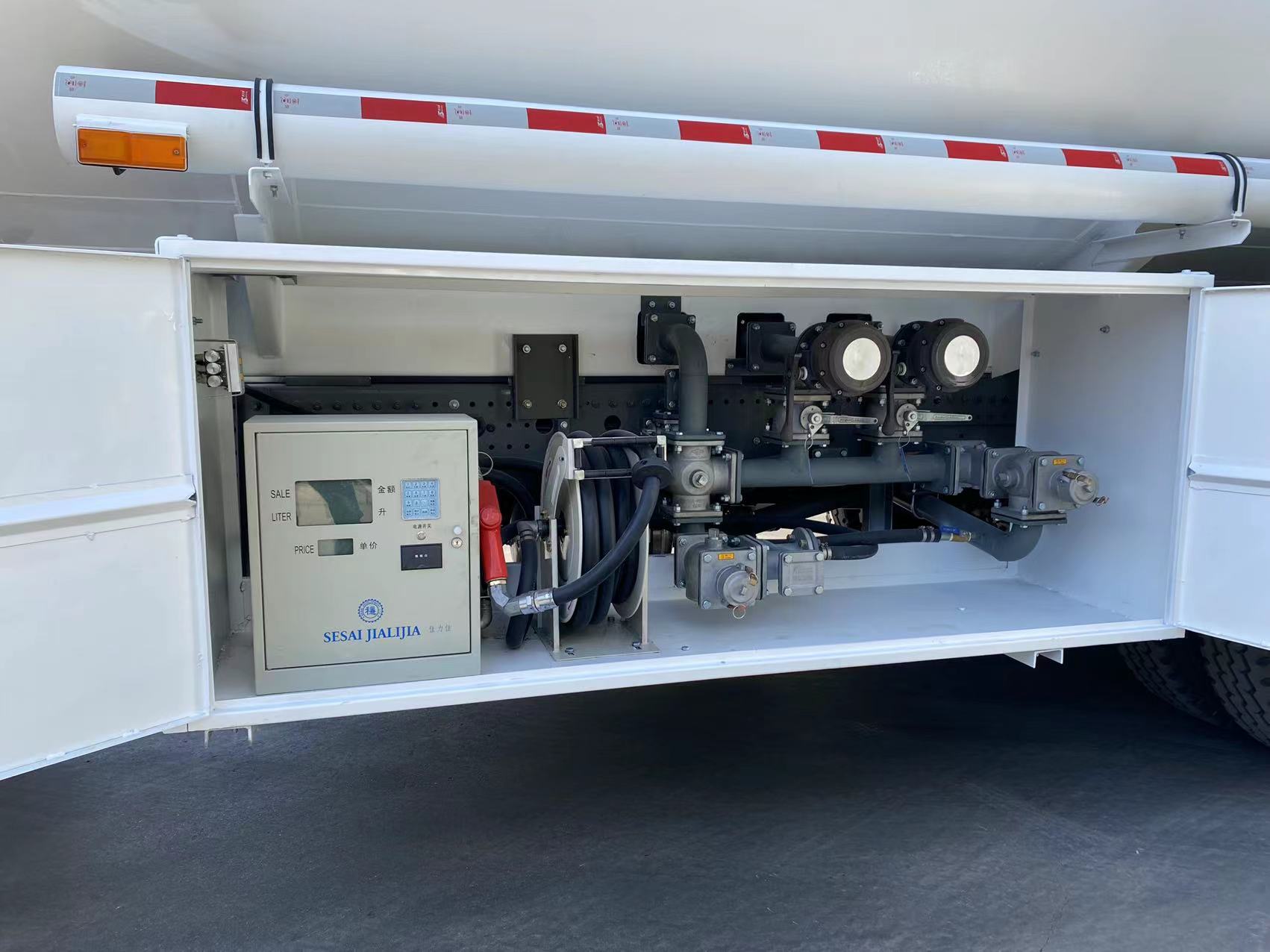
During top or bottom loading, a compartment needs a path for displaced vapor or air. During unloading, it needs a path to admit air or otherwise prevent unwanted vacuum. Pressure-vacuum venting equipment is commonly used to support this breathing function. Buyers should ask how the vehicle’s loading and unloading workflow interacts with the venting arrangement, including any vapor-control equipment required at the terminal or delivery location.
2. Pressure and vacuum protection
A pressure-vacuum device is intended to respond when normal breathing conditions move toward a specified threshold. Its opening and closing characteristics must match the approved tank design; they are not values to choose from a generic checklist. In the United States, for example, cargo-tank pressure-relief systems are addressed in 49 CFR requirements for specified DOT cargo tanks. That example illustrates why a fuel tanker should be checked against the rules that apply in its intended jurisdiction rather than against an online description alone.
3. Emergency venting
Emergency venting is a separate layer of protection for abnormal conditions such as external fire exposure. It is not a replacement for normal tanker ventilation, and normal vent hardware should not be assumed to provide emergency capacity. A sound review asks what emergency venting provision is specified, where it is located, how it is protected from damage, and what inspection or testing evidence accompanies it.
Design decisions that affect tank pressure control
Tank pressure control begins with the operating envelope. Procurement teams should document the product characteristics, expected ambient temperatures, fill and discharge rates, compartment count, route conditions, and terminal interface before finalizing the configuration. A fuel tanker used for routine delivery may face different pressure and vapor-management demands from a tank vehicle serving industrial sites or seasonal work.
- Compartment arrangement: Each compartment may require its own considered venting and relief approach. Bulkheads and separate products add operational complexity.
- Loading method: Bottom loading, top loading, and vapor-recovery workflows can change the required connection and control sequence.
- Product compatibility: Seals, valves, vent components, and cleaning procedures must be compatible with the carried medium. Confirm this from the approved specification rather than inferring it from a tank’s appearance.
- Location and protection: A component that is difficult to inspect or exposed to impact may increase maintenance and downtime concerns.
- Drainage and cleanliness: Water, residue, or contamination around fittings can compromise reliable operation and should be addressed in the maintenance plan.
Make inspection part of the oil tank design decision
Ventilation and pressure-control equipment only help when it remains serviceable. A practical oil tank design review therefore includes access, labeling, inspection records, and a clear escalation path. Drivers can make routine visual checks for damaged covers, missing caps, blocked openings, loose fittings, unusual odors, or signs of leakage. Those checks do not replace formal inspection, functional testing, or maintenance carried out under the relevant regulation and manufacturer procedure.
For fleet managers, the strongest routine is a documented one: identify the tank specification, record the device identification and maintenance history, define pre-trip observations, and remove the vehicle from service when a safety-critical concern is found. This approach gives purchasing, maintenance, and operations teams a common record instead of relying on assumptions about a component’s condition.
Questions to ask before ordering a fuel tanker
- What liquid or liquid products will each compartment carry, and what approved tank specification applies?
- How will the vehicle be loaded, unloaded, vented, and connected to any vapor-control system?
- What normal pressure-vacuum and emergency-relief provisions are specified for the final configuration?
- Which country, route, terminal, and transport rules govern the vehicle’s use?
- How can technicians safely inspect, test, clean, and document the ventilation and relief components?
- What final drawings, nameplates, manuals, and inspection records will be provided at handover?
A configuration-first approach
Ventilation and tank pressure control are not optional details added after capacity selection. They influence safe loading, unloading, transport, inspection, and maintenance throughout the service life of an oil tank truck. A buyer comparing tank vehicles should request a configuration review that connects the carried medium, route, operational workflow, and applicable compliance requirements. Confirm the final oil tank design with the manufacturer and qualified local professionals before placing the vehicle into service.