
 EN

Why Is Aluminum Alloy Used for Some Tank Truck Applications?
For a fleet buyer, choosing an aluminum tank truck is not simply a matter of choosing a lighter-looking tanker. The tank is part of a working system: it must suit the carried medium, the route, the loading pattern, the cleaning routine, and the inspection plan. Aluminum alloy is used for some tank truck applications because it can reduce tare mass and offers useful corrosion resistance in appropriate environments. Those benefits can improve operating flexibility, but they do not make aluminum the automatic answer for every liquid or every duty cycle.
The practical question is therefore not “Is aluminum better than steel?” It is “Does this tanker material fit this medium and this operation?” That distinction matters in fuel transport, where payload planning, compartment arrangement, discharge equipment, local rules, and material compatibility all deserve a documented review.
Lower tare mass can change the payload conversation
One reason an aluminum tank truck is considered is its potential to lower the vehicle’s unladen mass compared with a comparable heavier material design. Where gross vehicle mass limits, axle limits, and the final tank configuration allow it, a lower tare mass may leave more of the legal weight allowance available for payload. For operators making repeated deliveries, that can be a meaningful planning advantage rather than a cosmetic specification.
That benefit still has boundaries. Tank shell thickness, baffles, reinforcements, running gear, pumps, meters, hoses, and safety equipment all contribute to final weight. A buyer should compare completed vehicle weights and axle-load calculations, not material labels alone. This is especially important for an aluminum alloy tanker with multiple compartments, because load distribution can matter as much as total volume.
Corrosion resistance is useful, not universal
Aluminum forms a protective oxide layer, which is one reason corrosion resistance is often part of the discussion. In the right service environment, this can support a practical maintenance plan and a clean external appearance. However, corrosion behavior depends on the alloy, temper, weld areas, residues, drainage, cleaning chemicals, temperature, and exposure to salts or dissimilar metals. A statement that aluminum “does not corrode” would be misleading.
For an aluminum alloy tanker, the real review starts with the carried medium and the expected cleaning process. Some products, contaminants, or wash chemicals may call for another material or a different internal treatment. The supplier’s design documents and the relevant transport rules should confirm compatibility before a fleet commits. Routine inspections should also look at drains, joints, supports, fittings, and areas where moisture or residue may remain.
Alloy selection supports fabrication and serviceability
“Aluminum” is a family name, not a complete specification. Tank fabricators select alloy and temper with the intended fabrication method, strength requirements, weld design, and corrosion exposure in mind. Industry material discussions commonly mention alloy families such as 5xxx-series alloys for corrosion-focused service and 6xxx-series alloys where different strength and fabrication characteristics are needed. That is useful background, but it is not a substitute for the manufacturer’s approved tank drawing and material certificate.
Good tanker material selection also considers how the vehicle will be repaired and inspected. A fleet needs to know what weld procedures are permitted, whether qualified repair resources are available in the operating region, and how modifications are controlled. An aluminum tank truck can be a sound long-term asset only when its inspection and repair plan is as clear as its initial specification.
When aluminum makes sense in fuel transport
In fuel transport, an aluminum tank may be considered when the cargo compatibility review is positive and the operator values reduced tare mass, corrosion-management characteristics, and an application-specific body design. The decision should be linked to the actual fuel grade or product, compartment count, transfer equipment, route conditions, and local legal requirements. It should also account for the complete chassis-and-tank package, not the tank shell in isolation.
For example, a fleet may prioritize payload flexibility on repetitive routes, while another may prioritize a material better suited to its cleaning chemistry or cargo range. Both decisions can be reasonable. The key is to document the operating assumptions so that a tank is not selected merely because another fleet uses an aluminum alloy tanker in a different service.
Aluminum versus other tanker materials: use a fit matrix
| Decision factor | Why it matters | Questions for the specification review |
|---|---|---|
| Carried medium | Compatibility is the first material filter. | What exact liquids, residues, and cleaning agents will contact the tank? |
| Weight and payload | Lower tare mass may affect useful payload within legal limits. | What are the final vehicle and axle weights with all equipment installed? |
| Corrosion exposure | Environmental and chemical exposure influences service life planning. | How will the tank be washed, stored, drained, and protected from salt or trapped moisture? |
| Fabrication and repair | Welding and modification controls affect safe long-term use. | Which repair procedures and qualified resources are available? |
| Route and duty cycle | Road conditions and loading frequency shape fatigue and maintenance demands. | What are the expected terrain, stop frequency, and loading/unloading cycles? |
A buyer’s checklist before specifying an aluminum tank truck
- Define every carried medium, including likely return loads and cleaning agents.
- Request the proposed alloy, temper, shell design, and welding documentation for the final configuration.
- Compare completed tare mass, payload allowance, and axle-load distribution—not just nominal tank volume.
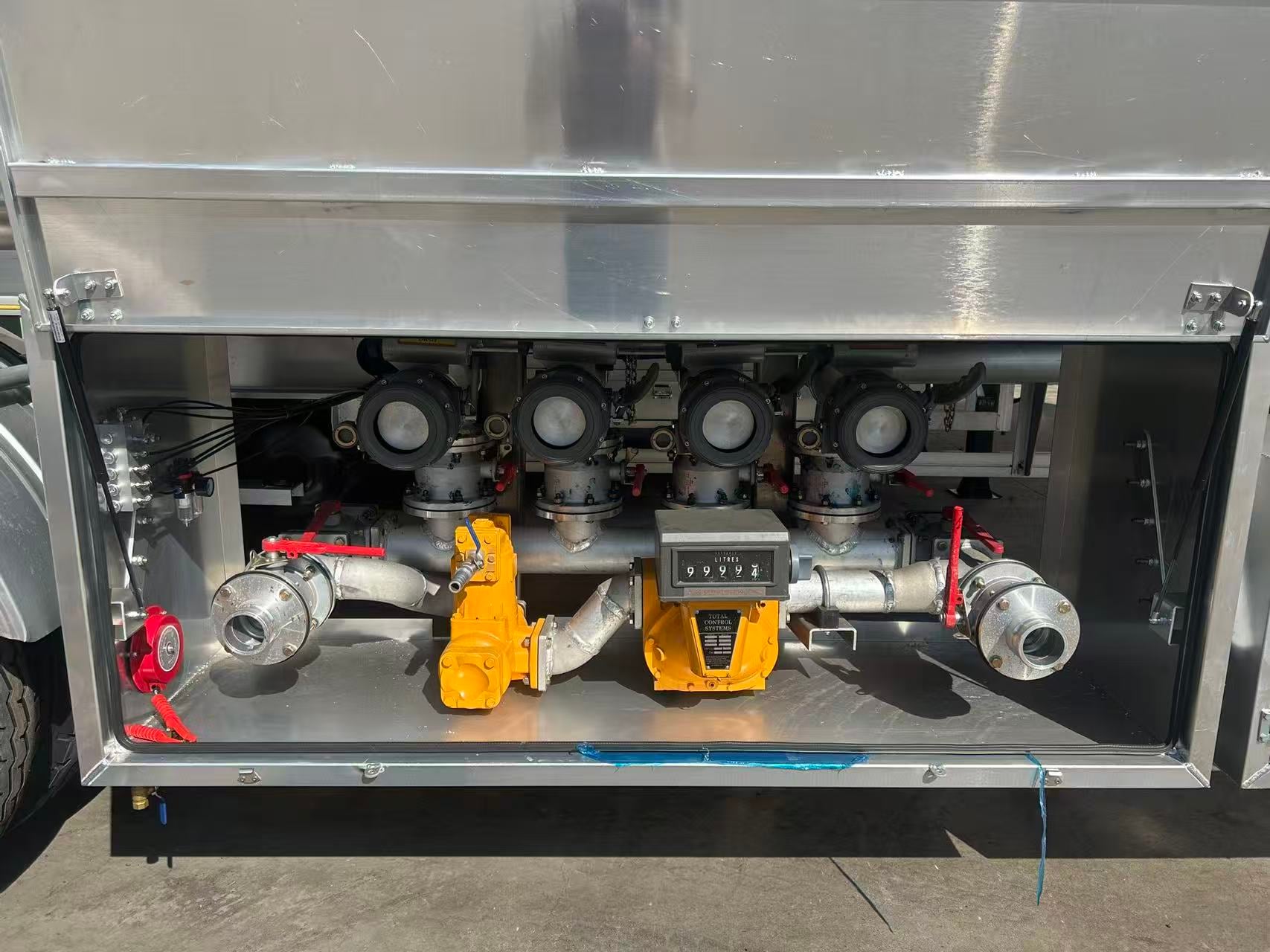
- Confirm the compartment, baffle, pump, meter, hose, and discharge arrangement for the delivery workflow.
- Review corrosion exposure, drainage, storage, cleaning, and inspection points with the operator and maintenance team.
- Check destination regulations and obtain final compliance confirmation before fuel transport begins.
The bottom line
An aluminum tank truck can be a sensible choice when reduced tare mass, the operating environment, and the carried medium align with the tank design. Its corrosion resistance and fabrication potential are valuable only when evaluated in context. For a new aluminum alloy tanker, the strongest purchasing decision combines material compatibility, final weight calculations, repair planning, and verified compliance documents. That approach helps a fleet choose the right tanker material for the work instead of relying on a broad material claim.