 EN

How Does an Oil Tank Truck Pump System Transfer Fuel?
An oil tank truck is more than a tank on a chassis. During delivery, it becomes a controlled transfer station: fuel leaves a selected tank compartment, travels through a protected suction route, passes through a pump and delivery hardware, and enters the customer’s receiving tank. Understanding that sequence helps fleet managers specify the right fuel pump system, train operators, and identify problems before a delivery is interrupted.
The exact layout varies with fuel type, compartment arrangement, local regulations, and the meter package. Still, the operating logic is consistent. A well-configured oil tank truck moves product through a closed, deliberate path while the operator controls flow, prevents cross-contamination, and manages static and spill risks.
The transfer path: from compartment to receiving tank
Think of the system as a chain. A break, restriction, air leak, or incorrectly positioned valve anywhere in that chain can reduce flow or create an unsafe condition. The typical route is:
- Tank compartment and outlet: Fuel is stored in one or more compartments. The operator selects the correct compartment and opens only the intended internal or external outlet valve.
- Suction piping and strainer: Product enters a suction line. A strainer or filter on the suction side may catch debris before it reaches the pump.
- Oil tanker pump: The pump creates the pressure difference that draws fuel from the compartment and pushes it into the delivery side. Many road-tanker systems use positive-displacement pumping because the flow is controllable and works well with metering equipment.
- Meter, air eliminator, and controls: Where fitted, an air eliminator helps prevent air from distorting a measured delivery. The meter records delivered volume, while control valves direct flow.
- Hose, nozzle, and receiving point: Fuel travels through the delivery hose to the receiving tank. The operator monitors the receiving level and stops flow before overfill.
What the pump actually does
The pump does not simply “pull fuel out.” It lowers pressure on the suction side so fuel enters the pump, then raises pressure on the discharge side so fuel can travel through the meter, hose, and nozzle. The amount of useful delivery pressure depends on hose length, hose diameter, filter condition, elevation difference, product viscosity, and restrictions created by fittings or partially closed valves.
Before engaging the PTO or electric/hydraulic drive, an operator confirms that the delivery path is open and that the selected compartment is correct. Running a pump against a closed discharge valve can rapidly build pressure in a system not intended for that condition. Running it dry can damage seals or create overheating. These are operating principles, not a substitute for the pump manufacturer’s operating limits.
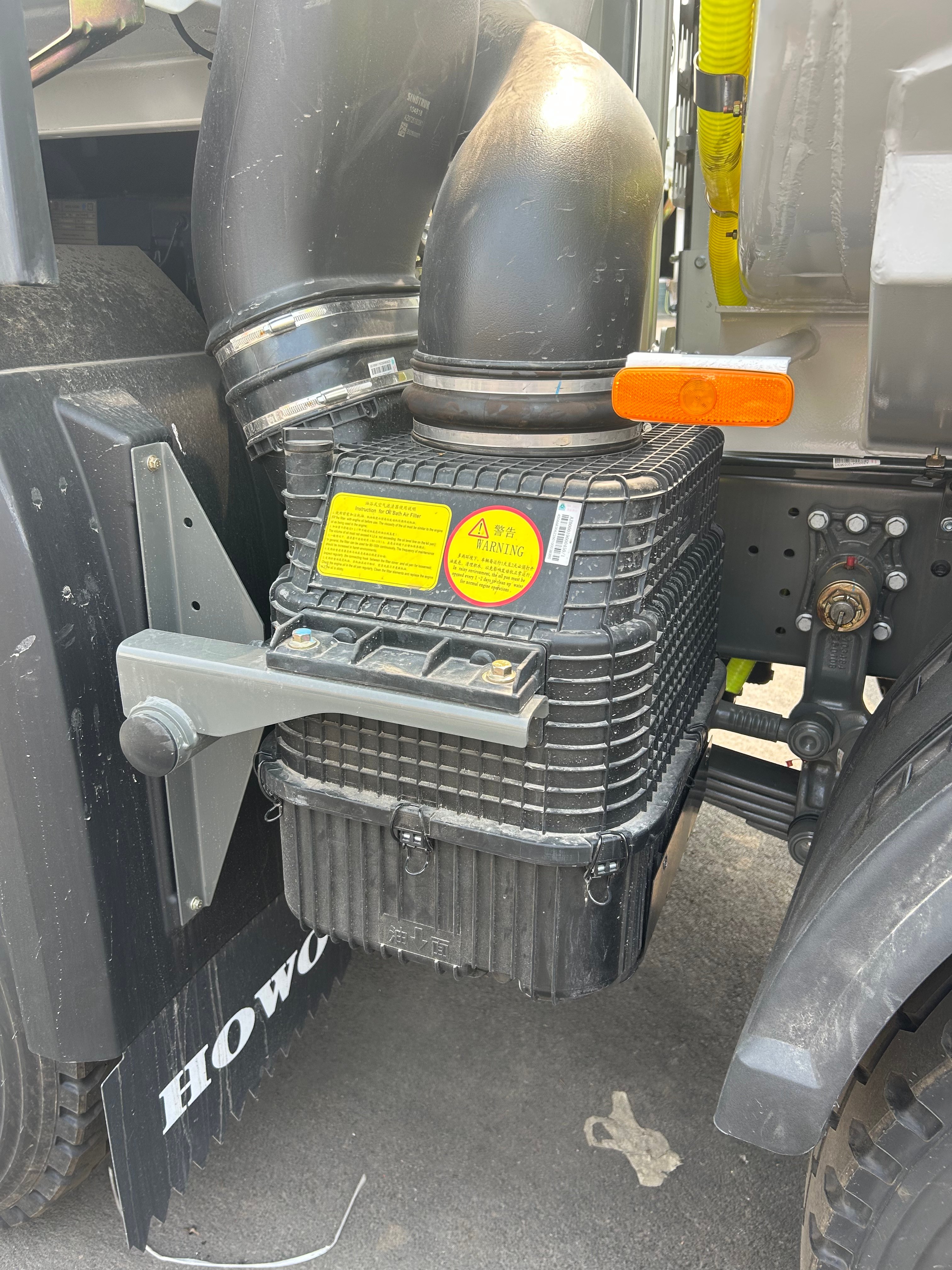
Key tanker equipment that makes fuel transfer controllable
Compartment valves and manifold
On a multi-compartment oil tank truck, valves allow the driver to isolate grades or delivery quantities. The manifold combines selected flow paths without making every compartment part of the same delivery. Clear valve labels and a repeatable valve-position check reduce the chance of mixing products.
Filters and strainers
Fuel transfer equipment needs clean flow. A clogged strainer can cause slow delivery, noise, or pump starvation. Service intervals should reflect product cleanliness and actual operating conditions; operators should not bypass a protective filter simply to finish a delivery faster.
Metering and preset controls
A calibrated meter supports accountable delivery. Some systems add presets that stop or slow flow at a programmed quantity. Even with automation, the driver remains responsible for observing the delivery because receiving-tank capacity, hose condition, and site access change from one stop to the next.
Hose reel, nozzle, and emergency shutoff
The hose and nozzle are the final control point. A suitable reel protects the hose during travel, and an accessible emergency shutoff lets the operator stop a transfer quickly. Inspect couplings, seals, and hose surfaces before use; abrasion, swelling, or a damaged coupling deserves attention before pressurizing the line.
A practical fuel transfer sequence
- Park on stable ground, set the vehicle secure, and assess traffic, ignition sources, drainage, and the receiving tank.
- Confirm the product grade, customer tank, available receiving capacity, and the intended compartment on the oil tank truck.
- Use the site’s required bonding and grounding procedure before transfer of flammable products. Make sound metal-to-metal connections as required by the applicable operating procedure.
- Inspect the delivery hose and nozzle, position spill-response equipment, then align valves for the selected route.
- Start the fuel pump system at a controlled speed. Check for leaks, abnormal vibration, unstable flow, or unexpected meter behavior.
- Remain at the transfer point. Monitor the receiving tank and delivery equipment throughout the transfer; do not leave an active nozzle unattended.
- Stop the oil tanker pump, close valves in the specified sequence, relieve hose pressure safely, drain or stow the hose as required, and document the delivery.
Common transfer problems and first checks
| Symptom | Likely area to inspect | Practical first action |
|---|---|---|
| Low or uneven flow | Suction strainer, air leak, valve position, hose restriction | Stop the transfer if conditions are abnormal; verify valve lineup and inspect the strainer and connections. |
| Pump noise or loss of prime | Suction-side air entry or insufficient product at pickup | Check couplings, gaskets, and compartment outlet position before restarting. |
| Meter reading appears inconsistent | Air elimination, meter condition, operating procedure | Follow the meter manufacturer’s verification process; do not adjust records casually. |
| Unexpected pressure rise | Closed discharge, blocked hose, incorrect valve alignment | Stop the pump and isolate the system according to the operating procedure. |
How to specify a pump system for your route
When choosing tanker equipment, start with the product and delivery pattern rather than a headline flow rate. Ask how many compartments are required, which fuels will be carried, typical hose reach, expected delivery volume, desired metering accuracy, power source, and the service support available on the route. A system sized for short depot transfers may not suit repeated remote deliveries with long hose runs.
For importers and fleet operators serving logistics, road construction, municipal work, or agricultural transport, the practical question is whether the complete oil tank truck configuration matches local operating conditions. JINAN CMHAN TRUCK SALES CO.,LTD. supplies trucks, semi-trailers, and construction equipment for markets in Africa, South America, and Southeast Asia. Discussing fuel grade, compartment layout, delivery routine, and local compliance needs before ordering helps define a workable specification without assuming one pump package fits every route.
Final takeaway
A safe fuel transfer depends on a disciplined path: correct compartment, clean suction route, compatible oil tanker pump, controlled meter and hose, and an operator who stays with the delivery. Keep the fuel pump system maintained, follow the manufacturer and site procedures, and treat bonding, valve alignment, and receiving-tank capacity as pre-transfer checks every time. That approach protects product, equipment, and people while keeping an oil tank truck productive on real delivery routes.