 EN

What Is the Difference Between a Semi Trailer and a Full Trailer?
A trailer purchase can look straightforward until the specification sheet asks how the load is supported and how the unit will be coupled. The practical difference is this: a semi trailer carries part of its front-end weight on the tractor through a fifth wheel, while a full trailer supports its own load on axles at both ends and is normally pulled from a drawbar. That single design choice affects turning behavior, tractor compatibility, loading work, and the kind of routes the equipment can serve.
For fleet buyers, the right answer depends on which arrangement matches the cargo, loading site, drivers, tractor fleet, and regulations in the markets where the equipment will operate.
How the two trailer configurations support a load
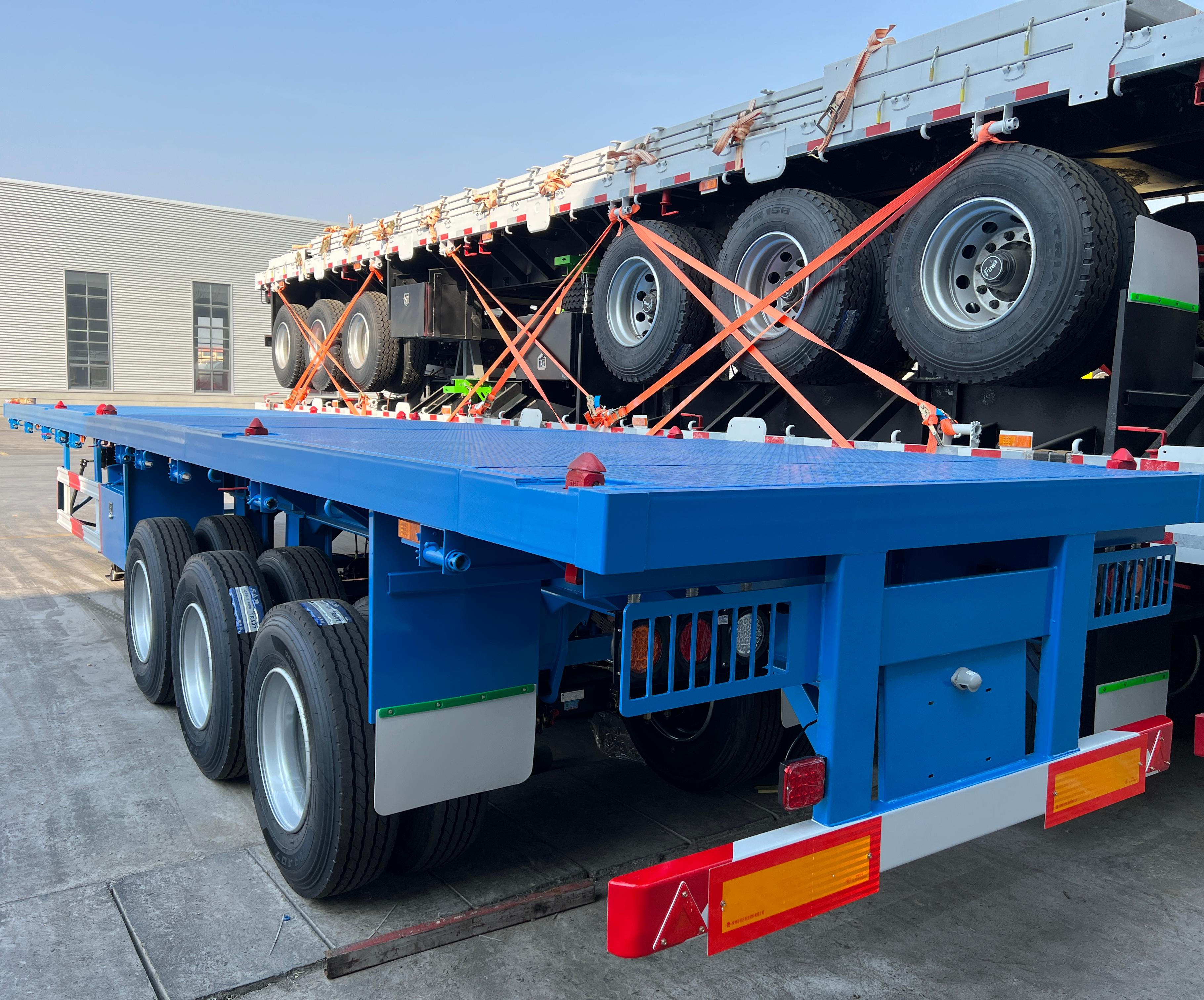
A semi trailer has no front axle supporting its forward end when it is coupled. Its kingpin locks into the tractor’s fifth wheel, so the tractor carries part of the trailer’s weight. Landing gear supports the front only when the trailer is parked or uncoupled. This shared load path is why tractor and trailer specifications must be considered together.
A full trailer has its own front and rear axles. Its chassis supports the full payload independently, and a drawbar or tow bar connects it to the towing vehicle. The towing vehicle pulls the trailer rather than taking a meaningful share of its vertical load. In simple terms, the full trailer is more self-supporting; the semi trailer is designed as one half of a tractor-trailer combination.
| Feature | Semi trailer | Full trailer |
|---|---|---|
| Front-end support | Supported by the tractor fifth wheel when coupled | Supported by its own front axle or axle group |
| Connection | Kingpin and fifth wheel | Drawbar or tow bar |
| Weight transfer | Part of the load transfers to the tractor | Trailer carries its own vertical load |
| Uncoupled support | Uses landing gear | Remains supported on its own running gear |
 Coupling changes the way each unit works
The fifth-wheel connection is central to a semi trailer setup. The kingpin and locking mechanism must be compatible, correctly adjusted, inspected, and operated according to the tractor and trailer manufacturers’ instructions. In the United States, coupling devices are addressed in 49 CFR Part 393 Subpart F; buyers working elsewhere should verify the local roadworthiness and coupling rules rather than assuming a U.S. requirement applies.
Full trailers use a drawbar connection, usually with safety chains or other required retention arrangements depending on the jurisdiction. This arrangement can be useful where a load needs a self-contained trailer or where the towing vehicle does not have a fifth wheel. It also adds another pivot point to manage during reversing and tight-site operations.
Maneuverability: why the extra pivot matters
A semi trailer generally tracks predictably behind the tractor on the road and is familiar to operators who routinely reverse into docks. The tractor and trailer pivot at the fifth wheel, and the trailer’s rear axles follow a relatively compact path. That does not make it automatically easy to maneuver: wheelbase, axle placement, steering axles, trailer length, and load distribution still matter.
A full trailer has a drawbar pivot and, depending on its steering design, a steering front axle. It can be agile in some forward movements and can distribute its load without relying on tractor axle capacity. However, backing a drawbar combination is often more demanding because the trailer can react quickly at the hitch. If repeated reverse docking is part of the job, test the actual trailer configuration with the intended tractor and driver team before placing a fleet order.
Typical applications and semi trailer types
Common semi trailer types include dry vans for packaged freight, flatbeds for machinery and construction materials, tank trailers for bulk liquids, lowbeds for tall or heavy equipment, reefer trailers for temperature-controlled cargo, and container chassis for intermodal work. Their shared feature is not the body style; it is the fifth-wheel-supported front end.
A heavy haul trailer may be a semi configuration when it needs a tractor designed for the required axle loads, power, and coupling height. Lowbed and multi-axle designs can be appropriate for equipment transport, but a buyer must calculate gross combination mass, axle loads, route limits, loading ramps, and required permits. “Heavy haul” is an operating requirement, not a promise that any low trailer will suit every oversized load.
Full trailers are often considered where independent load support, drawbar towing, or a particular site workflow is the priority. They can suit some agricultural, industrial, and regional hauling tasks. The specific legal length, weight, braking, lighting, and rear-protection requirements vary by country and by configuration. For example, U.S. rear-impact-guard rules under FMVSS No. 224 apply to many trailers and semitrailers above the stated weight threshold, but local requirements must control the final specification.
How to choose the right commercial trailer
Use the following questions to narrow a commercial trailer purchase:
- What will carry the front load? If the tractor is intended to take part of the trailer weight, start with a semi trailer and check fifth-wheel, kingpin, and axle ratings as a system.
- What is the cargo and loading method? Palletized goods, machinery, bulk liquids, containers, and long materials point toward different body designs even within the same trailer configuration.
- Where will the unit turn and reverse? Measure docks, job sites, turning radii, slopes, and yard space. A trailer that works on paper can be slow or unsafe at a constrained site.
- Which tractors are already in the fleet? A semi trailer may offer better fleet compatibility if suitable tractor units and fifth wheels are already available. A full trailer requires an appropriate drawbar towing arrangement.
- Which rules apply on the route? Confirm permitted dimensions, axle and gross weights, brake and lighting requirements, rear protection, and any special permits before finalizing the trailer configuration.
- Who will maintain and operate it? Include coupling inspections, landing gear or drawbar maintenance, tire access, spare-parts availability, and driver familiarization in the total-cost discussion.
The buyer takeaway
A semi trailer is usually the practical choice when you want a tractor-trailer system that shares load support through a fifth wheel and needs to fit established freight, dock, or long-haul workflows. A full trailer makes sense when independent front-and-rear support and drawbar towing better fit the job. Compare the complete combination—not just the trailer body—against payload, axle limits, coupling compatibility, maneuvering conditions, and local compliance requirements.
Before ordering, ask the supplier for a configuration review based on your cargo dimensions, expected payload, tractor details, and destination-country rules. That conversation will reveal whether a standard semi trailer, a specialized heavy-haul arrangement, or a self-supporting full trailer is the better operational match.