 EN

What Are the Main Types of Semi Trailers for Cargo Transport?
From a commercial-vehicle selection advisor perspective, the first question worth asking about a semi trailer is not which brand to choose, but which type actually fits the cargo, the route, and the loading conditions. A semi trailer is a trailer without a front axle, supported at its forward end by the fifth-wheel device of the tractor unit. That single coupling point defines a shared trailer configuration used across virtually every freight sector — but the deck, body, and containment design varies widely depending on what needs to be carried.
Selecting the wrong semi trailer types for a given operation is one of the most common and costly mismatches in transport fleet planning. This article maps the main categories to their intended cargo and use conditions, so the choice is driven by operational fit rather than availability or price alone.
Dry Van Trailers
The dry van is the most widely used enclosed cargo trailer in general freight. It features a rigid box body, usually 48 to 53 feet long, with full roof and sidewall enclosure. Access is typically through rear swing or roll-up doors. Cargo is protected from weather but not temperature-controlled.
For palletized manufactured goods, packaged consumer products, or general industrial cargo that does not require refrigeration or open loading access, the dry van is usually the starting point for trailer configuration decisions. The enclosed design also provides basic security during transit. What will the cargo actually need at the delivery point — dock access, side access, or both? That loading requirement often narrows the type quickly.
Flatbed Trailers
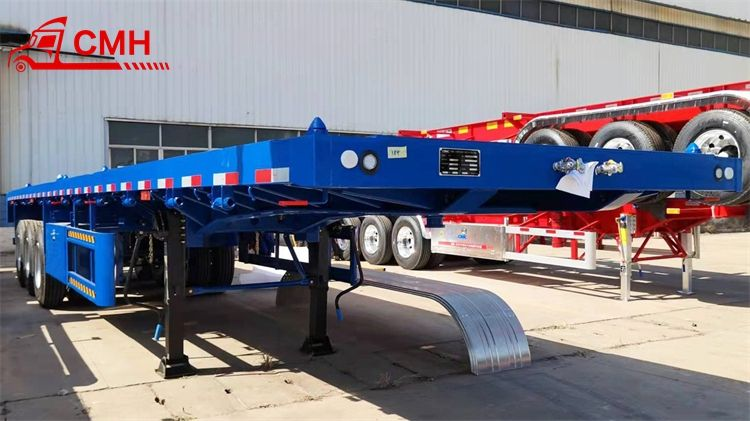
A flatbed trailer has an open deck with no sidewalls or roof. Standard flatbed dimensions run to approximately 48 to 53 feet in length, with a maximum legal freight height of around 8.5 feet above the deck. The open design allows loading from the sides, top, or rear — making it suited for cargo that cannot be driven or lifted into an enclosed box: steel coils, timber, structural steel, pipes, and large machinery components.
The flatbed is the right freight trailer when cargo dimensions or weight distribution require full crane or forklift access from multiple directions, or when the goods are oversized but within legal height limits. Loads must be secured with straps, chains, or tarps depending on cargo type and road regulations. On routes with strict weather exposure rules, a curtainsider or tautliner may be a more practical alternative.
Curtainsider (Tautliner) Trailers
A curtainsider combines the accessibility of a flatbed with side protection. The trailer has a rigid roof structure and a floor, but the sidewalls are retractable curtains secured to a rail system. Forklift access from either side is quick, and the curtains protect cargo from rain and dust without requiring rear-only loading.
For palletized goods on routes where side loading is the norm — common in European and African regional distribution — this trailer configuration reduces loading time compared to rear-access boxes. The semi trailer types in this category are particularly valued in general cargo operations where dock equipment varies by stop.
Refrigerated (Reefer) Trailers
A refrigerated semi trailer, commonly called a reefer, is an insulated enclosed body fitted with a mechanical refrigeration unit at the front. The cargo space is temperature-controlled from just below freezing to moderate chilled ranges, depending on the unit specification and the insulation rating.
Reefers are required for fresh produce, pharmaceuticals, dairy, meat, and any perishable cargo with defined temperature windows. The refrigeration unit adds weight and fuel consumption compared to a dry van. On routes that include areas with inconsistent power supply for pre-cooling at loading docks, the reefer trailer configuration needs to account for its self-contained operation capacity.
Tanker Trailers
A tanker is a semi trailer built around a cylindrical or elliptical tank, used to carry liquids, powders, or gases. Material selection — aluminum alloys for lighter liquids, stainless steel for food-grade or chemical applications, carbon steel for fuel and industrial fluids — depends on the cargo's chemical properties, temperature requirements, and any regulatory classification for hazardous materials.
The tank trailer is highly cargo-specific. Before ordering or selecting a tanker, the operational team needs to confirm the cargo's density, pH level, temperature sensitivity, and unloading method (bottom discharge, pump, or pressure vessel). A standard fuel tanker is not interchangeable with a food-grade milk tanker even if both are technically classified as the same semi trailer type on paper.
Lowboy Trailers
A lowboy trailer has an extremely low deck height, achieved by a well or drop frame design between the rear axle groups. This configuration allows cargo up to approximately 11.5 to 12 feet tall to be transported while staying under legal height restrictions typically set at 13.5 to 14 feet total (deck plus cargo).
Lowboys are the standard choice for heavy construction machinery — excavators, bulldozers, large generators, and transformers. The semi trailer itself is typically longer and wider than a standard flatbed, and may require rear steering axles for tight turns on construction site access roads. For export operations to markets in Africa and Southeast Asia, lowboy payload requirements and axle-load regulations vary significantly by country and road classification.
Step Deck (Drop Deck) Trailers
A step deck trailer has two deck levels: a shorter upper section near the front and a longer lower deck behind it. The design provides more vertical clearance than a standard flatbed for cargo that is too tall for a flat deck but does not require the full ground-level access of a lowboy.
Cargo that commonly uses step decks includes agricultural equipment, construction machinery at moderate height, and industrial rolls or prefabricated structures. The two-level design can also accommodate mixed-height loads on a single freight trailer in some configurations.
Dump Trailers
A dump trailer uses a hydraulic tipping mechanism to discharge bulk cargo at the rear or sides. Common cargo includes loose aggregates, sand, gravel, soil, agricultural bulk grains, and demolition debris. The hydraulic system requires a power take-off connection from the tractor.
Dump trailers are a practical trailer configuration for construction and agricultural logistics where bulk unloading speed is a priority. The structural design must be matched to cargo density — aggregate is significantly heavier per cubic meter than grain, and overloading a dump trailer beyond its rated GVW creates axle and frame stress risks.
Choosing the Right Trailer Configuration
Cargo type and loading conditions are the starting point. Three practical checkpoints help narrow the decision before committing to a specific trailer configuration:
- Cargo characteristics: Is the cargo enclosed or open, temperature-sensitive, liquid, bulk, or oversized? The physical state and protection requirement of the freight determines the body type.
- Loading and unloading method: Rear-access-only trailers (dry vans, reefers) require dock-height facilities at both ends of the route. Side-loading operations need curtainsiders or flatbeds. Crane access requires an open deck.
- Route and regulatory context: Axle-load limits, height restrictions, road surface conditions, and border documentation requirements vary by country. For export freight to developing markets, the trailer configuration must be practical for local road infrastructure, not just origin-country legal standards.
A lower initial price on a given semi trailer type does not resolve a fundamental mismatch between trailer design and cargo need. A more useful measure is cost per transported ton over the actual route — which factors in downtime from inappropriate loading methods, cargo damage from inadequate protection, and maintenance costs accelerated by overloading or incorrect use.
Summary
The main semi trailer types for cargo transport — dry van, flatbed, curtainsider, reefer, tanker, lowboy, step deck, and dump trailer — each serve a defined cargo category and loading context. Understanding these differences helps fleet planners and freight operators select the right trailer configuration rather than default to whatever is most available. For export markets with variable infrastructure and regulatory environments, matching the trailer type to the specific route conditions adds an operational planning dimension that general specification sheets rarely cover.