 EN

How to Maintain an Aluminum Tank Truck During Long-Term Operation?
An aluminum tank truck is one of the more demanding assets in a long-haul fleet. The material advantages are genuine — aluminum resists corrosion better than carbon steel, weighs less per equivalent volume, and can deliver a service life of 15 to 25 years or more when the maintenance program is consistent. But those gains depend entirely on how the vehicle is cared for over time. Skipping routine checks or delaying service does not save money; it accelerates the problems it was meant to prevent.
The following covers the core maintenance disciplines for aluminum tank trucks in long-term commercial operation — from daily pre-trip checks through scheduled aluminum tanker maintenance and corrosion control practices suited to tropical and high-humidity export markets.
Why the Material Changes the Maintenance Calculus
Compared with steel, aluminum behaves differently under stress, chemical exposure, and temperature variation. It does not rust in the conventional sense, but the surface corrodes when exposed to chlorides, alkaline residues, or dissimilar metals in contact, a condition called galvanic corrosion. Understanding this distinction matters before setting up any maintenance schedule, because the failure modes differ from steel and the remedies are not interchangeable.
Aluminum also develops fatigue cracks in weld seams if the tank is consistently overfilled, improperly loaded, or operated on rough roads beyond its designed payload. A crack that might be visible on a steel tank within weeks can develop slowly in an aluminum tank and only become apparent during a formal tank inspection that checks under baffles and along seam lines. If the route and payload are stable, that is still not a reason to skip inspection — it is a reason to be systematic about what you are looking for each time.
Building a Structured Maintenance Schedule
Fleet operators who manage these vehicles successfully tend to use a tiered schedule: daily pre-trip checks, monthly service events, and annual or mileage-based comprehensive inspections. Industry practice suggests internal visual inspection every five years, with a pressure test on the same cycle. At the chassis level, basic service is typically triggered every 10,000 to 15,000 miles, but monthly and quarterly checks layer on top of that mileage-based schedule.
For export market operations, a tiered aluminum tanker maintenance approach typically covers three levels:
Daily Pre-Trip Checks
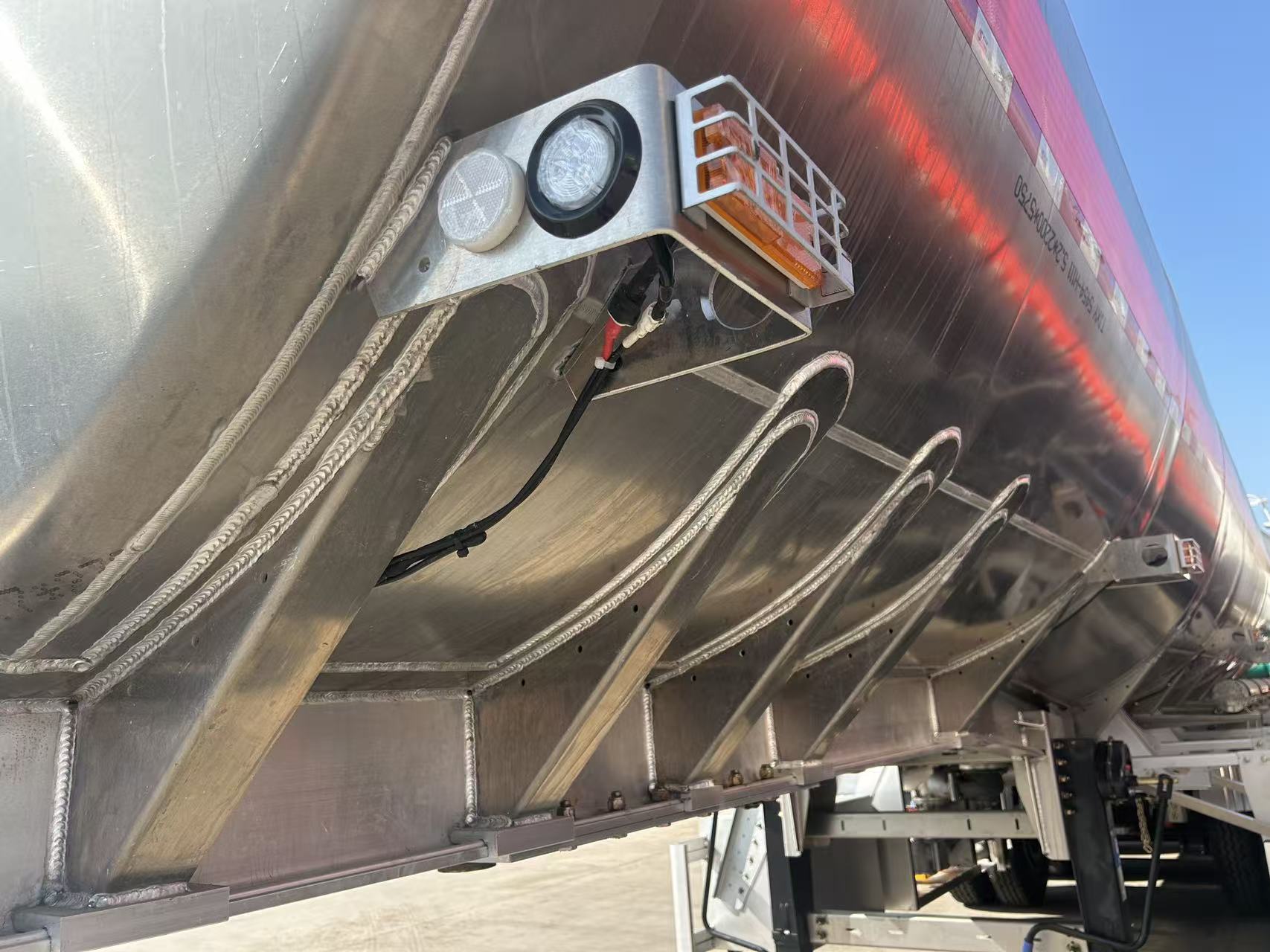
- Inspect valves, couplings, and fittings for leaks or physical damage. Even a slow drip from a valve seat indicates seal wear that will worsen under load.
- Check the tank exterior for visible dents, cracks, or surface staining that could signal a chemical reaction with the cargo.
- Verify that all manholes and venting systems open and close properly. A stuck vent can create internal pressure that stresses weld seams.
- Confirm that tank mounting brackets and chassis attachment points show no looseness or cracking at the fastener holes.
Monthly Aluminum Tanker Maintenance Events
- Clean the tank interior fully after each cargo type change. Residue left from a previous load can react chemically with the aluminum surface and accelerate degradation.
- Inspect the protective lining or coating inside the tank, if applicable. Bare spots or blistering should be addressed before the next load cycle.
- Check all discharge hose connections and cam-lock fittings for wear. These high-movement parts show fatigue before the tank body does.
- Review pump and PTO operation if the aluminum tank truck includes a transfer pump. Fuel tanker service typically involves pump-based delivery, and pump seals are a common source of gradual leaks.
Annual Tank Inspection and Regulatory Requirements
For commercial vehicles, annual tank inspection requirements vary by jurisdiction, but many export markets align with standards that mandate a documented inspection within 12 calendar months of the previous one. The annual check also covers what daily and monthly reviews cannot easily reach — it is the time to assess what daily and monthly checks cannot easily detect: weld integrity under load, internal surface condition of baffles and sumps, and the condition of manhole gaskets visible only when the tank is fully drained.
Schedule the pressure test on its five-year cycle, but do not wait for that date if the aluminum tank truck shows any signs of distortion, unusual sounds during filling, or a slow pressure drop during informal testing. Catching a developing weld issue early costs far less than a failure in service.
Corrosion Control Over the Long Term
Corrosion control is not a one-time treatment — it is an ongoing part of any aluminum tank truck service program. The aluminum surface's natural oxide layer provides baseline protection, but that layer can be compromised by mechanical abrasion, chemical exposure, or contact with dissimilar metals at bracket and fastener points.
The most common risk in export markets — particularly coastal, tropical, or high-humidity zones — is chloride-induced pitting. Road salt, sea spray near port areas, and chlorinated cleaning agents all introduce chlorides that penetrate the oxide layer. The standard response is to rinse the exterior thoroughly after any run through coastal or salt-treated roads, and to ensure that cleaning agents used inside the tank are pH-neutral or specifically rated for aluminum contact.
At fastener and bracket contact points, inspect for white or grey powdery deposits — these are early signs of galvanic corrosion where aluminum meets a less compatible metal. Using aluminum or stainless fasteners at these points, or applying an anti-galvanic compound at installation, significantly reduces the risk. Recheck these points during each annual inspection and re-treat if the compound shows displacement.
Any bare aluminum surface that has had its factory coating removed — by abrasion, a repair weld, or physical damage — should be recoated promptly. An unprotected area does not immediately cause failure, but it becomes the weakest point in the corrosion control system and deteriorates faster than the surrounding material.
Operational Practices That Extend Service Life
Maintenance happens in the workshop, but the choices made during operation determine how much aluminum tanker maintenance is actually required. A few operating habits tend to have an outsized effect on long-term condition:
- Load distribution: Consistent overloading on one side accelerates fatigue at the baffle welds. If payload volume varies, distribute it evenly and confirm with a loaded weigh-in when the configuration is new.
- Route selection: High-vibration routes — poorly surfaced roads, repeated rail crossings — create cumulative stress on weld seams and chassis mounts. Where the route is fixed, shorten inspection intervals rather than keeping to a standard calendar.
- Cargo compatibility: Not all liquids that can physically enter an aluminum tank truck are safe for aluminum over time. Certain fuel additives, cleaning chemicals, and agricultural fluids can slowly degrade the tank wall if contact time is long or concentration is high. Confirm cargo compatibility before introducing a new product type.
When to Escalate Beyond In-House Maintenance
In-house tank inspection handles most routine needs. But there are situations where a qualified third-party inspector or the original equipment workshop should be involved: any suspected internal weld failure, an aluminum tank truck that has been in a collision, any cargo spill with extended contact with the tank wall, and the five-year pressure test cycle.
The cost of a qualified inspection is small relative to the cost of an undetected failure during a delivery run. For an aluminum tank truck with a 15-to-25-year potential service life, maintaining a documented maintenance history also supports the vehicle's residual value and simplifies compliance review for the next operator.
Summary
Maintaining an aluminum tank truck through long-term operation comes down to consistency: daily checks on valves and mounting points, monthly aluminum tanker maintenance covering cleaning and coating review, annual tank inspection for structural integrity, and a five-year pressure test cycle. Add a corrosion control routine specific to the operating environment, follow cargo compatibility guidelines, and escalate to qualified inspectors for tasks beyond in-house capability. An aluminum tank truck maintained on this schedule will typically deliver the service life and reliability that justifies its specification at purchase.