
 EN

Why Does Dump Body Angle Matter During Material Unloading?
For a dump truck, unloading is not simply a matter of raising the body until the load slides out. The dump body angle affects how material starts to move, where the vehicle’s center of gravity shifts, and how much control an operator retains while the body is elevated. In fleet and jobsite operations, that makes angle a practical safety and productivity issue rather than a specification to overlook.
A hydraulic dump truck can handle aggregates, soil, demolition debris, grain, or other bulk material efficiently, but each material behaves differently. The right approach is to use the manufacturer’s operating guidance, inspect the site, and raise the body only as far as needed for the load to release. A controlled dump cycle protects people, equipment, and the schedule.
Angle Changes the Forces Acting on a Dump Truck
As the body rises, its load moves upward and rearward. That movement changes the combined center of gravity of the truck and its payload. On level, firm ground, the chassis and suspension have a better chance of staying within a stable operating envelope. On a side slope, soft shoulder, uneven stockpile, or rutted surface, the same dump body angle can create a much different result.
The concern is not just whether the truck looks level before unloading. A raised body magnifies small site irregularities. Guidance from safety organizations consistently notes that a dump truck becomes less stable with the bed raised, especially when the ground is not flat. Operators should therefore treat site preparation as part of the unloading system: choose a level area, avoid voids and overhead hazards, keep people clear, and confirm that the tailgate and load area are ready.
Body angle also transfers load through the hoist, hinges, subframe, tires, and suspension. Sudden movement of bulk material can introduce a side load or a sharp shift in weight. Smooth hydraulic control and a pause to observe the load are usually more useful than trying to finish the cycle quickly.
Material Flow Determines How Much Lift Is Needed
There is no universal angle that guarantees clean discharge. Dry, free-flowing aggregate may begin moving at a lower angle than moist clay, sticky spoil, compacted debris, or material that has frozen to the body. The material’s angle of repose, moisture condition, particle shape, and how it was loaded all influence the release point.
That is why operators should not assume that more lift is the answer in every situation. If the load hangs in the front of the body, a higher angle may be required, but it also increases the stability demand on the dump truck. Before raising further, check whether the truck is square to the unloading area, whether material is bridged or packed, and whether a safe, approved procedure exists for the condition. Do not place a person under a raised body or attempt an improvised intervention near a suspended load.
Load Distribution Matters Before the First Lift
A balanced load supports predictable unloading. Material piled heavily to one side can remain there as the body rises, creating an off-center force. Uneven distribution is a recognized tip-over risk because it can reduce stability even before the full load releases. During loading, aim for an even spread within the body and avoid oversized pieces that can lodge against the front wall or tailgate.
The body liner, tailgate design, and material condition can affect flow as well. These factors should be discussed during equipment selection and maintenance, but they do not replace a pre-dump inspection. The driver remains responsible for deciding whether the unloading area and the load condition are suitable for the next step.
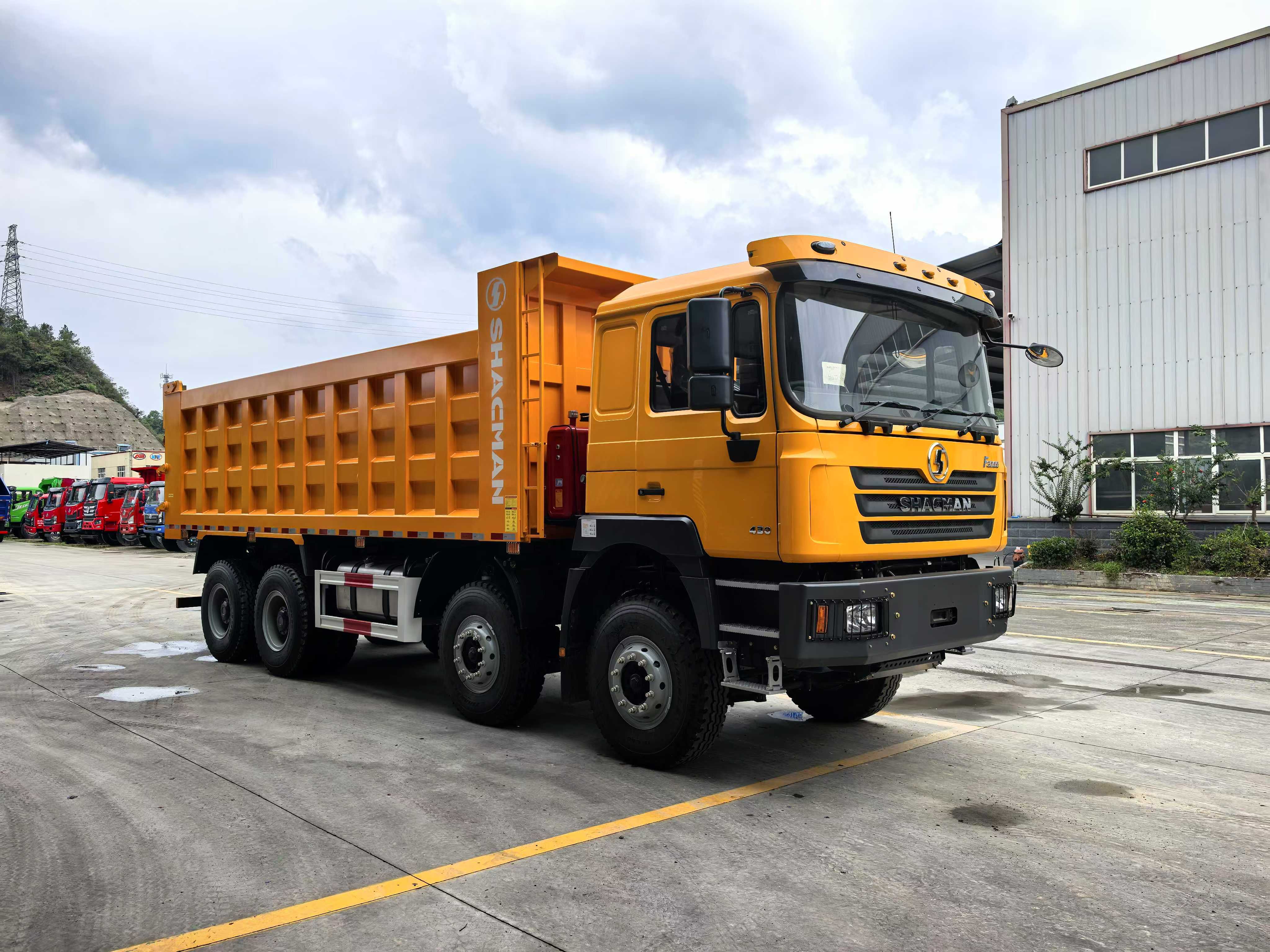
A controlled body angle and level ground help support a safer unloading cycle.
How the Hydraulic Unloading System Affects Control
A well-maintained unloading system gives the operator gradual, observable movement. On a hydraulic dump truck, that means inspecting the hydraulic fluid condition, hoses, fittings, cylinders, pivots, body prop arrangement, and controls according to the equipment manual and the company maintenance plan. Leaks, unusual cylinder motion, delayed response, or a body that does not raise evenly are signals to stop and investigate.
Control is especially important when the load begins to break free. A slow initial lift gives the operator time to watch the body, rear wheels, surrounding ground, and material discharge path. Once the material is moving, keep the truck stationary and avoid abrupt braking, steering, or throttle inputs. After unloading, lower the body fully before moving the dump truck. Traveling with the body elevated can create visibility, clearance, and stability hazards.
A Practical Unloading Sequence
- Assess the discharge zone. Use firm, level ground where possible. Look for side slopes, soft edges, overhead wires, people, and equipment in the exclusion area.
- Check the load. Consider moisture, compaction, load distribution, and any signs that bulk material may stick or bridge.
- Position straight. Keep the dump truck aligned with the intended discharge path; avoid dumping while turned or partly on a shoulder.
- Raise gradually. Use the unloading system smoothly and stop if the body, chassis, or material behaves unexpectedly.
- Let the load clear safely. Do not use sudden vehicle movement to shake material free unless an approved procedure specifically permits it.
- Lower and verify. Bring the body down completely, confirm the tailgate is secure, and inspect the area before leaving.
Choosing Equipment Around the Real Job
When specifying a dump truck for road work, municipal construction, quarry support, or agricultural freight, ask more than how many tonnes the body can carry. Consider the materials being hauled, typical unloading surfaces, body geometry, hydraulic layout, and the training available to operators. A configuration that fits dry aggregate on maintained sites may need different operating controls for sticky soil or variable ground conditions.
For logistics and construction teams, the useful question is not “What is the maximum dump body angle?” It is “At what point does this load release safely under today’s site conditions?” That question encourages operators to observe the truck, the material, and the work area instead of relying on a single number.
Frequently Asked Questions
Can a higher dump body angle make unloading safer?
Not automatically. More angle can help some material release, but it also raises the center of gravity and can reduce stability. Use only the angle needed, on suitable ground, and follow the truck manufacturer’s operating instructions.
Why does a dump truck tip risk increase during unloading?
As the body rises, the load and body weight shift upward and rearward. Uneven ground, an off-center load, stuck material, or abrupt movement can turn that shift into a side-load problem.
What should an operator do if bulk material will not slide out?
Stop the cycle and assess the condition using approved site and manufacturer procedures. Keep people clear of the raised body and do not improvise near suspended equipment.
In short, dump body angle matters because it links material flow to vehicle stability. A disciplined unloading routine, a maintained hydraulic dump truck, and level working conditions give operators better control over both.