
 EN

Water Truck Tank Shape Can Affect Stability and Liquid Distribution
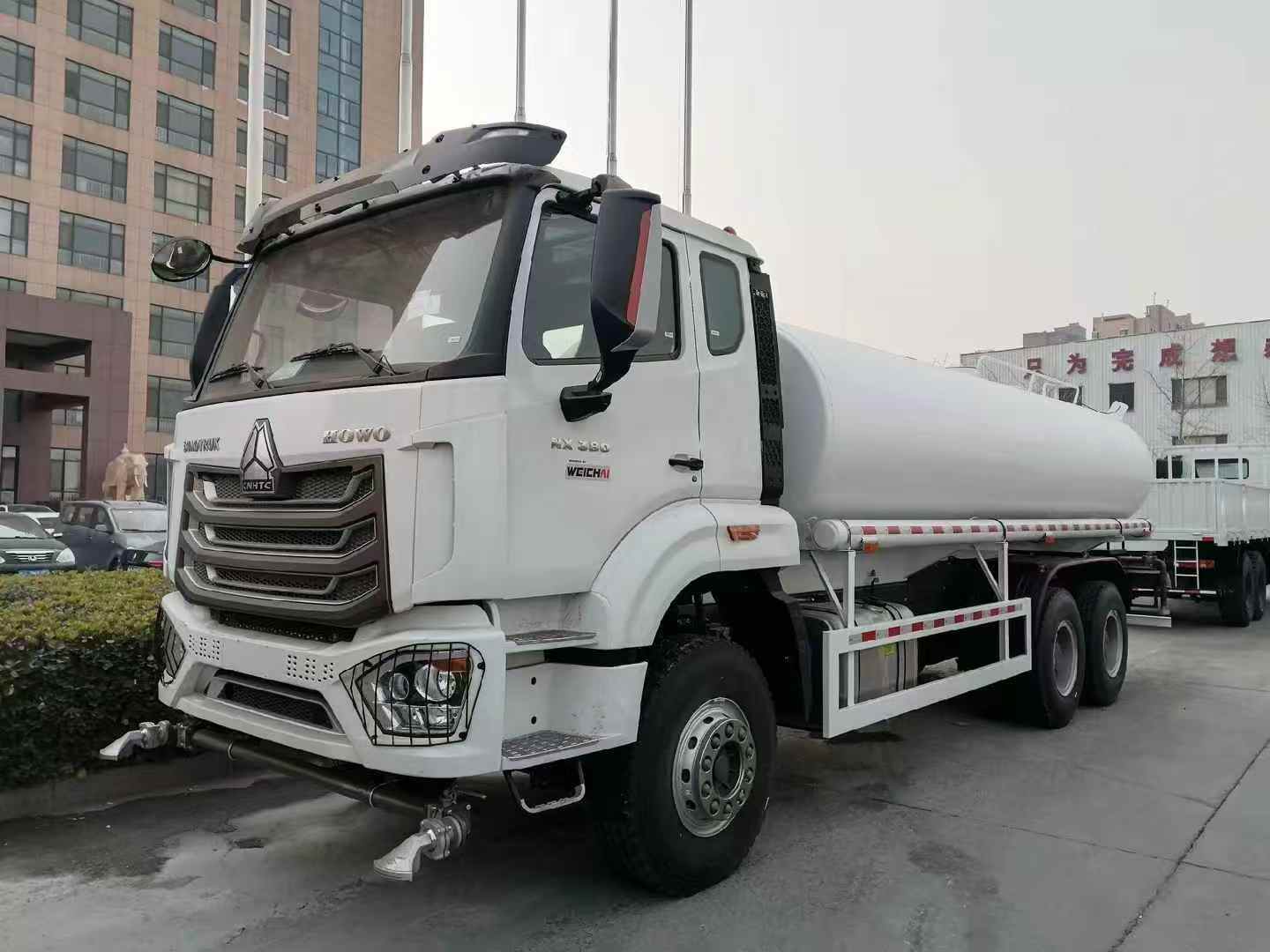
A water truck is often specified by capacity first, but capacity alone does not tell an operator how the vehicle will feel when it turns, brakes, climbs a rough access road, or runs partly full. Tank cross-section, length, mounting height, compartment layout, and internal control features all influence how water moves and where its weight acts on the chassis. For fleet managers and contractors, a sound water tank design is therefore an operating decision as much as a volume decision.
This overview explains the practical relationship between tank geometry, load movement, and tanker stability. It is not a substitute for the vehicle manufacturer’s instructions, local transport rules, or operator training; the finished water truck should be evaluated as a complete chassis-and-tank system.
Why tank shape matters on a water truck
Water is heavy and mobile. In a full tank, the load is comparatively predictable because the free surface is limited. In a partially filled truck tank, the free surface becomes larger and the water can move after steering, braking, or acceleration. That movement changes the instantaneous load on the axles and suspension. The driver may feel it as a delayed push, a change in steering response, or a stronger tendency to lean during a turn.
Tank shape affects two related issues: the height of the liquid’s center of gravity and the amount of free surface available for the water to travel across. A taller tank can place more of the load higher above the frame. A wider or longer unsegmented volume can allow more liquid distribution to shift from side to side or front to back. Neither observation means one shape is automatically right or wrong; the geometry must suit the chassis, legal gross weight, intended fill levels, and operating terrain.
Cross-section: round, elliptical, and rectangular considerations
Round and elliptical tanks are common because curved shells can be structurally efficient and can shed stress smoothly around the shell. An elliptical profile may help keep the load lower than a tall circular profile of similar volume, depending on how the tank is mounted. That can be useful where a water truck repeatedly travels on uneven work sites or makes frequent turns at moderate speed.
Rectangular or box-style tanks can package volume efficiently within a defined body envelope. However, their corners and broad flat panels require careful engineering, and their internal water movement must be controlled thoughtfully. A rectangular form that is tall relative to its width may raise the overall center of gravity. The appropriate choice is not simply “round versus square”; it is the combined effect of shell dimensions, mount position, baffles, compartments, and the truck’s axle and suspension ratings.
Length and compartments change how water moves
A long tank can spread capacity along the chassis, but it also creates a longer path for front-to-back movement. When the truck brakes, water can surge toward the front. When it accelerates, the load can move rearward. Industry explanations of baffled cargo tanks describe perforated bulkheads as a way to limit this forward-and-back surge while allowing water to pass through the tank in a controlled manner.
Compartmenting divides the volume into smaller sections. This can improve control of liquid distribution and may give operators more flexibility when a job does not need a full load. The trade-off is that compartment arrangements add fabrication detail, inspection points, and cleaning considerations. Ask the tank supplier how the layout behaves at the fill levels most common for dust suppression, road works, municipal use, or agricultural service.
Baffles are part of tanker stability, not an afterthought
Baffles and other internal anti-surge devices are designed to interrupt bulk water movement. Their value is especially apparent when the tank is not full, because the moving surface has room to build momentum. Some systems use perforated plates; other designs use alternative internal media. The correct design depends on the tank’s dimensions, intended fluid, maintenance plan, and the applicable rules for the vehicle’s use.
Do not treat baffles as permission to ignore loading and driving discipline. Even a well-designed water truck can become difficult to manage if it is overloaded, loaded unevenly, driven too fast for site conditions, or operated with neglected tires, suspension, brakes, and mounts. The practical goal is to reduce avoidable surge while keeping the truck predictable.
A practical water tank design checklist
- Start with the duty cycle. Record typical route surfaces, grades, turning frequency, travel speed, and the fill levels used between water points and the job site.
- Check the mounted height. Compare the proposed tank’s center-of-gravity information with the chassis maker’s body-builder guidance and axle-load limits.
- Review the internal layout. Ask where baffles or compartments are located and how they control longitudinal and lateral movement in the actual tank geometry.
- Consider usable capacity. The largest nominal volume may not be the most suitable operational choice if it creates unfavorable axle loading or limits safe travel on rough ground.
- Plan inspection and cleaning. Access points, drainage, corrosion protection, and baffle inspection matter over the service life of the truck tank.
- Validate the complete vehicle. Confirm body mounting, suspension condition, tire ratings, braking performance, and local compliance before placing the water truck into service.
Match tank geometry to the job instead of buying by liters alone
For a water truck that spends most of its day on level paved roads, the appropriate balance may differ from a unit used on quarry tracks, construction sites, or rural routes. Site work often brings cambers, potholes, slopes, and stop-start movement—conditions that make load transfer more noticeable. A lower, well-supported tank and a suitable internal layout can help the driver manage those conditions, while a capacity-focused specification with limited surge control may produce a less comfortable operating margin.
When reviewing quotations, request drawings that show outside dimensions, mounting height, access points, compartment or baffle arrangement, and the intended operating fill range. Discuss those details with the chassis supplier and the body builder rather than evaluating the tank in isolation. For export projects, confirm that the final water truck configuration also fits the destination’s road, loading, and registration requirements.
Key takeaway
Tank shape influences more than appearance. It affects the height and movement of the water load, which in turn affects steering feel, braking response, axle loading, and overall tanker stability. A thoughtful water tank design combines suitable geometry with internal surge control, sound mounting, appropriate capacity, and trained operation. Specify the complete system around the work your water truck must perform, then verify the final design with qualified vehicle and tank professionals.