 EN

Proper Welding and Inspection Are Important for Aluminum Tank Truck Manufacturing.
An aluminum tank truck is not defined by the tank material alone. Its dependable service depends on how the tank is fabricated, how each joint is controlled, and how the finished assembly is inspected before release. From a commercial-vehicle selection advisor perspective, the practical question is whether the manufacturing record, inspection access, and intended duty cycle align—not simply whether the tank is described as aluminum.
This matters because tank fabrication joins thin and thick sections, fittings, baffles, manways, and structural interfaces into one enclosed system. A sound process helps a buyer evaluate an aluminum tank truck with more confidence while giving the fabricator clear checkpoints for preventing rework.
Why aluminum tank welding deserves its own process controls
Aluminum tank welding requires disciplined preparation. Aluminum surfaces can carry oxide, moisture, oil, or shop contamination, and those conditions can affect weld consistency. Industry welding guidance commonly identifies contamination and unsuitable parameters as contributors to porosity. That does not mean every aluminum weld has the same risk; it means the welding procedure, filler selection, cleaning method, shielding arrangement, and joint fit-up should be controlled for the actual material and tank design.
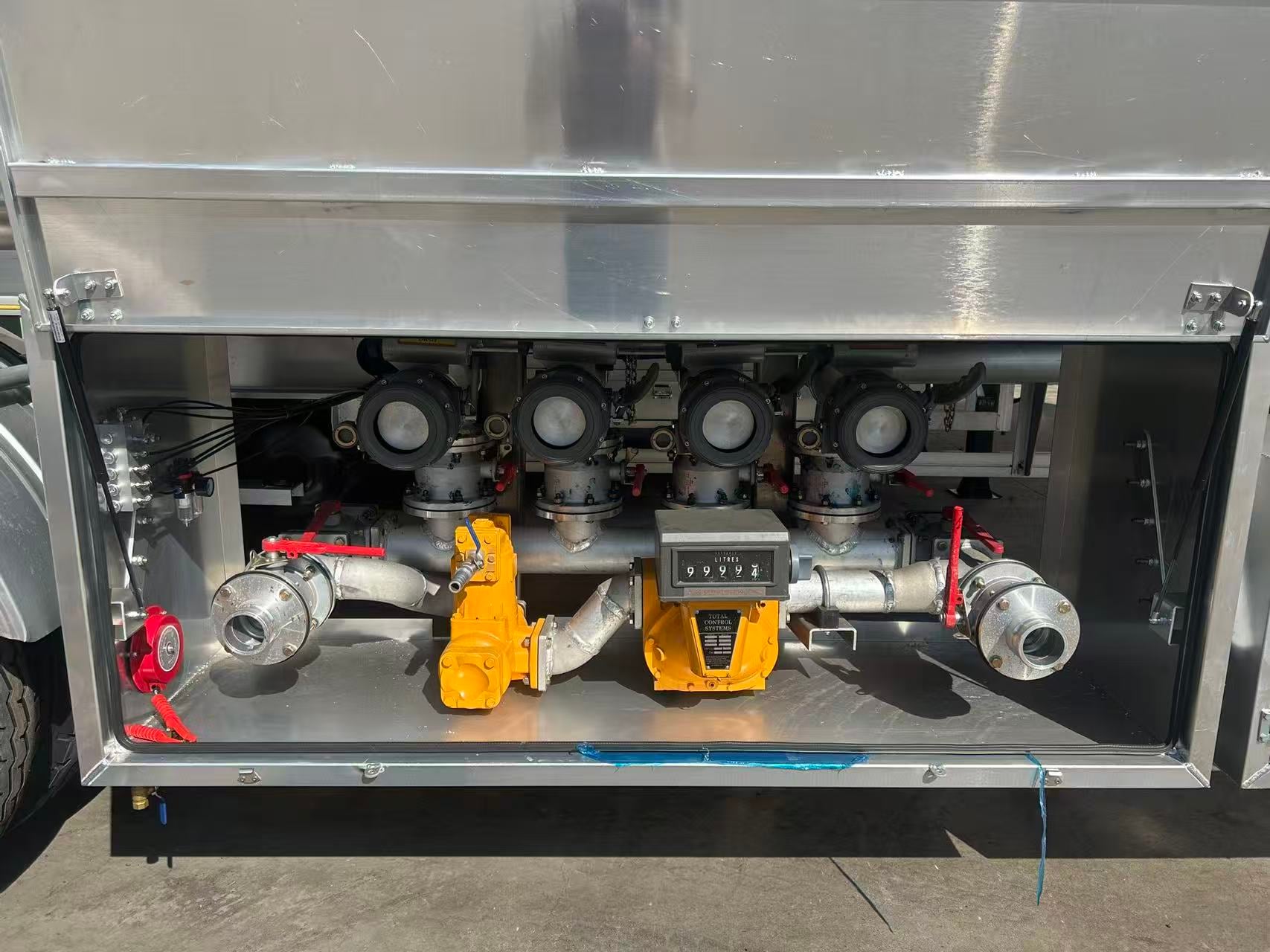
A useful checkpoint is inspection access; before deciding, relate it to the loading and unloading routine. For an aluminum tank truck that will see frequent cycles, the manufacturing team should make it practical to inspect critical areas rather than treat inspection as a paperwork event at the end of production.
Start with material and joint traceability
Before welding begins, the shop should be able to identify the material pieces and the approved work sequence for the tank. Fit-up matters at shells, heads, baffles, brackets, piping connections, and openings because gaps or distortion can complicate heat control. Clear work instructions help the team keep the joint geometry consistent and make later weld inspection more meaningful.
Traceability is also useful for the buyer. It creates a path from the completed tank back to the relevant material, welding procedure, and inspection record. The exact documentation package should be confirmed for the project, cargo, and jurisdiction; it should not be assumed from a general product description.
Build quality into tanker manufacturing, not after it
Reliable tanker manufacturing is a sequence of controlled decisions. The first decision is fit for service: carried medium, expected payload, route conditions, loading frequency, and cleaning routine all influence the tank configuration. The next decision is production control: fixtures, joint preparation, welding sequence, and distortion management need to suit that configuration.
For example, welding sequence can affect how heat accumulates across a large shell or around a concentrated fitting area. The specification side is important; the next question is how the tank behaves in the daily routine. If an assembly cannot be reached for a visual check or a repair assessment, a theoretically acceptable layout may create an avoidable maintenance burden.
- Fit-up control: confirm alignment and joint condition before welding rather than trying to correct a poor fit with added weld metal.
- Cleanliness control: keep preparation tools and materials appropriate for aluminum work to reduce contamination transfer.
- Process consistency: use approved procedures and qualified personnel as required by the project and applicable rules.
- Heat and distortion awareness: sequence work so dimensional checks remain practical at critical interfaces.
What a practical weld inspection plan looks like
Weld inspection should be planned alongside fabrication. Visual examination is a foundational method for identifying accessible surface discontinuities and checking weld profile, but it is only one part of a release decision. Depending on the design, contract requirements, and applicable regulations, the plan may also include dimensional checks, leak testing, and selected non-destructive examination. The appropriate method and acceptance criteria must be defined for the specific tank—not copied from an unrelated vehicle or pressure-vessel application.
Use staged checks instead of a single final review
- Pre-weld review: check material identification, preparation, joint fit-up, consumable condition, and procedure availability.
- In-process review: monitor sequence, cleanliness, and any visible signs that call for correction before subsequent work hides the area.
- Final visual and dimensional review: examine accessible welds, attachments, openings, and tank geometry against the approved drawings and criteria.
- Integrity verification: perform the specified leak or other integrity test using the approved method and safe controls.
- Record completion: connect results, repairs if any, and final disposition to the tank identification record.
This staged approach is especially valuable for aluminum tank welding because a late discovery can require access that is no longer straightforward. It is not simply a material issue; more precisely, exposure, fabrication sequence, and inspection practice all affect the result.
Questions buyers should ask before accepting an aluminum tank truck
A buyer does not need to prescribe the shop process, but the right questions clarify whether the aluminum tank truck has been manufactured with a coherent quality plan. Ask how critical weld areas are identified, what inspections are planned at fit-up and completion, how repairs are documented, and how the final integrity check is recorded. Also ask which requirements are project-specific, since cargo compatibility and local rules can change the needed evidence.
| Review area | Why it matters | Useful question |
|---|---|---|
| Joint preparation | Helps reduce preventable welding variability. | What pre-weld fit-up and cleanliness checks are documented? |
| Inspection sequence | Finds issues while access is still available. | Which checks occur before closures or attachments limit access? |
| Integrity testing | Supports a controlled release decision. | Which test method and acceptance record apply to this tank? |
| Repair traceability | Shows how nonconforming work was resolved. | How are repairs and re-inspections tied to the tank record? |
Turn weld inspection into a long-term operating advantage
The value of weld inspection is not limited to catching visible defects. A clear fabrication and inspection trail helps maintenance teams understand the tank, supports communication when operating conditions change, and gives procurement teams a more consistent basis for comparison. For fleets and logistics companies, that can be more useful than relying on broad claims about aluminum alone.
When evaluating an aluminum tank truck, treat tank fabrication as a controlled system: material preparation, joint design, welding execution, staged inspection, integrity verification, and records should reinforce one another. If the route and payload are stable, this may be a practical starting point for supplier discussions. Where cargo, pressure conditions, or regulatory requirements are specialized, confirm the final configuration and compliance evidence with qualified engineering and the applicable authority.