
 EN
EN

How to Reduce Tire Wear During Heavy-Duty Dump Truck Operations?
For a heavy-duty dump truck, tires are not a consumable detail to notice only at replacement time. They influence traction, ride, steering response, downtime, and the predictability of a working shift. In a fleet operation, a tire that wears early can also be evidence of a wider issue: loading practice, inflation control, alignment, suspension condition, route surface, or driver technique. The practical objective is not to make a tire last for an assumed number of kilometers. It is to make each dump truck tire wear evenly for the duty cycle it is actually asked to perform.
From a maintenance-coordinator viewpoint, the first useful question is simple: where is the wear showing, and what changed in the job before it appeared? Recording that answer turns tire maintenance from a reactive expense into a repeatable inspection routine.
Start With the Duty Cycle, Not the Tire Alone
Heavy-duty hauling creates conditions that a general-road fleet may not see every day: abrasive quarry approaches, short loaded cycles, repeated turning in loose material, steep grades, uneven loading, and heat built up during slow work. A heavy haul truck used on a mixed route may need a different tire-management plan from a dump truck that spends most of its time inside a construction site.
Before changing pressures, rotating positions, or ordering replacements, document four operating facts for each vehicle: the typical payload, the loading distribution, the dominant surface, and the distance or hours per shift. Include whether the truck is frequently maneuvering while fully loaded and whether the work changes between dry, wet, paved, and unpaved surfaces. This baseline makes later tire observations more useful.
- Payload: confirm that actual loads stay within the vehicle, axle, tire, and local legal limits.
- Distribution: check whether material is centered and whether one axle group consistently carries more load.
- Surface: note sharp aggregate, ruts, standing water, compacted soil, and pavement transitions.
- Cycle: capture loaded speed, cornering frequency, grade, idle time, and haul distance.
A useful checkpoint is payload distribution; before deciding that a tire is the problem, relate it to the actual loading and unloading routine. A load that is acceptable in total weight can still create uneven stress when distribution, axle loading, or site geometry is not controlled.
Build a Daily Tire Maintenance Routine
Consistent tire maintenance starts before the truck leaves the yard. The inspection does not need to be complicated, but it must be systematic enough that two people will reach similar conclusions. Ask drivers to inspect all visible tires during the pre-trip walk-around, then train supervisors to review exceptions rather than relying on a vague report of “low tire” or “bad tread.”
- Check cold inflation pressure. Use the tire and vehicle manufacturer’s approved pressure guidance for the installed tire, axle load, and operating conditions. Record readings with a calibrated gauge before long operation, not after heat has changed the reading.
- Look across the full tread face. Compare inner shoulder, center, and outer shoulder rather than checking one convenient spot. Uneven wear patterns are more actionable than a single overall tread estimate.
- Inspect dual assemblies as a pair. Check for visible diameter differences, pressure mismatch, stones between tires, rubbing, and sidewall damage. A mismatch can make the pair work unevenly.
- Check rims, valves, and wheel ends. Air loss, loose hardware, or heat signs deserve escalation before the vehicle returns to severe work.
- Log cuts, punctures, bulges, exposed material, and recurring location-specific damage. A photograph and tire position are more useful than a general note entered at the end of the week.
Commercial-tire wear guidance commonly treats irregular patterns as diagnostic clues. Center wear may be associated with excess inflation, while shoulder wear may be associated with insufficient inflation; however, neither pattern proves a cause by itself. Alignment, suspension components, dual matching, and operating conditions still need review. Treat a wear pattern as an inspection trigger, not a remote diagnosis.
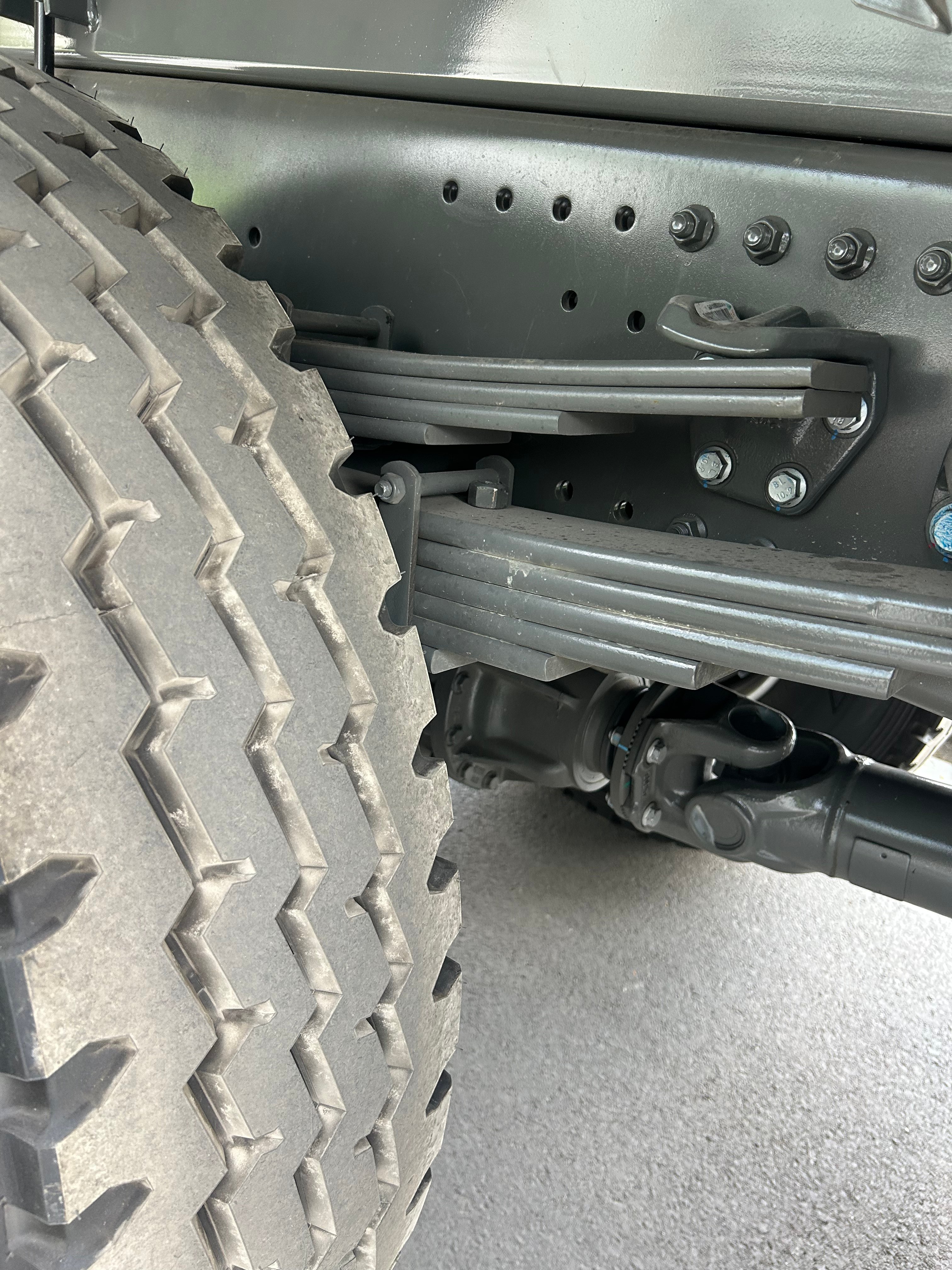
Control Pressure, Load, and Heat Together
Pressure management is one of the clearest levers for reducing dump truck tire wear, but it only works when load information is credible. Underinflation can increase flexing and heat, while overinflation can reduce the tread contact pattern and make the tire more vulnerable to impacts on rough surfaces. The right setpoint depends on the tire maker’s load-and-inflation table, installed size, axle configuration, and the truck’s actual scale weights.
Do not set a fleet-wide pressure by habit. Instead, establish approved cold-pressure targets by axle position and review them whenever tire specification, payload range, route, or season changes. If the fleet has access to tire-pressure monitoring, use the alerts to prioritize inspection; the system does not replace a visual check for cuts, debris, and abnormal wear.
Heat is the other half of the issue. On a hot day or a long loaded climb, a tire can experience a very different condition from the one recorded in the yard. Drivers should report vibration, pulling, handling changes, or a tire that repeatedly needs air. Stopping safely to inspect a suspected issue is usually less disruptive than a roadside failure or collateral wheel-end damage.
Use Wear Patterns to Decide What to Inspect Next
| Observed condition | Possible inspection direction | Fleet action |
|---|---|---|
| More wear in the center | Review approved cold pressure, tread design, and load records. | Verify gauge accuracy and compare with manufacturer guidance. |
| More wear on both shoulders | Review pressure, overload exposure, and tire condition. | Inspect soon; do not assume pressure is the only cause. |
| One-sided shoulder wear | Check alignment, axle position, steering parts, and suspension condition. | Schedule alignment and mechanical inspection before fitting new tires. |
| Cupping or scalloped wear | Check shock absorbers, suspension, balance where applicable, and wheel-end condition. | Document tire position and inspect related components. |
| Fast cuts or chunking | Review site surface, debris control, tire selection, and loaded maneuvering. | Discuss route/site changes and verify application suitability. |
Road conditions alter configuration priorities. If several trucks show similar damage after the same site assignment, look beyond individual driving habits. Review the loading area, haul-road maintenance, turning radius, sharp material, and drainage. Repeating the same route with replacement tires but no site correction can repeat the same outcome.
Protect Alignment and Suspension Condition
Alignment is often treated as a workshop event rather than a tire-life control. On a dump truck, impacts, rutted ground, curb contact, and repeated loaded turns can change the forces acting on steering and suspension components. A truck that pulls, needs frequent steering correction, or shows directional shoulder wear should be inspected before the pattern consumes a new tire.
Include steering linkage, bushings, shocks, axle alignment, wheel bearings, and suspension condition in the investigation. The right order is to identify and correct the mechanical cause, confirm alignment, and then decide whether a tire can remain in service, be repositioned under an approved fleet policy, or should be removed. Installing new tires before correcting the root cause only hides the issue for a short time.
Improve Driver Habits at the Work Site
Drivers cannot eliminate every source of wear, but they can reduce avoidable scrub and impact. Briefing should focus on actions that fit the task: reduce speed over sharp or broken surfaces, avoid aggressive loaded turns, do not climb debris piles when a safer route is available, approach loading areas consistently, and report a change in steering feel immediately. This is particularly important where a fleet operation rotates drivers among vehicles and sites.
Keep the message practical. “Drive carefully” is hard to audit. “Report pulls, vibration, air-loss checks, or a fresh sidewall cut before the next loaded run” gives drivers an observable action. If a route requires tight turns or repeated reverse maneuvers, supervisors should treat that as an operating condition to manage, not a driver failure to ignore.
Measure Results and Escalate Early
Use a tire-position map for every vehicle and record pressure readings, tread measurements, repairs, removals, alignment work, and the work site. Review the data at a regular interval. The useful question is not only which tire was replaced, but whether the same axle, position, truck, route, or load pattern keeps appearing.
Turn recurring questions into verified fleet guidance. When the same wear pattern appears, separate observed symptoms from presumed causes, inspect the truck and work environment, and update the checklist only after the finding is confirmed. That approach helps a dump truck fleet reduce avoidable tire loss without making unsupported promises about tire life.
Practical Next Step
Begin with one week of disciplined records: cold pressure by position, payload or load type, site assignment, visible wear pattern, and driver observations. Then review the outliers with maintenance and operations together. If pressure, loading, alignment, route condition, and inspection follow-up are managed as one system, dump truck tire wear becomes easier to detect earlier and address with a defensible maintenance decision.