 EN

How to Reduce Tire Wear During Heavy-Duty Dump Truck Operations?
Per un veicolo pesante plaustrum Dump , i pneumatici non sono un semplice componente consumabile da controllare solo al momento della sostituzione. Essi influenzano l’aderenza, il comfort di guida, la reattività dello sterzo, i tempi di fermo e la prevedibilità di un turno lavorativo. Nella gestione di una flotta, un pneumatico che si usura precocemente può anche rivelare un problema più ampio: modalità di carico, controllo della pressione, allineamento, stato del sistema di sospensione, condizione del fondo stradale o stile di guida. L’obiettivo pratico non è far durare un pneumatico per un numero presunto di chilometri. È invece far sì che ogni plaustrum Dump pneumatico si usuri in modo uniforme nel ciclo di lavoro effettivamente richiesto.
Dal punto di vista di un coordinatore della manutenzione, la prima domanda utile è semplice: dove appare l’usura e cosa è cambiato nel lavoro prima che essa si manifestasse? Registrare tale risposta trasforma la manutenzione dei pneumatici da una spesa reattiva in una procedura ispettiva ripetibile.
Iniziare dal ciclo di lavoro, non dal pneumatico da solo
Transportatio gravis generat conditiones quas grex viae communis fortasse non videt cotidie: accessus abrasivos in quarries, cycli breves onerati, conversiones repetitas in materia laxa, gradus praealti, oneratio inaequalis, et calor qui accumulatur dum vehiculum lente operatur. A camionis pro transporto gravissimo qui utitur in itinere mixto alium planum gerendi tyros necessitat quam plaustrum Dump qui tempus maximum in aedibus constructionis agit.
Antequam pressiones mutas, positiones rotas, aut substitutiones ordinare incipias, quattuor facta operativa pro singulis vehiculis annota: pondus typicum oneris, distributionem oneris, superficiem praecipuam, et distantiam vel horas per vicem. Includere debes an camio saepe manet in loco plene oneratus et an opus inter superficies siccus, humidus, laevigatus, et asperas variat. Haec basis observationes ulteriores de tyris utiliores reddit.
- Pondus oneris: confirma ut onera realia intra limites vehiculi, axis, tyrorum, et legum localium permaneant.
- Distributio: examina utrum materia in centro sit et utrum unus axis semper plus oneris portet.
- Superficies: note sharp aggregate, ruts, standing water, compacted soil, and pavement transitions.
- Cyclum: capture loaded speed, cornering frequency, grade, idle time, and haul distance.
A useful checkpoint is payload distribution; before deciding that a tire is the problem, relate it to the actual loading and unloading routine. A load that is acceptable in total weight can still create uneven stress when distribution, axle loading, or site geometry is not controlled.
Build a Daily Tire Maintenance Routine
Constantem tire maintenance starts before the truck leaves the yard. The inspection does not need to be complicated, but it must be systematic enough that two people will reach similar conclusions. Ask drivers to inspect all visible tires during the pre-trip walk-around, then train supervisors to review exceptions rather than relying on a vague report of “low tire” or “bad tread.”
- Check cold inflation pressure. Use the tire and vehicle manufacturer’s approved pressure guidance for the installed tire, axle load, and operating conditions. Record readings with a calibrated gauge before long operation, not after heat has changed the reading.
- Look across the full tread face. Compare inner shoulder, center, and outer shoulder rather than checking one convenient spot. Uneven wear patterns are more actionable than a single overall tread estimate.
- Inspect dual assemblies as a pair. Check for visible diameter differences, pressure mismatch, stones between tires, rubbing, and sidewall damage. A mismatch can make the pair work unevenly.
- Check rims, valves, and wheel ends. Air loss, loose hardware, or heat signs deserve escalation before the vehicle returns to severe work.
- Log cuts, punctures, bulges, exposed material, and recurring location-specific damage. A photograph and tire position are more useful than a general note entered at the end of the week.
Commercial-tire wear guidance commonly treats irregular patterns as diagnostic clues. Center wear may be associated with excess inflation, while shoulder wear may be associated with insufficient inflation; however, neither pattern proves a cause by itself. Alignment, suspension components, dual matching, and operating conditions still need review. Treat a wear pattern as an inspection trigger, not a remote diagnosis.
Control Pressure, Load, and Heat Together
Pressure management is one of the clearest levers for reducing dump truck tire wear , but it only works when load information is credible. Underinflation can increase flexing and heat, while overinflation can reduce the tread contact pattern and make the tire more vulnerable to impacts on rough surfaces. The right setpoint depends on the tire maker’s load-and-inflation table, installed size, axle configuration, and the truck’s actual scale weights.
Ne imposez pas par habitude une pression uniforme à toute la flotte. Établissez plutôt des cibles approuvées de pression à froid selon la position de l’essieu, et révisez-les chaque fois que la spécification des pneus, la plage de charge utile, l’itinéraire ou la saison changent. Si la flotte dispose d’un système de surveillance de la pression des pneus, utilisez ses alertes pour hiérarchiser les inspections ; ce système ne remplace pas un contrôle visuel des coupures, des débris et de l’usure anormale.
La chaleur constitue l’autre moitié du problème. Par temps chaud ou lors d’une longue montée en charge, un pneu peut subir des conditions très différentes de celles enregistrées dans l’aire de stationnement. Les conducteurs doivent signaler tout phénomène de vibration, de tirage, de modification du comportement routier ou de pneu nécessitant régulièrement de l’air. S’arrêter en lieu sûr pour inspecter un problème suspect est généralement moins perturbant qu’une panne sur la voie publique ou des dommages collatéraux au niveau de l’essieu.
Utilisez les motifs d’usure pour décider de la prochaine pièce à inspecter
| État observé | Orientation possible de l’inspection | Mesure à prendre par la flotte |
|---|---|---|
| Usure plus marquée au centre | Revoir la pression à froid approuvée, la conception de la bande de roulement et les registres de charge. | Verificare accuratiam indicis et comparare cum directionibus fabricantis. |
| Plus abrasio in utrisque humeris. | Recensere pressionem, expositionem ad onus nimium, et statum pneumatorum. | Inspicere cito; non supponere pressionem esse unicum causam. |
| Abrasio unilateralis humeri. | Examinare alignmentum, positionem axis, partes gubernationis, et statum suspensionis. | Programmare alignmentum et inspectionem mechanicam antequam nova pneumata applicentur. |
| Abrasio cupiformis vel scallopata. | Examinare amortissatores, suspensionem, aequilibrium ubi applicabile est, et statum partium rotarum. | Documentare positionem pneumatorum et inspicere componentes coniunctas. |
| Rapid cuts or chunking | Review site surface, debris control, tire selection, and loaded maneuvering. | Discuss route/site changes and verify application suitability. |
Road conditions alter configuration priorities. If several trucks show similar damage after the same site assignment, look beyond individual driving habits. Review the loading area, haul-road maintenance, turning radius, sharp material, and drainage. Repeating the same route with replacement tires but no site correction can repeat the same outcome.
Protect Alignment and Suspension Condition
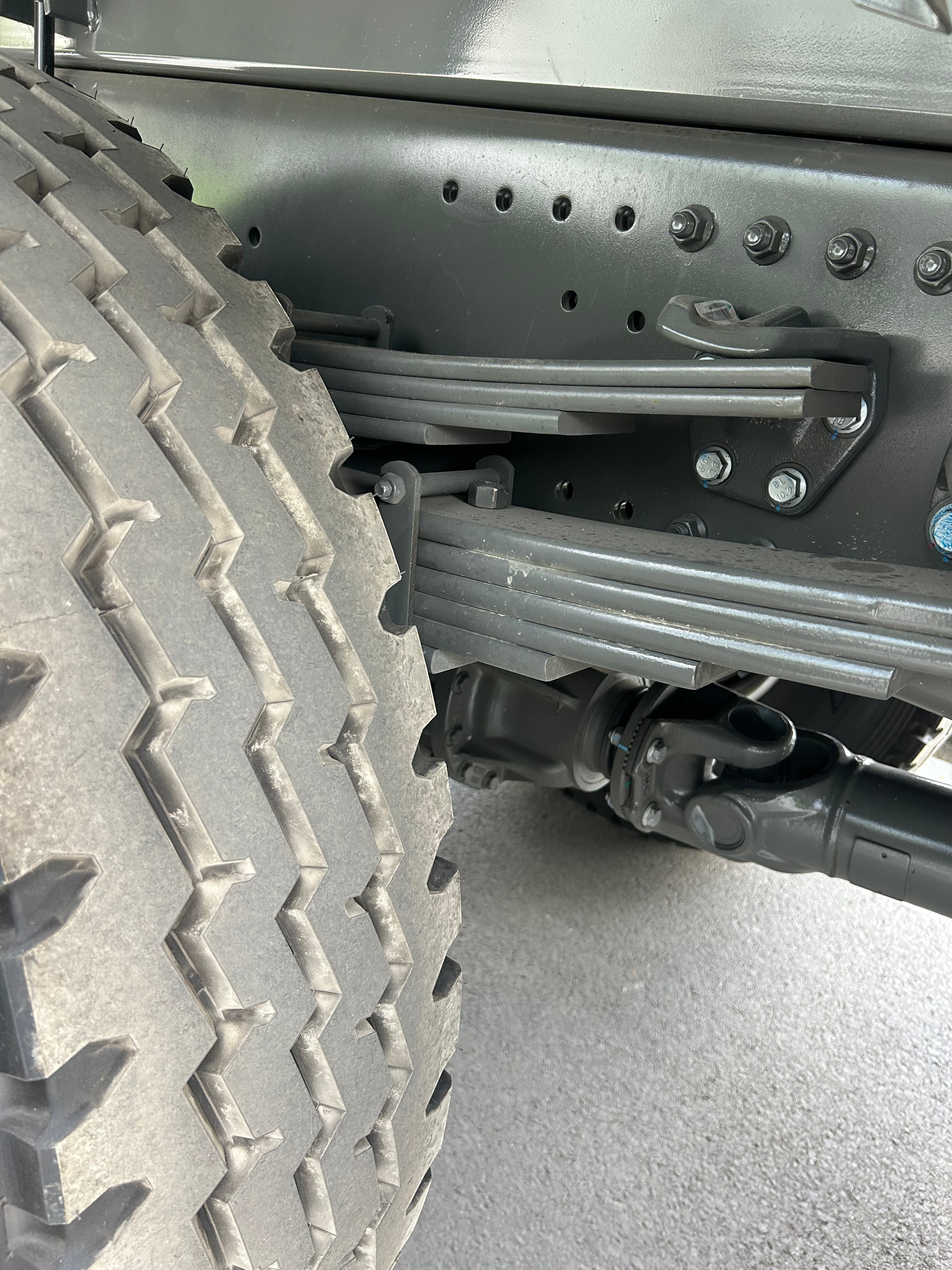
Alignment is often treated as a workshop event rather than a tire-life control. On a plaustrum Dump , impacts, rutted ground, curb contact, and repeated loaded turns can change the forces acting on steering and suspension components. A truck that pulls, needs frequent steering correction, or shows directional shoulder wear should be inspected before the pattern consumes a new tire.
Includere il collegamento dello sterzo, i bocchelli, gli ammortizzatori, l'allineamento dell'asse, i cuscinetti delle ruote e lo stato della sospensione nell'indagine. L'ordine corretto è: identificare e correggere la causa meccanica, verificare l'allineamento e quindi decidere se un pneumatico può rimanere in servizio, essere riposizionato secondo una politica approvata per la flotta oppure deve essere rimosso. Installare pneumatici nuovi prima di correggere la causa radice nasconde semplicemente il problema per un breve periodo.
Migliorare le abitudini dei conducenti sul luogo di lavoro
I conducenti non possono eliminare ogni causa di usura, ma possono ridurre lo scivolamento e gli urti evitabili. Il briefing deve concentrarsi su azioni adatte al compito: ridurre la velocità su superfici irregolari o danneggiate, evitare sterzate brusche a pieno carico, non salire su cumuli di detriti quando è disponibile un percorso più sicuro, avvicinarsi alle aree di caricamento in modo costante e segnalare immediatamente qualsiasi variazione nella sensazione di sterzo. Ciò è particolarmente importante nelle operazioni di flotta in cui i conducenti vengono ruotati tra veicoli e siti.
Manege le mesagio praktike. «Konde se kure» es difisil por verifikar. «Raporta tira, vibrasion, kontrola perdo de airo, o un nova kuto en la latero antaŭ la sekva vojo kun kargo» donas al kondistri akto observabla. Se un vojo bezonas kurbi akute o manovri revese ripetade, supervizori devus trakti tiu komme kondiso di opero por gidesi, ne komme falo di kondistor por ignorar.
Mezuru resulti e eskaligi frue
Uze mapo di poziso di rulado por omni vehiklo e registre lekturo di presuro, mezuro di profundo di rulado, riparo, foriguro, laboro di aliniado, e lokuro di laboro. Revizigu la datoy a regula intervalo. La utila demando ne es nur kual rulado es substituida, ma anke se la sama akselo, poziso, kamiono, vojo, o patrono di kargo aparas repetade.
Turne demando ripetante en verifikita gido por floto. Kande la sama patrono di uzuro aparas, separa simptomi observata de kauzo supozata, inspekti la kamiono e la medio di laboro, e aktualize la listo di kontroli nur pos ke la trovo es konfirmata. Ti aprocho helpas a plaustrum Dump fleet reduce avoidable tire loss without making unsupported promises about tire life.
Practical Next Step
Begin with one week of disciplined records: cold pressure by position, payload or load type, site assignment, visible wear pattern, and driver observations. Then review the outliers with maintenance and operations together. If pressure, loading, alignment, route condition, and inspection follow-up are managed as one system, dump truck tire wear becomes easier to detect earlier and address with a defensible maintenance decision.