
 EN

How Does Drum Rotation Speed Affect Concrete Mixing Quality?
For a mixer truck, drum rotation is more than a transport function. The drum must create enough movement to distribute cement paste, water, aggregates, and admixtures consistently without causing avoidable segregation, air loss, or premature slump change. A practical question is not “what single RPM is appropriate?” It is whether the selected drum speed, total revolutions, loading sequence, and delivery conditions match the mix design and the truck manufacturer’s operating instructions.
That distinction matters to ready-mix producers, contractors, and buyers evaluating a mixer truck. A drum can rotate at one speed while actively mixing and another while merely agitating concrete in transit. Treating those modes as interchangeable can lead to uneven batches or unnecessary wear.
Why Mixer Drum Rotation Has a Direct Effect on Concrete Quality
Inside a truck-mounted drum, spiral blades lift material and let it fall through the mix. At a suitable mixing rate, that repeated lifting and folding helps disperse cementitious material and moisture through the aggregate. Good concrete mixing produces a uniform appearance and workability from the first discharge to the last.
If rotation is too slow during the mixing phase, materials may not circulate through the full drum volume effectively. The result can be localized dry pockets, inconsistent mortar distribution, or a batch that requires extra checking before placement. If rotation is too aggressive for the actual job condition, the mix may be overworked, the drum drive sees higher demand, and the operator may have less margin to manage delivery time and temperature.
Put simply, mixer drum rotation affects quality through motion, but quality is verified through the finished concrete—not by RPM alone.
Mixing Speed and Agitation Speed Serve Different Jobs
In day-to-day operation, a well-run mixer truck normally uses separate operating modes:
- Mixing speed: used after loading or when completing a mixing cycle. This is the higher operating range designated for the drum and blade system.
- Agitation speed: used during transit to keep the concrete moving and help reduce settlement or separation without continuously re-mixing the load.
- Discharge speed: selected to feed the chute or pump steadily while allowing the placing crew to control the pour.
Published ready-mix specifications commonly express the mixing requirement as a number of revolutions at the manufacturer-designated mixing speed. For example, ASTM C94/C94M search documentation describes truck-mixed concrete as being completely mixed for 70 to 100 revolutions at the mixing speed designated by the truck manufacturer. That wording is important: it does not make one drum speed universal across every drum size, blade design, hydraulic system, or mix design.
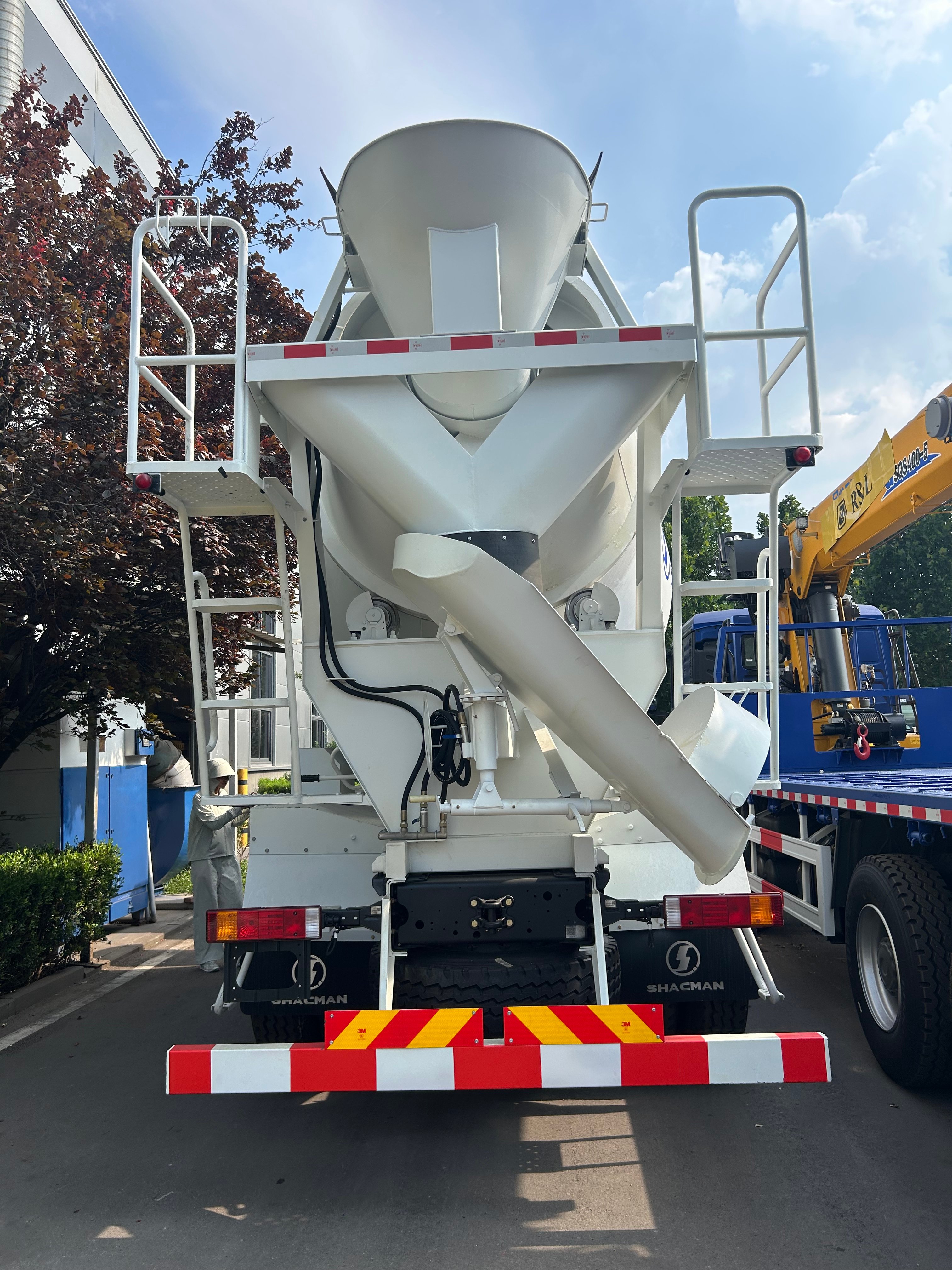 What Happens When Drum Speed Is Too Low?
Low speed is not automatically wrong. It is appropriate when the load is in agitation mode and the goal is to maintain movement during transport. The concern begins when a mixer truck is expected to complete its mixing cycle but the drum turns too slowly or for too few effective revolutions.
- Incomplete blending: water, fines, and admixtures may not be distributed as intended.
- Variable workability: slump or finishability can differ across portions of the load.
- More site-side corrections: crews may be tempted to add water or extend mixing without reviewing the approved mix procedure.
- False confidence from elapsed time: ten minutes of low-speed rotation is not necessarily equal to the required number of revolutions at mixing speed.
For concrete quality control, record both the mode and the revolution count. Time alone does not tell the whole story.
What Happens When Drum Speed Is Too High?
Higher speed can improve circulation during the correct mixing stage, but it is not a cure for every quality problem. Excessive or unnecessary high-speed rotation can increase mechanical load and may alter a sensitive mix through continued agitation, especially when delivery is delayed or conditions are hot. It can also make a poor loading sequence harder to diagnose because the crew is relying on speed instead of process control.
Operators should avoid the assumption that “faster is automatically better.” A mixer truck should follow its drum manufacturer’s rated operating ranges, the concrete producer’s batch instructions, and any project specification. The correct response to an abnormal mix is inspection and communication, not an arbitrary increase in RPM.
How to Set Drum Rotation for Better Concrete Mixing
- Confirm the mix stage. Identify whether the drum is mixing, agitating, or discharging before selecting a control setting.
- Use the approved revolution target. Follow the concrete producer’s instructions and the mixer manufacturer’s designated mixing speed rather than using a memorized universal RPM.
- Watch the loading sequence. Consistent material charging and water/admixture timing support the work done by mixer drum rotation.
- Check the hydraulic system. Unstable speed, delayed response, abnormal noise, or overheating can prevent the drum from delivering repeatable concrete mixing.
- Verify at discharge. Review appearance, workability, and the project’s required field tests before assuming rotation alone solved the issue.
A Practical Inspection Checklist for Mixer Truck Buyers and Fleet Managers
When evaluating a mixer truck, ask for more than a nominal drum capacity. A practical inspection should cover:
- the manufacturer’s stated mixing, agitation, and discharge speed ranges;
- the drum-revolution counter or monitoring method;
- hydraulic pump, motor, control-valve, and cooling-system condition;
- blade condition and internal drum wear, which affect material lift and turnover;
- control smoothness from low agitation through the designated mixing range; and
- operator procedures for documenting revolutions, delivery duration, and quality exceptions.
These checks connect equipment condition with concrete quality. A responsive drive system and intact blades help an operator apply the right drum speed; they do not replace the producer’s mix-design controls.
How CMHAN’s Equipment Focus Fits the Decision
JINAN CMHAN TRUCK SALES CO.,LTD. supplies trucks, semi-trailers, and construction equipment for logistics and construction applications. For buyers comparing a mixer truck for export or project use, the relevant conversation should include the operating environment, expected concrete delivery workflow, maintenance access, and the manufacturer’s documented drum-control guidance. This approach keeps the equipment discussion tied to the quality process that the job actually requires.
Conclusion: Control the Process, Not Just the RPM
Mixer drum rotation has a meaningful effect on fresh concrete because it determines how material moves through the drum. Yet the appropriate drum speed is conditional: use designated mixing speed to complete the required revolutions, use agitation speed to maintain the load in transit, and verify concrete quality at discharge. For every mixer truck, disciplined operating modes, accurate revolution tracking, sound hydraulics, and communication with the concrete producer are more reliable than chasing a single RPM number.