 EN

What Are the Benefits of Aluminum Tank Trucks for Fuel Transport?
For a fleet buyer, an aluminum tank truck is worth evaluating as a transport asset rather than as a material upgrade in isolation. Fuel distribution involves payload planning, route conditions, loading and unloading routines, inspection access, and the regulations that apply where the vehicle will operate. Aluminum can offer practical advantages in that system, especially when reduced tare weight and corrosion management match the duty cycle. But the right choice still depends on the carried fuel, tank design, chassis, axle limits, and maintenance capability.
An aluminum fuel tanker is therefore not automatically the right answer for every fleet. The useful question is: what will the vehicle actually carry, how often will it run, and what operating exposure will it face? Starting there helps procurement teams turn a material discussion into a workable specification.
1. Lower tare weight can improve planning flexibility
The most frequently discussed advantage of an aluminum tank is lower vehicle weight compared with many steel alternatives. A lightweight tanker can leave more of the applicable gross vehicle weight allowance available for cargo, equipment, or route-specific configuration. That does not guarantee a higher legal payload: local axle limits, tank volume, chassis weight, fuel density, and permit rules all still govern the final loading plan.
Still, lower tare weight can make a difference when a fleet runs recurring routes near weight limits. It may help planners balance capacity and axle loading more carefully, particularly when compartments, pumps, vapor-recovery equipment, meters, or safety equipment are part of the build. A useful checkpoint is payload distribution; before deciding, relate it to the actual loading and unloading routine rather than looking only at nominal tank capacity.
2. Aluminum can simplify some corrosion-management work
Fuel transport equipment lives outdoors and is exposed to road spray, moisture, cleaning practices, storage conditions, and debris. Aluminum does not rust in the same way as ordinary carbon steel, which can be attractive where exterior corrosion management is a recurring concern. That can support a cleaner long-term maintenance plan for the shell and exterior components when the material, finish, joints, and care routine are appropriate.
It is not simply a material issue, however. Aluminum does not remove all corrosion-management needs. Dissimilar-metal contact, damaged coatings on associated components, trapped moisture, chemical exposure, abrasion, and poor drainage can still create problems. Specify isolation methods, fittings, fasteners, and cleaning procedures for the actual configuration. The relevant technical question is whether the material and construction details suit the fleet’s environment.
3. A lighter tank body may support fuel-efficiency goals
Reducing unladen mass can reduce the energy required to move the vehicle, all else being equal. On routes with frequent empty or partially loaded travel, that may support a fleet’s fuel-efficiency objectives. The benefit is conditional, not a universal savings claim. Aerodynamics, engine and transmission specification, tire condition, driver behavior, terrain, traffic, and payload all influence real consumption.
For that reason, assess an aluminum tank truck through route data rather than a generic mileage promise. Compare typical loaded and unloaded distance, stops, grades, idle time, and annual utilization. That is the specification side; the next question is how it behaves in the daily routine. A decision based on measured operating patterns is more useful than one based on a single material claim.
4. Lifecycle thinking can be more useful than purchase-price comparison
Aluminum construction can carry a different initial cost from a steel option, so the comparison should include more than the purchase quotation. Consider expected service life, exterior-care workload, repair access, downtime exposure, residual-value assumptions, and the availability of qualified repair support in the operating region. A lower initial price does not by itself answer the operating-cost question.
Aluminum is also softer than some steels and can be more susceptible to visible dents or localized damage in demanding conditions. The repair method, welding procedures, and approved repair capability should be confirmed before purchase. This is where the weight-versus-durability trade-off becomes practical: an aluminum tank truck can be a strong fit for a defined duty cycle, but rough access roads, frequent impact exposure, or limited service support may alter the balance.
5. Inspection access and safety features remain central
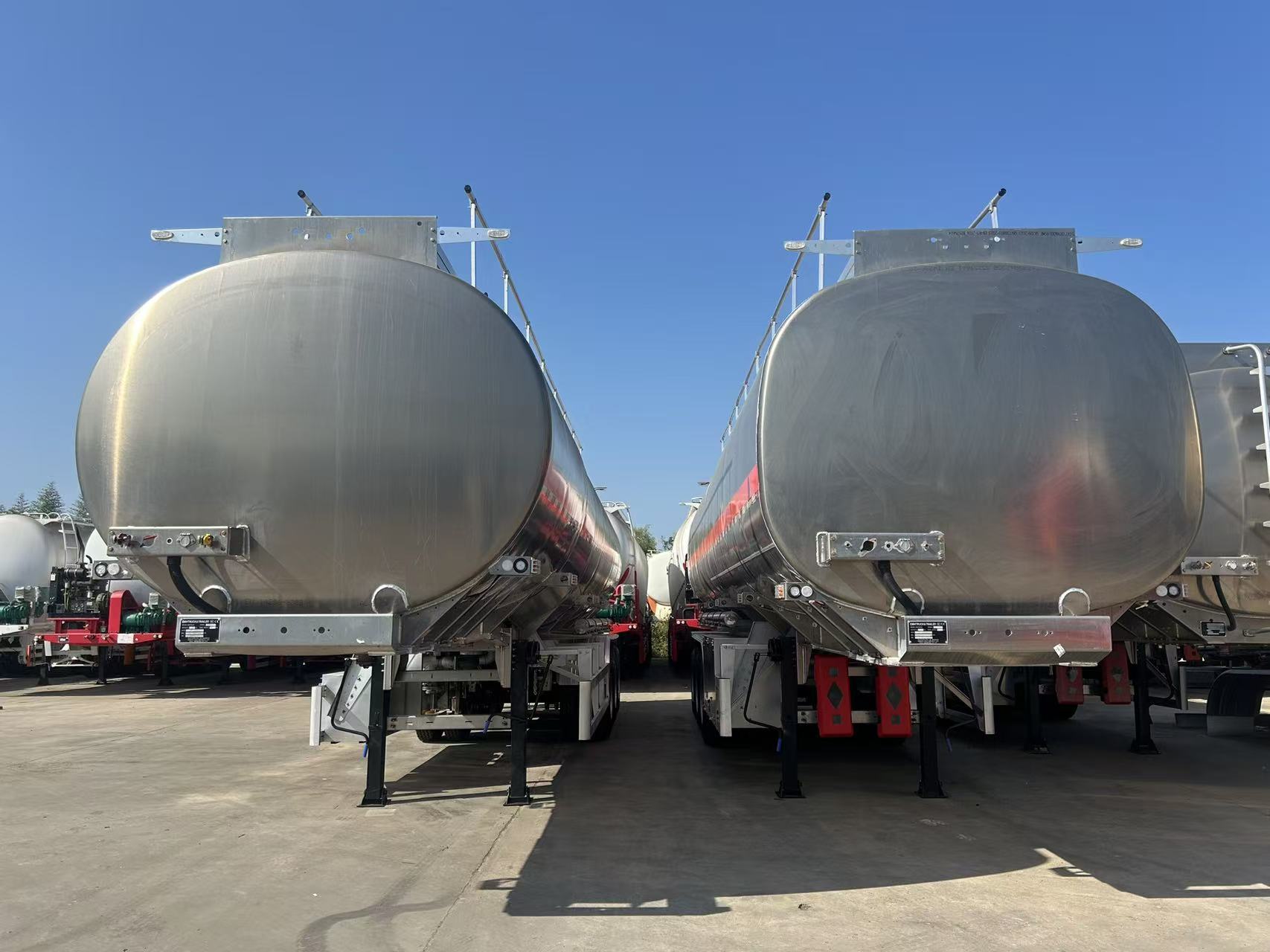
Material choice does not replace a fuel-transport safety program. A well-planned aluminum fuel tanker should still be reviewed for manhole access, valves, piping, hose routing, grounding and bonding provisions, emergency equipment, compartment layout, walkways, and the accessibility of routine inspection points. Before operation, confirm the inspection requirements and cargo-tank specification for the actual fuel and jurisdiction.
For example, U.S. 49 CFR 180.407 requires in-scope specification cargo tanks with due tests or inspections to be successfully inspected before they are filled and offered for transportation. Requirements differ by country, cargo-tank specification, and service, so this is an illustration rather than a global compliance checklist. Work with qualified inspectors and the applicable authority when finalizing a fuel transport configuration.
By inspection access, we mean whether routine check points can be reached safely and consistently. Check shell condition, weld areas, fittings, gaskets, hose assemblies, valves, ladders, and drainage zones according to the manufacturer’s documentation and applicable rules. Routine records make it easier to distinguish an observed condition from an assumed cause.
6. Aluminum supports a targeted, not universal, configuration decision
For many fleets, the appeal of an aluminum tank is a combination of lower tare weight, corrosion resistance, and a potentially favorable lifecycle profile. These benefits are most meaningful when they align with stable routes, verified loading limits, controlled maintenance, and a service partner that understands the material. Larger capacity is not automatically better, and a standard configuration may not suit the route.
A practical buying brief for an aluminum tank truck should include:
- fuel type, density, compartment needs, and loading method;
- target capacity, axle configuration, chassis weight, and route limits;
- climate, cleaning process, drainage exposure, and storage conditions;
- pump, meter, vapor, valve, and hose requirements;
- applicable transport rules, testing intervals, and documentation;
- access to qualified inspection and aluminum repair support.
Conclusion: Match the aluminum tank to the transport task
An aluminum tank truck can provide useful weight, corrosion-management, and lifecycle advantages for fuel transport. The strongest result comes from matching those advantages to a clearly defined duty cycle rather than treating aluminum as a blanket upgrade. First clarify the fuel and route, then compare tank and chassis configurations, and only then discuss price. JINAN CMHAN TRUCK SALES CO.,LTD. supports B2B buyers of trucks and semi-trailers with configuration-focused discussions; final material, capacity, and compliance details should be confirmed against the intended operating requirements.
Frequently Asked Questions
Is an aluminum tank truck necessarily lighter than a steel tanker?
Aluminum is generally selected in part for lower weight, but the finished vehicle weight depends on tank volume, shell thickness, compartments, chassis, pumps, safety equipment, and other options. Compare the completed specification rather than material alone.
Does aluminum eliminate corrosion concerns in fuel transport?
No. Aluminum changes the corrosion profile but does not remove the need to manage moisture, abrasion, dissimilar metals, drainage, cleaning, and inspection. Maintenance procedures should follow the final tank design and operating environment.
What should a buyer verify before ordering an aluminum fuel tanker?
Verify the carried fuel, capacity and axle limits, tank specification, route conditions, required equipment, applicable regulations, inspection schedule, and availability of qualified repair and inspection support.