 EN

Why Do Light Trucks Outperform Larger Vehicles in City Deliveries?
For an urban fleet manager, the most suitable delivery vehicle is not automatically the one with the biggest body. A light truck often earns its place because city work is a sequence of short moves, tight approaches, curbside stops, and repeated loading decisions. When payload, route design, and local access rules align, a light truck can help a delivery team complete more workable stops with less friction than a larger vehicle.
That does not mean a light truck wins every route. Larger vehicles remain appropriate for dense loads, longer line-haul legs, or sites with generous loading access. The practical question is whether the extra capacity of a larger vehicle is used often enough to offset the limits it creates in city delivery.
City delivery is governed by access, not capacity alone
Urban transport is constrained by narrow streets, turning space, congestion, loading windows, and the availability of legal curb space. Freight guidance and city loading-zone programs both treat curb access as an operating issue, not simply a parking inconvenience. If a vehicle cannot approach a stop, wait safely, or leave efficiently, its theoretical payload does little to improve the day.
A light truck usually gives dispatchers more options at those moments. Its smaller footprint can make it easier to enter secondary streets, position near a customer, and move between closely spaced drops. That flexibility matters most where deliveries are frequent and small rather than concentrated in a few high-volume locations.
The light truck benefits become clearer when a route contains many uncertain stops: a retailer with no rear dock, a construction supply pickup on a busy road, or a neighborhood customer with limited off-street access. In each case, the relevant measure is not maximum load alone. It is the amount of useful cargo delivered per hour of real route time.
Why a light truck can move through the route more effectively
Maneuvering reduces avoidable work
Every difficult turn, reverse maneuver, or search for a workable stopping position adds time and driver workload. A light truck is generally easier to place in constrained streets and loading areas than a substantially larger commercial vehicle. That can reduce the number of situations where a driver must circle a block, park farther away, or rely on a second person to guide a maneuver.
This advantage should be assessed route by route. A light truck is a strong candidate when the daily plan includes dense districts, alleys, mixed-use neighborhoods, or destinations where the vehicle must turn around without a formal loading dock. On wide industrial roads with dedicated bays, the gap may be much smaller.
Stop density rewards a right-sized vehicle
Many city delivery operations carry smaller consignments to many receivers. A light truck can be a better match for that rhythm because it avoids hauling unused capacity through every stop. Researchers and urban freight practitioners commonly identify access and congestion as important last-mile constraints; the practical implication is to match the vehicle to the stop pattern rather than purchase capacity that sits idle.
For example, a driver making a dozen compact drops may value quick positioning and an orderly cargo area more than a body sized for occasional peak loads. A light truck can support that operating model if its legal payload, load restraint, and body layout match the goods being carried.
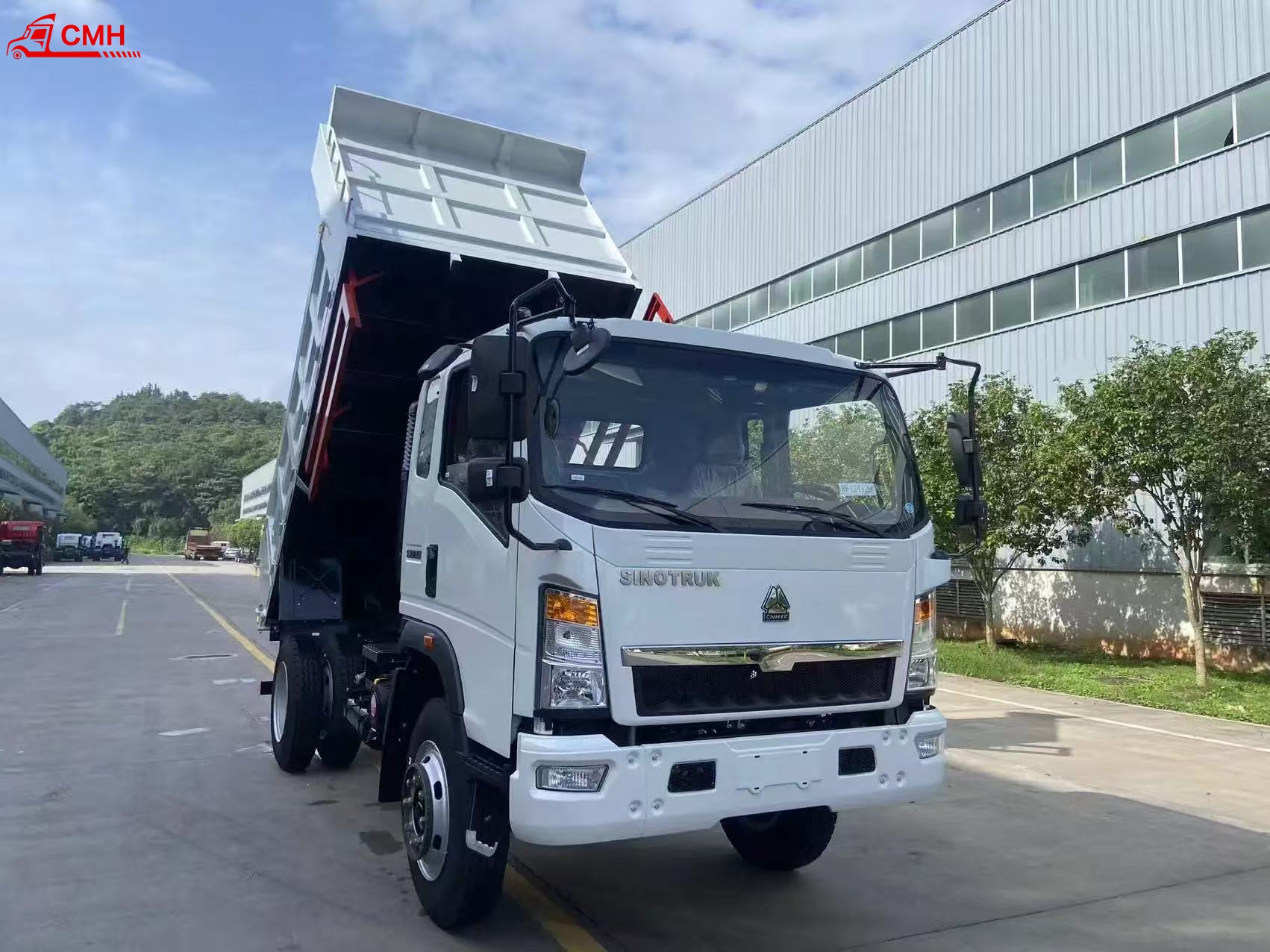
Light truck benefits extend to loading and driver workflow
Vehicle size affects more than road movement. It also changes how a driver opens the body, retrieves parcels, verifies orders, and returns empty packaging. With a well-planned body, a light truck can keep frequently handled goods accessible and reduce unnecessary walking around a large vehicle. This is especially relevant for city delivery routes where the driver enters and exits the cab repeatedly.
The useful configuration depends on the cargo. Parcel work may favor shelving and clear zones by stop sequence. Food, tools, or service parts may require different restraint, ventilation, or compartment arrangements. The point is not that every light truck is inherently efficient; it is that a right-sized commercial vehicle makes a practical loading workflow easier to design.
Fleet teams should also consider the human side of urban transport. Repeated difficult maneuvers, long carrying distances, and improvised roadside loading can introduce fatigue and inconsistency. Selecting a light truck that fits the actual work can make standard operating procedures more repeatable for drivers.
Where larger vehicles still make better sense
A balanced decision recognizes the limits of a light truck. If a route regularly leaves with high-volume, high-mass cargo, a larger vehicle may prevent multiple trips and lower the cost per delivered unit. A larger commercial vehicle may also be the better choice for scheduled warehouse-to-warehouse movement, regional distribution, or customers with dependable docks and ample turning space.
Do not choose a light truck simply because the route is within city limits. Review the heaviest legal payload requirement, cargo dimensions, loading equipment, grade conditions, driver licensing requirements, service support, and applicable local restrictions. A light truck that is overloaded or poorly configured will not create the efficiency the category is meant to provide.
A practical comparison checklist for fleet buyers
- Map the route: Identify narrow approaches, restricted streets, turning points, and typical curb conditions.
- Measure the real load: Review average and peak weight, volume, and the longest individual items before specifying a light truck.
- Count productive stops: Compare completed deliveries, not only kilometers or nominal payload.
- Check loading workflow: Confirm that doors, body access, restraint points, and cargo layout work for the delivery sequence.
- Plan for exceptions: Decide whether occasional oversized loads should use a larger vehicle, a separate route, or a different delivery schedule.
This checklist keeps the choice tied to operating evidence. It also prevents a common purchasing mistake: comparing a light truck and a larger vehicle only by price or maximum capacity while ignoring how each one performs at the curb.
How to choose the right light truck for urban transport
Start with the route and cargo, then work backward to the vehicle. Define the normal delivery zone, the number of stops, the access constraints, and the cargo profile. Next, confirm the light truck's permitted payload and body dimensions against your real loads. Finally, evaluate how the vehicle will be serviced and operated in the markets where it will work.
For logistics companies, the most valuable light truck benefits usually come from fit: enough capacity for the recurring load, enough maneuverability for the recurring route, and a body layout that supports the recurring delivery process. That is a more reliable standard than assuming either the smallest or largest commercial vehicle is inherently the most economical.
Conclusion
A light truck can outperform a larger vehicle in city delivery because urban performance is shaped by access, stop density, maneuverability, and loading workflow. When it is properly matched to the job, a light truck helps teams make practical use of limited street and curb space while carrying the load they actually need. Review the route before the specification, and let the operating pattern—not just maximum capacity—guide the vehicle decision.