 EN

How Does a Water Truck Perform Compared With Fixed Dust Suppression Systems?
Choosing between a water truck and fixed dust suppression systems is not a simple equipment comparison. The practical answer depends on where dust forms, how often conditions change, how much water can be supplied, and whether the site has stable routes or moving work fronts. From a fleet-procurement perspective, start with the duty cycle: a water truck moves treatment to the problem area, while a fixed system keeps applying control at a defined location.
That distinction matters on construction, quarry, and mining equipment sites. A water tanker can support a haul road one shift and a stockpile perimeter the next; fixed equipment usually serves a repeatable dust source. Neither approach is automatically better. Site management should compare coverage, response speed, water logistics, traffic interaction, maintenance access, and the cost of interruption before selecting a primary method.
The operating difference: mobile coverage versus fixed consistency
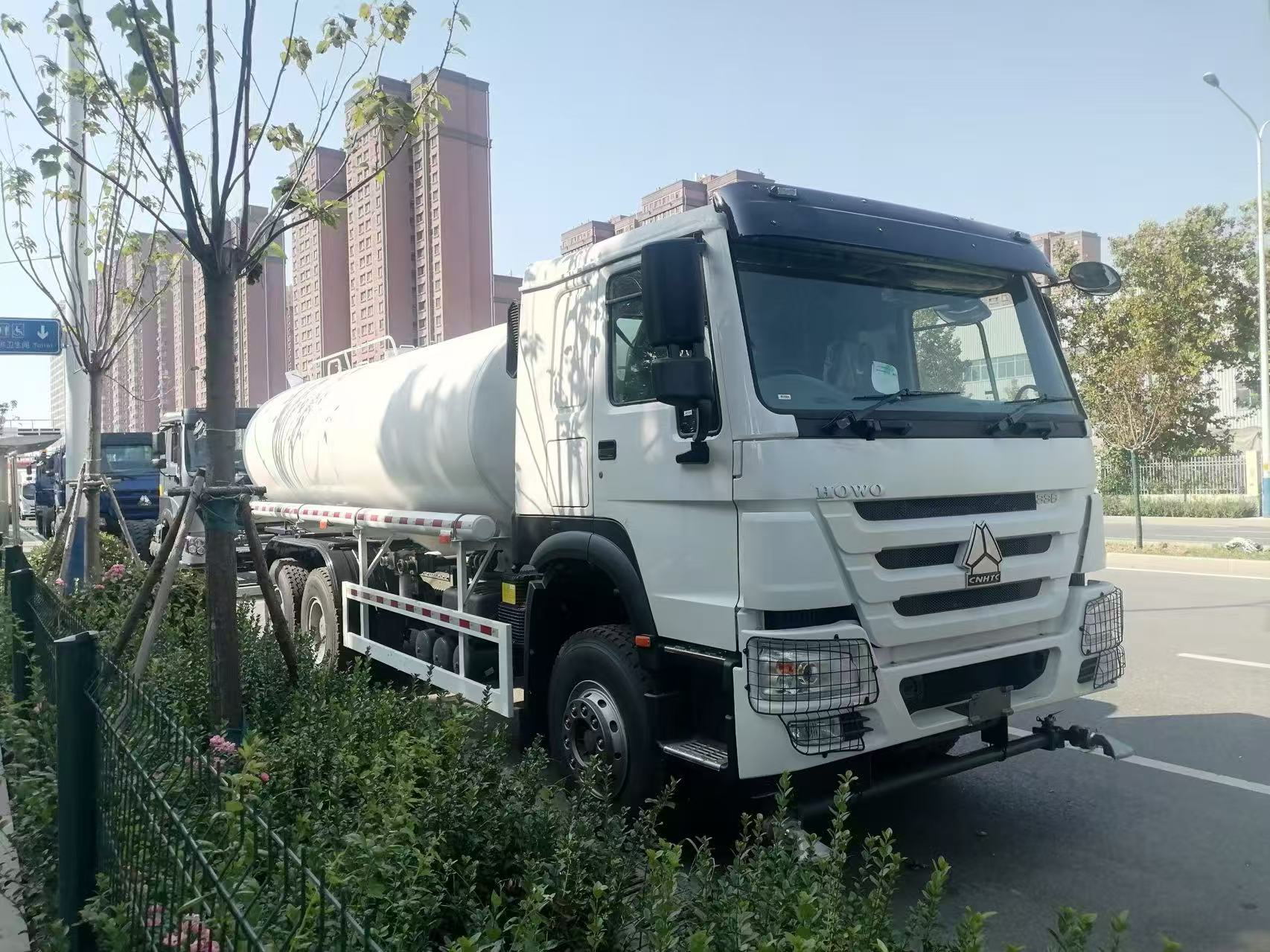
A water truck carries water to the point of need and applies it through a spray system. Its main advantage is mobility. If work moves, a road segment becomes dusty after a change in traffic, or a temporary access route needs attention, the operator can redeploy the water truck. This is useful when dust sources are scattered or change over the week.
Fixed dust suppression systems are installed around a known source such as a transfer point, crusher approach, loading zone, or gate. Their value is repeatability: once the layout, water supply, controls, and nozzles are correctly designed, the system can apply treatment without dispatching a vehicle for every cycle. Fixed equipment is therefore often easier to integrate into a routine where the process and source location remain stable.
The trade-off is reach. A fixed system does not travel with the work. A water truck can cover a long road network, but its coverage depends on tank capacity, refill distance, route time, and operator availability. A useful checkpoint is not capacity alone; relate it to the actual loading, unloading, and traffic routine. Larger capacity is not automatically better if the vehicle cannot safely turn, refill, or work around production equipment.
Where a water truck is likely to fit
A water truck is often the more flexible choice when the site has temporary roads, seasonal work areas, changing excavation faces, or several dust zones that do not justify permanent piping. It can also support early project stages while a permanent system is being evaluated. In these situations, a water tanker lets a site test where and when application is needed before committing to fixed infrastructure.
EPA fugitive-dust guidance identifies regular application of water or approved suppressants as a control measure for unpaved haul and service roads. That supports the basic role of a water truck, but it does not mean one watering schedule will suit every site. Surface material, wind, heat, traffic, road grade, and refill timing all change how long an application remains useful.
In mining equipment environments, the water truck also has to coexist with large mobile assets. MSHA haul-road safety material emphasizes safe passage for the largest equipment using the road. That is the specification side; the next question is how the daily routine behaves. The truck route, spraying zone, radio procedure, and turnaround points should be planned with traffic control rather than treated as an afterthought.
Where fixed systems can perform better
Fixed dust suppression systems can be a stronger fit when dust repeatedly occurs at the same point and the site has dependable utilities. A fixed installation avoids travel time between applications and can be timed or sensor-controlled where the process is consistent. For a transfer area that produces dust every operating cycle, keeping water at the source may be more predictable than sending a water truck back and forth.
Fixed systems can also reduce dependence on one driver and one vehicle. However, they introduce a different set of dependencies: pump condition, piping integrity, nozzle placement, winterization where relevant, electrical controls, and water quality. If any of these items are poorly matched to the material or layout, fixed equipment may deliver uneven coverage despite its automation potential.
This is why a dust suppression comparison should not stop at purchase price. Initial cost versus service access is a real planning issue. A water truck needs inspection and maintenance like other commercial vehicles; a fixed system needs accessible components and a clear maintenance owner. The right choice may depend on details that should be verified with the final specification and site plan.
A side-by-side decision checklist
| Decision factor | Water truck | Fixed system |
|---|---|---|
| Dust source location | Best suited to changing or dispersed areas | Best suited to stable, repeatable points |
| Response to new hotspots | Can be redirected when access and staffing allow | Limited to installed coverage |
| Water logistics | Requires refill planning and travel time | Requires a dependable supply and installed distribution |
| Labor pattern | Requires vehicle operation and dispatch coordination | May reduce routine dispatch but needs maintenance oversight |
| Expansion | Can shift with project phases | May require additional installation for new sources |
First clarify the task, then compare configurations, and only then discuss price. For example, ask: Are dust events concentrated at fixed transfer points or spread across haul roads? Is water available near the source? Can a water truck move safely during peak production? What happens if the truck is refilling when a hotspot develops? These questions make site management requirements visible.
Can both systems be used together?
Yes. A mixed approach is often worth evaluating when a site has both permanent dust sources and changing road conditions. Fixed equipment can cover the predictable locations, while a water truck handles haul routes, temporary work zones, and unusual dry periods. The goal is not to maximize equipment count; it is to assign each method to the conditions it handles more reliably.
For example, published haul-road material hosted by CDC describes an example in which once-hourly watering showed 40% control efficiency for total suspended particulates. Treat that as an illustrative, condition-dependent result rather than a promise. A site should document its own traffic, weather, application interval, and observations before assuming that a similar outcome will occur.
Final decision: match the system to the operating pattern
A water truck is often a strong fit when flexibility and broad mobile coverage matter more than fixed automation. Fixed dust suppression systems are often a strong fit where dust is generated repeatedly at known locations and utilities can support a maintained installation. In many operations, the decision is not water truck versus fixed equipment in absolute terms; it is which role each can play in a coordinated dust-control plan.
Before procurement, map dust sources, water access, vehicle routes, production peaks, and maintenance responsibilities. Then request a configuration review that reflects the carried medium, route conditions, and local operating requirements. That evidence-bounded process gives a water tanker or fixed-system investment a clearer chance of fitting the real site rather than an assumed one.