 EN

Why Do Dump Trucks Perform Differently on Muddy Job Sites?
Two trucks can carry similar loads yet behave very differently after a job site turns wet. The reason is rarely one part alone. A dump truck responds to the combined effect of ground strength, tire condition, axle loading, drivetrain layout, suspension movement, driver inputs, and the route that has developed during the shift. From an operator viewpoint, the useful question is not simply whether a truck can enter mud. It is whether it can move, steer, stop, and unload predictably within the actual loading and daily inspection routine.
That distinction matters on a construction site. Rain can turn a firm haul route into a surface that packs into tread blocks, develops ruts, or loses edge support. A truck that was productive in the morning may need a different route, a lighter payload, or a pause for road work later in the day. Understanding the causes makes it easier to match an on-road-oriented dump truck or an off road truck configuration to the work instead of treating all muddy conditions as the same.
Mud changes the force available at the tire contact patch
Traction starts where each tire meets the ground. On compact, drained soil, the tread can develop useful grip and the ground can resist the tire’s shear force. In saturated material, the surface may shear or flow before the tire can transmit the force needed to pull the vehicle forward. Tread can also fill with clay or fine soil, reducing the edges that normally bite into the surface. This is why visible wheel spin is more than a delay: it can polish the surface, deepen ruts, and make the next pass harder.
Dump truck traction is therefore a system result, not a promise made by a tire pattern. Tire construction, tread depth, approved inflation setting, and temperature all influence how a tire works. So do ground moisture, stone content, slope, and the distance a truck must travel before reaching a firmer road. A lower or higher pressure should not be selected from a generic internet number. The tire manufacturer’s load-and-inflation guidance, the truck specification, and the site’s operating procedure must govern the decision.
Load distribution can help or hurt tire performance
Payload affects more than braking distance. It changes the force carried by each axle, the way the tires settle into the surface, and the amount of stress placed on soft road edges. A correctly distributed load can keep the driven tires working within their intended range. An uneven or excessive load may overload one axle, reduce steering authority, or cause the truck to sink farther into weak material.
On a muddy construction site, loading technique also matters. Material that shifts toward one side of the body can create a handling problem before the truck reaches the exit route. Operators and site supervisors should confirm payload limits, body loading practice, and tire condition together. It is not simply a capacity issue; more precisely, the condition of the haul road and the way the load sits on the chassis both matter.
Why truck design changes the outcome
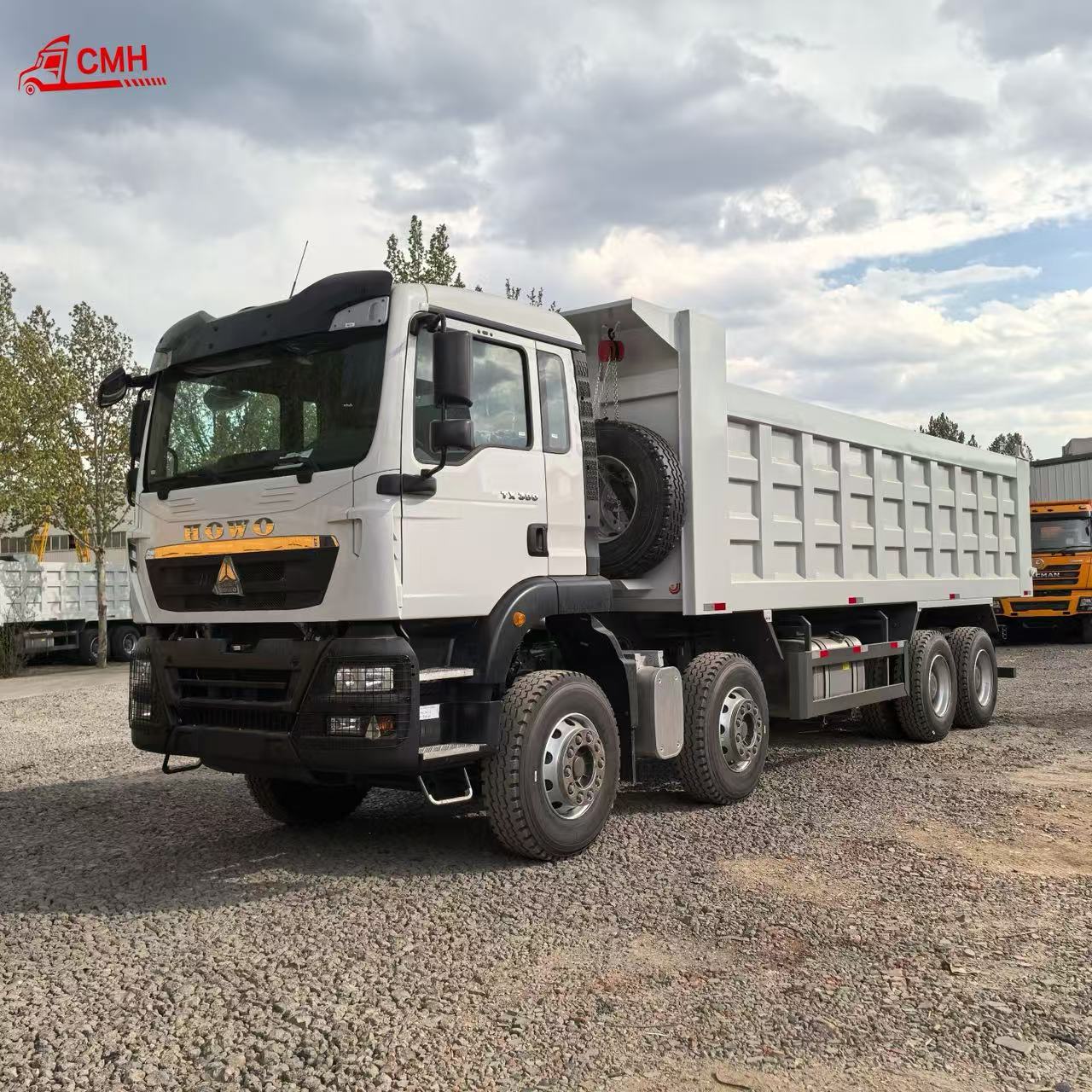
Different dump-truck layouts place weight, drive axles, articulation, suspension travel, and steering functions in different relationships. A road-going truck may be an efficient choice when it spends most of its time on prepared roads and only makes short, controlled trips into a work area. An off road truck may offer features better suited to variable ground and rougher travel, but that does not make it the automatic answer for every project. The relevant technical question is whether the vehicle’s axle arrangement, clearance, turning space, payload requirement, and route conditions suit the job.
Articulation and suspension movement can help tires remain in contact with uneven ground, while a more rigid arrangement may behave differently across cross-ruts or soft shoulders. Ground clearance can reduce contact with ruts, but it does not overcome a route that is too soft for the vehicle’s load. A suitable match depends on how far the truck travels off prepared surfaces, how often conditions change, and whether the site can maintain a stable haul road.
Four job-site conditions that change a dump truck’s behavior
- Surface type: Clay, silt, sand, crushed aggregate, and mixed demolition material react differently to water. Fine material may become slick, while coarse material may still support weight but move under tire lugs.
- Grade and cross-slope: A route that feels manageable when dry can become difficult when climbing, descending, or turning on wet soil. Cross-slope also increases the consequence of a soft edge.
- Drainage: Standing water can conceal ruts and weak sections. Repeated passes can pump water into the surface and accelerate deterioration.
- Traffic pattern: The first loaded truck, the return path of empty trucks, and equipment crossing points can create different failure areas. A route needs inspection through the full cycle, not just at the entrance.
A practical pre-shift and after-rain checklist
A useful checkpoint is route condition; before deciding, relate it to the actual loading and unloading routine. Before dispatching a loaded dump truck, walk or inspect the route according to site procedures and look for standing water, fresh rutting, soft shoulders, blocked drainage, and narrowed turning areas. Verify that the chosen lane still has room for the planned body position and that a truck can leave the area without reversing across the weakest ground.
- Inspect tire damage, tread condition, and inflation against the approved specification.
- Confirm the expected material, payload, and loading sequence before the first trip.
- Check the route after rain, grading, or changes in equipment traffic.
- Set a turnaround point if the surface beyond it is no longer suitable for loaded travel.
- Use smooth throttle, steering, and braking inputs; aggressive inputs can break available traction.
- Stop and reassess if repeated wheel spin, steering drift, or rut growth appears.
Construction motor-vehicle safety guidance emphasizes the need for worksite-specific controls. Local rules, competent supervision, and the truck manufacturer’s instructions should take precedence over a general checklist. That is the specification side; the next question is how the route behaves during the daily routine.
Maintenance and operating choices that protect tire performance
Tire performance on mud is easier to manage when the maintenance plan reflects the actual route. Remove packed material where safe and permitted, record recurring wear patterns, and investigate uneven wear instead of assuming it is normal. Alignment, suspension condition, wheel-end health, and inflation management all affect how the tire meets the ground. A truck with good tread can still lose usable traction if the drivetrain, load distribution, or route condition is working against it.
Driver feedback should be part of the review. If operators report a consistent loss of traction at one slope, turn, or loading zone, that information can guide drainage improvements, aggregate placement, route changes, or a different truck assignment. A lower initial vehicle price does not by itself answer the operating-cost question when recoveries, delays, tire damage, or route repairs become frequent.
Choose the truck around the route, not only the payload
When comparing a dump truck for wet work, document the material to be hauled, average and peak payload, route length, grade, ground condition after rain, unloading method, and the level of haul-road maintenance the project can sustain. Then compare those conditions with the vehicle’s approved specifications and tire requirements. If the route is stable and prepared, a conventional configuration may be practical. If the route changes constantly and includes soft, uneven ground, the operating case for a more terrain-focused configuration may be stronger.
The goal is predictable movement rather than a dramatic claim of “mud capability.” By treating dump truck traction, tire performance, payload distribution, and route maintenance as one operating system, a site team can make safer decisions and reduce avoidable downtime when the ground turns wet.