 EN

How to Choose a Tractor Truck for Heavy Cargo Operations?
Choosing a tractor truck for heavy cargo operations is not a matter of selecting the largest engine or the lowest quotation. A productive combination has to match the trailer, the cargo, the road, the duty cycle, and the support plan. From a fleet procurement perspective, the first question is simple: what must the unit pull, how often, and under what conditions?
That question turns tractor truck selection into an operating-fit exercise. A unit that looks adequate on a specification sheet can become an expensive mismatch if its axle layout, fifth-wheel rating, braking interface, cooling package, or service access does not suit the actual work. Start with the transport task, then compare configurations, and only then discuss price.
Start With the Complete Heavy Cargo Transport Task
Write a short operating profile before asking suppliers for a quotation. Include the cargo type, typical and maximum payload, trailer type, loaded kilometres, empty-return frequency, road surface, grades, ambient temperature, fuel availability, and expected annual mileage. For project cargo, also record loading equipment, turning constraints, permits, and any escort requirements.
The important figure is not a headline payload by itself. It is the whole combination: tractor kerb mass, semi-trailer mass, cargo mass, fifth-wheel imposed load, and the distribution of those loads across each axle. A useful checkpoint is payload distribution; before deciding, relate it to the actual loading sequence and trailer kingpin position. A tractor truck may have sufficient engine output yet still be unsuitable if legal axle limits or its plated gross train weight are exceeded.
For example, United Kingdom guidance distinguishes gross vehicle weight, gross train weight, and individual axle limits, and makes clear that the trailer is included in gross train weight. Your destination may use different limits, but the procurement lesson travels well: verify the manufacturer plate, trailer plate, and applicable local rules for the entire combination rather than treating “towing capacity” as one universal number.
Check Towing Capacity as a System, Not a Sales Number
When comparing towing capacity, request the rated gross combination or train weight for the exact axle arrangement, tyre specification, transmission, and intended application. Ask how the rating changes with road grade, altitude, heat, trailer configuration, and regional regulations. If a supplier provides only a general model brochure, that is a prompt for clarification, not a final answer.
- Fifth wheel and kingpin: Confirm the vertical load rating, coupling height, mounting position, and compatibility with the trailer kingpin.
- Axles and suspension: Match drive-axle count, axle ratings, suspension type, and tyre capacity to traction needs and legal axle loading.
- Powertrain: Compare usable torque range, transmission ratios, differential ratio, cooling capacity, and engine-braking options against the route rather than comparing peak horsepower alone.
- Braking interface: Confirm that tractor and trailer air or electrical connections, braking response, ABS/EBS requirements, and parking-brake procedures are compatible for the market.
Brake compatibility deserves special attention in heavy cargo transport. UNECE braking materials address tractor and semi-trailer behaviour under laden and unladen conditions, which is a useful reminder that the tractor and trailer must be assessed as a working pair. The right choice may depend on destination-specific approval requirements, so obtain the exact technical documents before signing a purchase order.
Choose an Axle Layout for the Route and Load Distribution
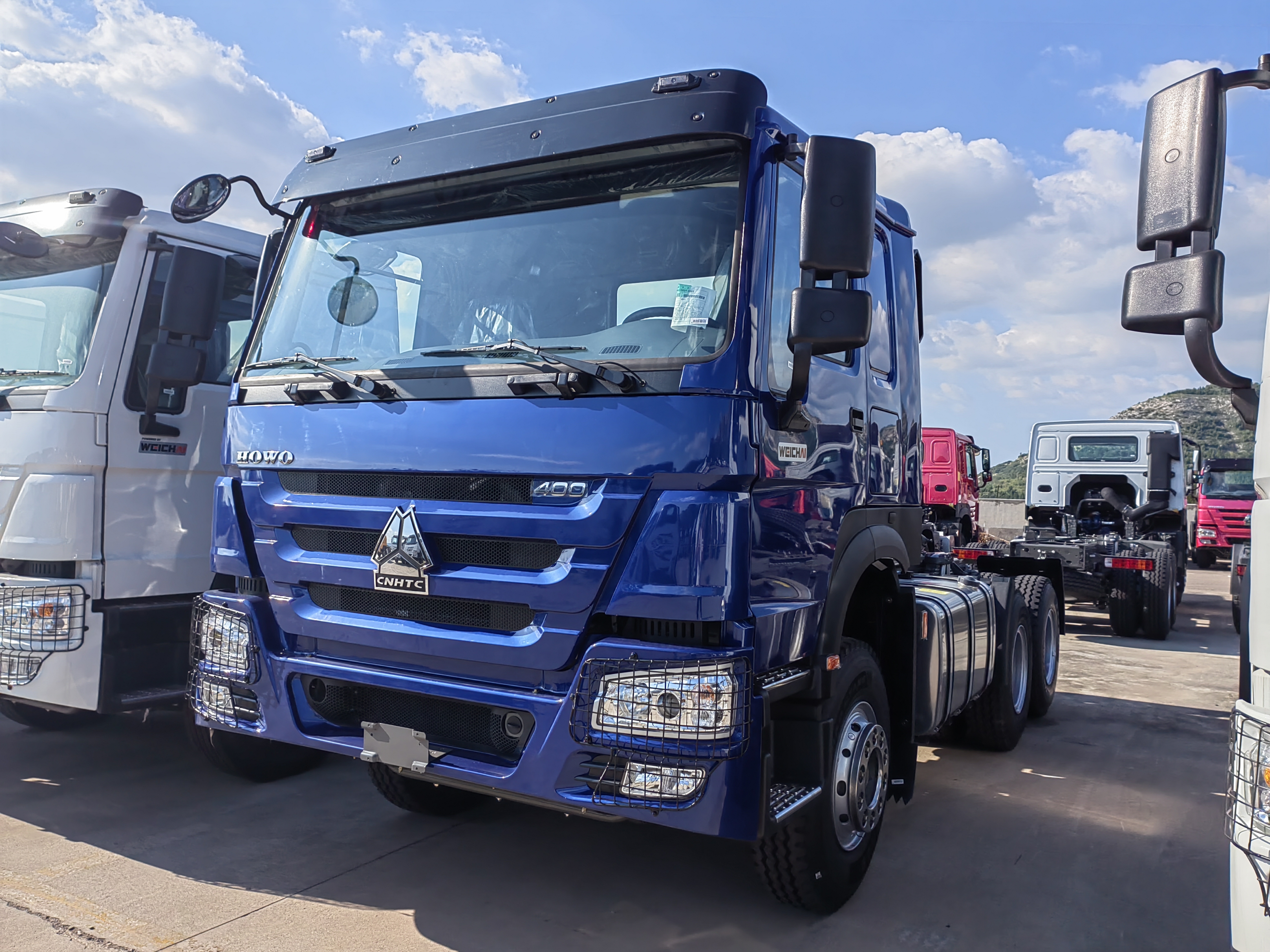
A 4x2 tractor truck can be practical where loads, roads, and traction demands are predictable. A 6x4 or other multi-drive configuration may be more appropriate where grades, loose surfaces, frequent starts, or high kingpin loads call for additional traction and load-sharing capability. More axles can improve suitability in some applications, but they also change kerb weight, manoeuvrability, tyre costs, maintenance points, and local compliance considerations.
Do not compare trailers without axle and route context. Roads with steep climbs, wet unpaved access roads, congested ports, or construction-site approaches place different demands on a fleet truck than stable highway routes. Ask the operator where wheel slip, brake heat, tyre wear, and turning difficulty are most likely to occur. Those observations often reveal more than a generic “heavy-duty” label.
Match Cab, Fuel, and Cooling Choices to the Duty Cycle
Cab choice affects driver endurance, payload, and operating cost. Day cabs can make sense for short shuttle work or port operations. Sleeper cabs are usually more relevant where a tractor truck supports long-distance schedules and planned rest periods. The correct choice is conditional: select the cab around actual route duration, driver accommodation needs, and local operating rules, not a presumed prestige level.
Fuel-tank volume should be matched to station availability, route distance, payload, and reserve policy. In hot, dusty, mountainous, or stop-start work, review the cooling package, filtration, and service intervals with the same care. A lower initial purchase price does not by itself answer the operating-cost question if the unit has more downtime, unsuitable fuel range, or difficult access to routine checks.
Build Serviceability Into Fleet Truck Selection
A fleet truck is an operating asset, so evaluate it after the first delivery day as well as before it. Ask suppliers for a preventive-maintenance schedule, wear-part list, diagnostic support options, warranty boundaries, and expected lead times for filters, brake components, clutch-related parts, suspension parts, and electrical items. Confirm whether trained support and parts can reach the intended country or operating region.
Inspection access matters. Can the crew safely check fluids, tyres, couplings, air lines, lights, and fifth-wheel lubrication during a normal shift? Are daily and weekly checks clear in the operator documentation? Road conditions alter configuration priorities, especially when uneven surfaces and frequent loading cycles accelerate wear. A practical selection process includes the people who will drive and maintain the truck, not only purchasing staff.
Use a Five-Step Procurement Review
- Define the combination: Document the tractor, trailer, cargo, and target gross combination weight for ordinary and peak loads.
- Map the route: Record grades, road surface, climate, turning space, fuel stops, border or port constraints, and local legal limits.
- Request configuration-specific evidence: Obtain rating plates, axle data, fifth-wheel information, braking compatibility details, and the exact powertrain specification.
- Compare lifecycle effects: Consider fuel, tyres, service coverage, parts availability, driver fit, and likely downtime alongside the purchase price.
- Validate before release: Have the supplier and your technical team confirm the final tractor-trailer pairing, loaded axle calculations, and compliance requirements for the operating market.
Make the Final Choice Conditional on Verified Facts
For heavy cargo, choose the tractor truck whose rated combination capability, axle configuration, coupling, braking system, powertrain, cab, and support plan fit the job you can document. It is not simply a horsepower issue; more precisely, cargo distribution, route conditions, trailer compatibility, and maintenance capacity all affect the decision.
For logistics fleets, road construction projects, and industrial-goods transport, a disciplined tractor truck selection process reduces avoidable surprises after delivery. Prepare a route-and-load brief, compare like-for-like configurations, and treat any unverified figure as a question to resolve with the final specification. That approach gives heavy cargo transport operations a more dependable basis for procurement than a model name or headline towing capacity alone.