
 EN

Why Are Aluminum Tank Trucks Becoming More Popular Than Steel Tankers?
For fleet managers, choosing an oil tank truck is no longer only a question of capacity. The material of the tank affects tare weight, legal payload headroom, cleaning routines, repair planning, and the economics of every route. That is why an aluminum tanker is gaining attention wherever a fleet makes frequent deliveries and wants to examine how weight reduction fits its daily work.
Aluminum is not automatically the right answer for every oil tank truck. A steel tanker can remain a sensible choice when duty conditions, local repair resources, price structure, or a specific design requirement favor it. The practical change is that buyers now compare the whole operating system rather than treating tank material as a minor specification line.
The main driver: lower tare weight creates options
The appeal of an aluminum-bodied oil tank truck begins with empty weight. Common reference values put aluminum at roughly 2.7 g/cm³ and carbon steel at roughly 7.85 g/cm³. That comparison does not mean an aluminum tank is automatically one-third the weight of a steel tank: wall thickness, baffles, frame design, fittings, and reinforcement all matter. It does explain why a well-engineered aluminum tanker can offer meaningful weight reduction in the finished vehicle.
That weight reduction can be used in more than one way. On a payload-constrained route, it may leave more room for saleable product within the applicable gross-vehicle and axle limits. On a route where payload is fixed below the legal limit, it may reduce the energy required to move the vehicle. In either case, an oil tank truck should be evaluated with the full chassis and axle layout, not tank weight alone.
A useful checkpoint is payload distribution. Before deciding, relate the empty weight of the oil tank truck to compartment layout, liquid density, fill level, axle loading, and the actual loading and unloading routine. A lighter vessel is valuable only when the final configuration remains compliant and practical.
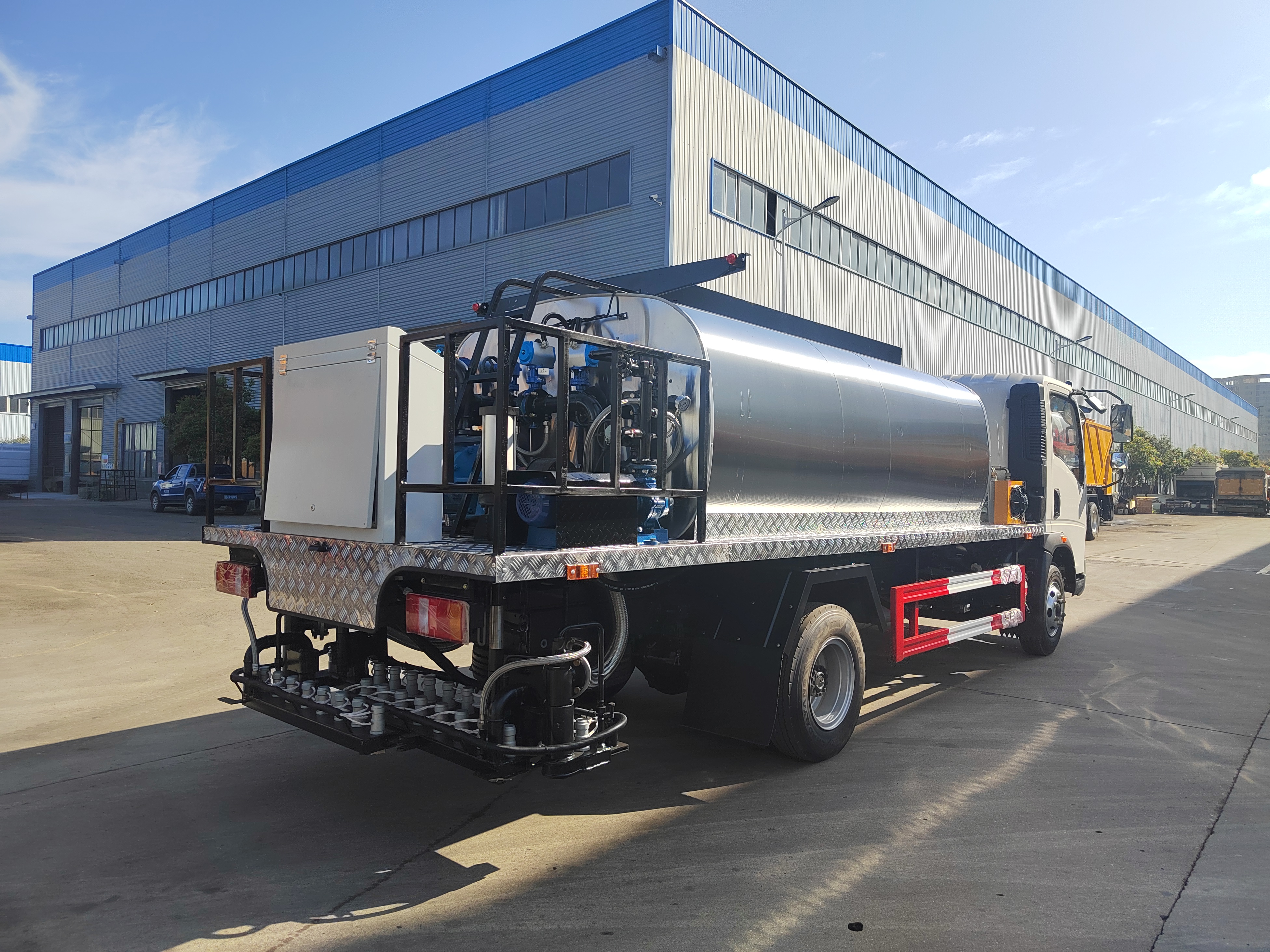 Material selection should be reviewed alongside route, payload, and service requirements.
How weight reduction can support fuel efficiency
Lower mass does not produce one universal fuel-saving percentage. Fuel efficiency depends on stop frequency, gradients, traffic, tire condition, engine calibration, weather, driver behavior, and how often the oil tank truck returns empty. Still, reducing unproductive tare weight can improve the operating case, especially for high-mileage delivery fleets.
For an oil tank truck that repeatedly works near legal gross weight, a lighter tank can create a choice: carry more product within the limit or preserve the payload and operate with less vehicle mass. The better choice varies by route and local regulation. This is why fuel efficiency should be modeled from real dispatch data instead of promised from a material label.
In many planning discussions, this is where configuration details start to matter. The relevant comparison is not simply aluminum versus steel; it is tank material plus chassis, suspension, pump, meter, hose reel, compartment count, and expected daily distance. A fleet that records fuel use, payload, and empty running can test whether the lighter oil tank truck changes cost per delivered litre or gallon.
Why aluminum tankers fit modern delivery patterns
Many distribution operations are under pressure to carry useful payload efficiently while meeting stricter safety and axle-loading controls. An aluminum tanker can be attractive for multi-drop fuel delivery because small differences in tare weight can matter across repeated cycles. It can also suit buyers who want to keep future configuration flexibility in view.
There is a second reason: buyers increasingly look at life-cycle decisions, not purchase price alone. A lighter oil tank truck may support payload planning and potentially reduce operating burden, while an aluminum surface can have different corrosion behavior from carbon steel in certain environments. It is not simply a material issue; more precisely, the cargo, external exposure, cleaning chemicals, repair process, and maintenance practice all matter.
For petroleum service, the final tank design must be compatible with the product carried and the governing safety requirements. Ask what the oil tank truck will actually carry, how compartments are cleaned, how grounding and discharge systems are specified, and what local rules apply. These questions are more useful than assuming that every aluminum tanker suits every liquid.
Where a steel tanker still makes sense
A steel tanker is not obsolete. It may be preferred where the initial capital plan is tight, where the operator has established steel-repair capability, or where the required design favors a particular steel construction. Availability of qualified fabrication and repair support can be as important as the base material itself.
For a demanding route, the decision should consider impact exposure, off-road access, temperature swings, and the quality of inspection access. An oil tank truck is a working asset, so a repair that can be completed safely and correctly in the markets where it operates has real value. The right choice may depend on details that should be verified with the final specification.
A practical comparison checklist
Use the same questions for each proposed oil tank truck rather than comparing brochure claims:
- Legal loading: What tare weight, axle distribution, and compartment arrangement apply at the expected fill levels?
- Route pattern: Is the vehicle mainly long-haul, multi-drop, urban, remote, or partly unpaved?
- Payload value: Will weight reduction create usable payload capacity or simply reduce dead weight?
- Fuel efficiency: Can the fleet calculate a route-specific operating case using its own payload and fuel records?
- Cargo and cleaning: Are the tank material, seals, fittings, and wash procedure compatible with the intended products?
- Maintenance: Which qualified workshops can inspect and repair the aluminum tanker or steel tanker in the operating region?
- Safety and compliance: Has the final oil tank truck specification been checked against applicable transport, fire-safety, and axle-load rules?
Make the material decision after defining the job
The growing popularity of aluminum comes from a clear operational logic: lower tare weight can create payload flexibility and may contribute to fuel efficiency when the route supports it. But an oil tank truck should not be selected on tare weight alone. A sound decision connects the tank material to cargo, legal limits, delivery pattern, service support, and total cost of operation.
First clarify the job, then compare configurations, and only then discuss price. If a fleet can use the available weight reduction safely and repeatedly, an aluminum tanker may be a strong fit. If repair access, duty conditions, or the required configuration point elsewhere, a steel tanker may remain the more practical oil tank truck. A specification review based on real route data is the most reliable way to choose.