 EN

Oil Tank Truck vs Tank Container: Which Fuel Transport Solution Is Better?
Choosing an oil tank truck or a tank container is not mainly a question of which asset looks more versatile on a quotation. It is a question of how fuel moves through your actual network. As a fleet procurement planner would frame it, start with the duty cycle: how often do you deliver, where do you unload, which transport modes are involved, and who controls the equipment between loading and discharge?
Both solutions can support fuel logistics, but they solve different problems. An oil tank truck is usually built around responsive road distribution. A tank container is usually chosen when liquid cargo must transfer between road, rail, or sea without decanting into a new vessel. The better answer comes from route fit, cargo controls, local rules, and the operating team—not capacity alone.
The short answer: match the equipment to the transport pattern
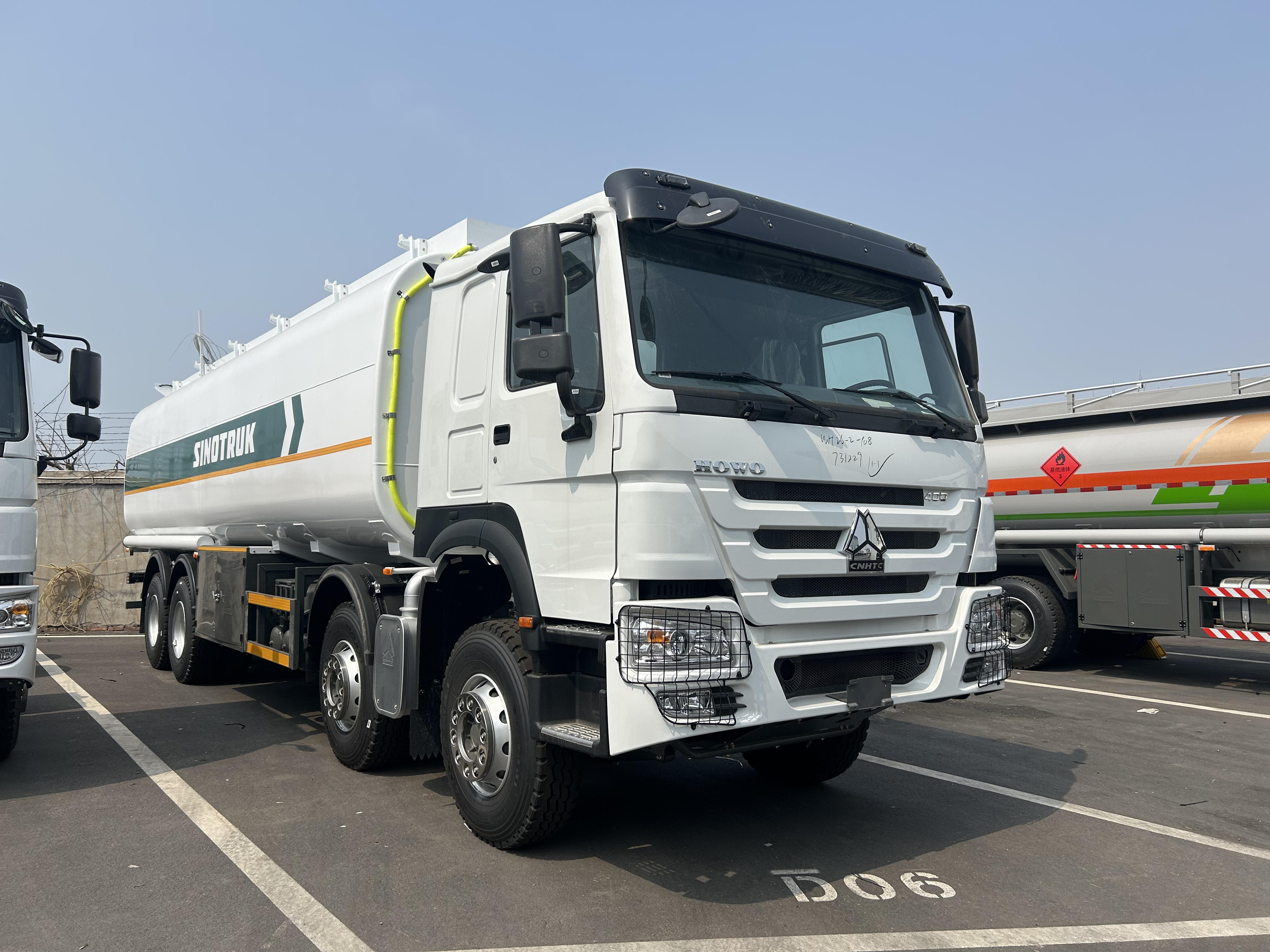
Choose an oil tank truck when frequent road deliveries, direct site access, and a repeatable local or regional route are the priority. It can keep petroleum delivery close to the customer-facing operation: load, drive, meter or discharge where the route requires, then return to the next cycle. This approach is often easier to organize when the fleet controls the vehicle, driver schedule, and loading/unloading routine.
Choose a tank container when the shipment needs an intermodal path or when the same tank may need to move by road, rail, and sea. Its core advantage is transferability: the tank body can remain with the cargo while the transport platform changes. That can simplify handoffs in a multi-leg lane, provided terminals, chassis availability, cleaning arrangements, and cargo approvals have been checked in advance.
Oil tank truck: suited to direct and repeatable petroleum delivery
An oil tank truck is a road-going tanker vehicle configured for a particular operating task. It is especially relevant when dispatchers need to serve several receivers in a day, reach facilities with limited handling infrastructure, or keep deliveries within a defined geography. In these conditions, vehicle accessibility and the unloading sequence can matter as much as nominal tank volume.
A useful checkpoint is inspection access; before deciding, relate it to the actual loading and unloading routine. Can the driver safely position at each delivery point? Is the route dominated by city streets, construction access, or longer highway runs? Is the load dedicated to one product, or do compartments and delivery controls need a more tailored review? These questions help turn an oil tank truck from a generic purchase category into a usable configuration brief.
For regulated dangerous-goods movements, the operating plan also matters. The UNECE describes ADR as covering international road carriage of dangerous goods, including requirements that address crews, equipment, operation, and documentation. Applicability varies by cargo and route, so the right next step is to verify the governing local and cross-border rules with qualified compliance resources rather than assume one configuration fits every petroleum delivery.
Tank container: suited to intermodal liquid cargo flows
A tank container is a tank mounted within a standardized frame designed for handling across compatible transport modes. That makes it useful when tanker transport must continue beyond the road network. For example, a shipment may need a truck move to a rail terminal, a rail leg to a port, and a sea leg before final delivery. Keeping the cargo in the same tank can reduce handling steps between modes, but it does not remove the need to plan cleaning, inspection, booking, and receiving capacity.
The strongest case for a tank container is usually a lane—not a single trip. Repeated intermodal movement can justify the coordination required around terminals and return logistics. If the route is entirely local and receivers need flexible delivery windows, those same handoffs may add time and complexity without creating enough value.
Compare the two options against five practical criteria
| Decision factor | Oil tank truck | Tank container |
|---|---|---|
| Route pattern | Strong fit for direct, frequent road delivery. | Strong fit for planned road-rail-sea or road-rail lanes. |
| Last-mile access | Usually more adaptable where receivers need direct vehicle access. | Depends on chassis, terminal handling, and receiver equipment. |
| Asset control | Vehicle, tank, and driver can be managed as one operating unit. | Tank and transport provider may be managed separately across legs. |
| Turnaround logic | Suited to repeat local cycles when loading and discharge are predictable. | Suited to scheduled intermodal flows where handoffs are planned. |
| Compliance workflow | Focuses on vehicle, driver, route, and delivery procedure. | Requires coordination across each mode, terminal, and container process. |
That is the specification side; the next question is how it behaves in the daily routine. If the route and payload are stable, an oil tank truck may be a practical starting point. If the shipment repeatedly crosses modes or borders, a tank container may create a clearer chain of custody. Neither conclusion is universal, because the carried medium, local regulation, terminal access, and unloading equipment can all change the result.
Cost comparison: avoid treating purchase price as the decision
For an oil tank truck, the cost discussion should include chassis suitability, tank configuration, driver availability, maintenance access, route utilization, and downtime risk. For a tank container, include leasing or ownership, chassis and terminal charges, repositioning, cleaning, inspection, storage, and the cost of missed transfer windows. A lower initial number can become less attractive if it fails to match the route or leaves the operation with frequent empty repositioning.
From price to route fit is the useful shift. Build a lane-level comparison using realistic cycle times, handling points, load frequency, expected empty returns, and the resources at both ends. Ask suppliers to clarify the configuration boundary and the evidence available for any performance, material, or compliance statement. This keeps the decision traceable without relying on generic claims.
A decision checklist for fuel logistics teams
- Map the shipment path. List every loading point, delivery point, terminal, border, and mode change.
- Define the cargo and segregation needs. Confirm the carried product, compatibility requirements, cleaning expectations, and whether dedicated service is needed.
- Test last-mile practicality. Review site access, unloading equipment, driver procedures, and delivery windows.
- Verify regulatory fit. Check the applicable road, rail, sea, and local dangerous-goods requirements with appropriate specialists.
- Model the full cycle. Compare utilization, waiting time, empty moves, inspections, cleaning, and maintenance—not only acquisition cost.
- Choose the configuration after the operating facts are clear. A suitable design must be confirmed against the final cargo, route, and local requirements.
Which solution is better?
An oil tank truck is generally the better fit for direct road-based petroleum delivery with frequent stops, controlled local routes, and a need for flexible on-site service. A tank container is generally the better fit for recurring intermodal liquid cargo lanes where the same vessel needs to move across transport modes. The correct choice is conditional: select the oil tank truck when delivery responsiveness and road access lead the decision; select the tank container when transferability across a planned network creates the stronger operational case.
Before ordering either option, turn the route map into a technical review: cargo characteristics, delivery frequency, operating geography, unloading method, and applicable rules should all be confirmed. That process gives a procurement team a defensible basis for comparing tanker transport choices and helps prevent a specification that works on paper but not in service.