 EN

What Types of Cargo Are Suitable for a Flat Bed Semi Trailer?
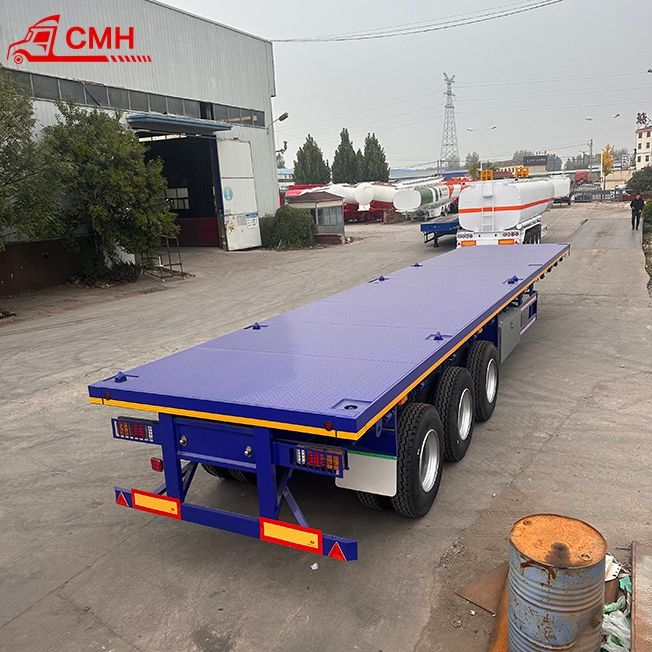
A flat bed semi trailer is built for loads that are difficult to enclose rather than loads that are difficult to move. Its open deck gives shippers crane and forklift access from the sides, top, and rear. That flexibility makes a flat bed semi trailer a practical option for long, wide, tall, or irregular freight when the cargo can be secured and protected appropriately.
From a commercial-vehicle selection advisor’s perspective, the first question is not simply whether a load will fit on a flat bed semi trailer. It is whether the cargo’s dimensions, weight distribution, loading method, route, and exposure to weather match the deck and the securement plan. A useful checkpoint is payload distribution; before deciding, relate it to axle loading, the deck layout, and the actual loading and unloading routine.
When Is a Flat Bed Semi Trailer the Right Starting Point?
A flat bed semi trailer is a strong option when open access solves a real handling problem. Forklifts can approach palletized materials from either side, while cranes can lower structural pieces or machinery from above. That is the specification side; the next question is how the freight behaves during the daily routine. Freight that can be placed flat, blocked, braced, or tied down without relying on trailer walls is generally a stronger candidate.
For U.S. operations, cargo planning must also account for applicable weight limits, axle spacing, route restrictions, and permits. The FHWA notes Federal limits involving single axles and bridge-formula calculations, but the permitted combination depends on the actual equipment, route, and jurisdiction. A flat bed semi trailer should therefore be selected after confirming the load map rather than by gross weight alone.
Common Cargo Categories for an Open Deck Trailer
Steel, pipe, and long fabricated materials
Steel beams, rebar bundles, pipe, tubing, and fabricated sections are common flatbed trailer cargo because their length and shape often make enclosed loading inefficient. A flat bed semi trailer provides room to position dunnage, edge protection, and commodity-appropriate tiedowns. The center of gravity, bundle stability, contact points, and forward restraint still need to be evaluated. A round or smooth item may need chocks, cradles, or other controls to prevent rolling; straps alone are not a cargo plan.
Lumber, panels, and building materials
Lumber packs, plywood, wall panels, roof components, and other job-site materials can suit a flat bed semi trailer when their packaging and moisture tolerance are understood. Side access can shorten forklift handling time at both ends of the trip. However, an open deck trailer exposes the shipment to rain, road spray, and wind. If material quality depends on remaining dry, the shipper should specify tarping, protective wrapping, or a different trailer type before dispatch.
Machinery and construction equipment
Compact machinery, generators, attachments, and fabricated equipment may be viable heavy cargo for a flat bed semi trailer, particularly when a crane or ramp-assisted process is available. Fit depends on more than deck area. Verify machine dimensions, ground clearance, tie-down locations, concentrated load effects, and whether the loading method changes the trailer choice. Tall machinery may require a lower deck, while extreme weight or unusual axle loads may require specialized equipment and permits.
Crated, palletized, and bundled industrial freight
Crated pumps, packaged components, palletized construction supplies, and bundled industrial goods can travel on a flat bed semi trailer if the packaging can withstand an open environment and the load can be positively restrained. This is where incomplete cargo information creates avoidable problems. Confirm the actual crate footprint, declared weight, lift points, stackability, and weather sensitivity rather than assuming a standard pallet pattern will be stable.
Cargo That Needs Extra Review Before Flatbed Transport
A flat bed semi trailer is not automatically the right answer for every oversized or heavy load. Loose bulk material, small items that can fall through or off the deck, temperature-sensitive goods, high-value freight requiring full enclosure, and hazardous commodities may need containment or specialized transport. Cargo with a very high center of gravity, poor tie-down points, or a tendency to shift also requires a specific engineering and securement review.
FMCSA cargo-securement rules apply to all commodities and include commodity-specific requirements for items such as logs, dressed lumber, metal coils, paper rolls, concrete pipe, vehicles, heavy equipment, and large boulders. That does not mean each item belongs on every flat bed semi trailer; it means the commodity determines the required control method. Verify the applicable rules in the operating jurisdiction and the instructions for the actual load.
How to Match the Trailer to the Load
- Describe the freight precisely. Record overall length, width, height, total mass, piece weights, center of gravity, and any projections.
- Map the load on the deck. Check deck space, axle loading, concentrated-weight locations, and clearance needs for a flat bed semi trailer.
- Choose the loading method. Forklift, crane, and ramp loading create different access and stability requirements.
- Build a securement plan. Identify tie-down points, blocking, bracing, edge protection, weather protection, and inspection stops before loading.
- Validate the route. Review bridge, height, width, weight, and permit conditions for the route—not just the origin and destination.
If the route and payload are stable, this may be a practical starting point: use a flat bed semi trailer for freight whose shape benefits from open access and whose securement, exposure, and legal limits can be confirmed. If those conditions are uncertain, treating the decision as a configuration review is safer than treating open-deck capacity as a universal solution.
Final Takeaway
The most suitable flatbed trailer cargo is typically long, wide, crane-handled, forklift-accessible, bundled, crated, or irregularly shaped freight that can be secured against movement and protected from the elements when needed. A flat bed semi trailer can support efficient freight transport for steel, pipe, lumber, building materials, machinery, and industrial packages, but cargo fit depends on the exact payload, route, securement method, and governing requirements. Confirm the final trailer configuration and loading plan with qualified transport and compliance personnel before shipment.