
 EN
EN

How to Maintain Water Truck Hoses and Spray Components?
A water truck can look ready for work even when a hose cover is scuffed, a clamp is walking loose, or a spray nozzle has started to lose its pattern. Those small signs matter because the tank, plumbing, water pump, valves, and spray heads work as one system. A practical maintenance routine helps an operator identify a minor issue before it becomes a roadside leak, an uneven dust-control pass, or an avoidable interruption.
From an equipment-operations perspective, the useful question is not simply whether the truck still sprays. It is whether the water truck hose path, fittings, pump inlet, and spray components are in condition for the route, water quality, pressure setting, and daily duty cycle. The steps below are a general maintenance framework; follow the vehicle, pump, hose, and safety instructions that apply to the specific unit.
Start with a safe, repeatable inspection routine
Park on stable ground, secure the vehicle, isolate the power source as required by the manufacturer, and release pressure before opening a line or removing a nozzle. Do not place hands near a suspected leak while the system is pressurized. Water under pressure can move a loose hose, fitting, or clamp unexpectedly.
A good routine separates a quick pre-shift check from a more deliberate scheduled inspection. Before each shift, walk the visible water path from tank outlet to suction line, water pump, discharge plumbing, and spray bars. After a repair, long haul, or abrasive jobsite exposure, add a closer check. A useful checkpoint is inspection access; before deciding that a part is serviceable, relate it to the actual loading, filling, and spraying routine.
- Look for damp spots, drips, staining, or dust tracks around hose ends, valves, manifolds, and pump seals.
- Check that clamps, couplings, retainers, and guards are present and seated correctly.
- Confirm that hoses are not pinched, sharply bent, dragged across edges, or rubbing against a frame member.
- Note unusual pump noise, vibration, heat, or a change in spray coverage during a controlled functional test.
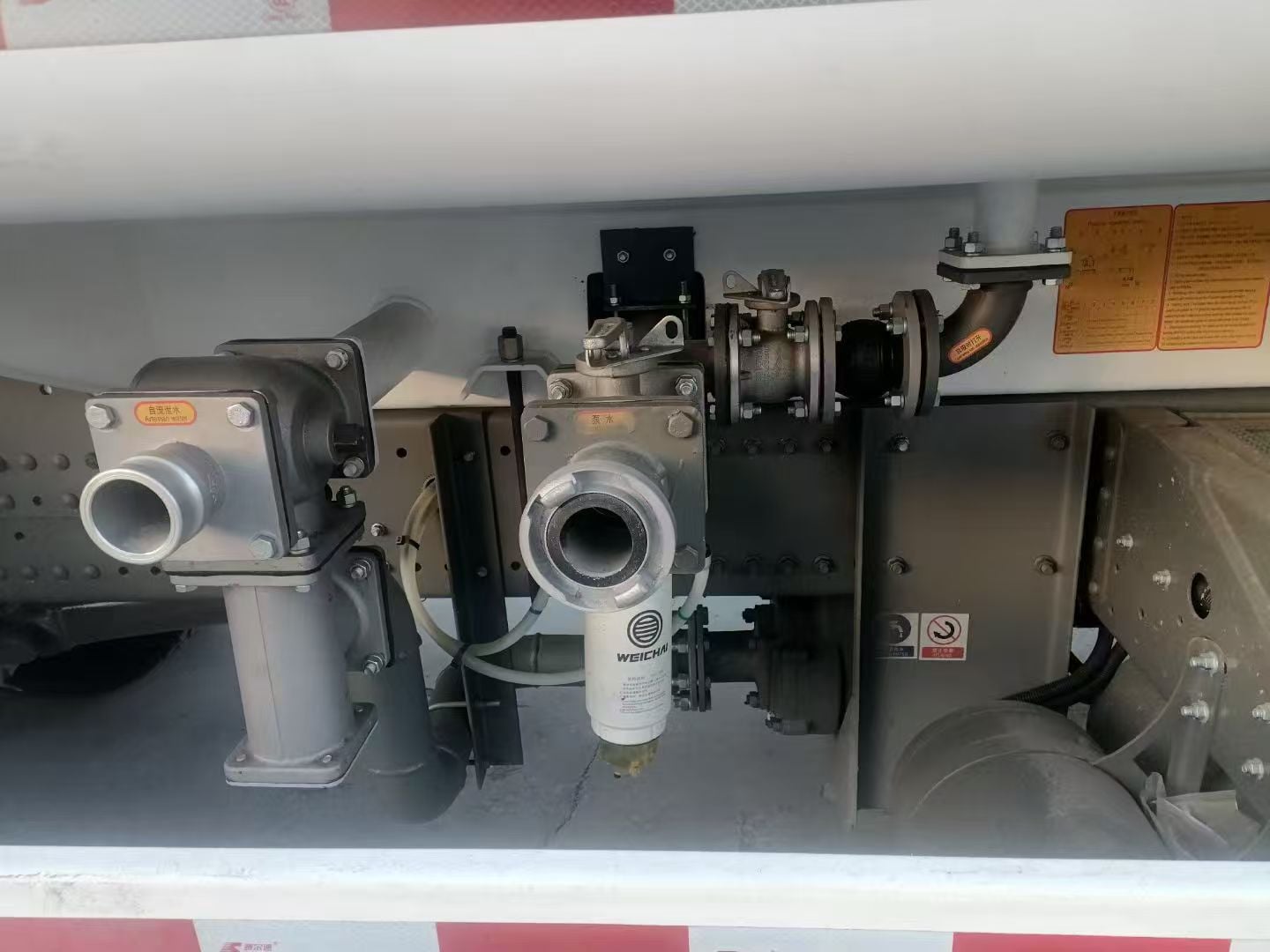
Keeping a short inspection record is worthwhile. Record the date, operator, location of the concern, and action taken. This creates a clear handoff between drivers, maintenance staff, and supervisors without claiming that one fixed interval fits every water truck.
Inspect a water truck hose from end fitting to end fitting
A water truck hose should be inspected along its entire accessible length, not only where a leak is already visible. Flex the hose gently where safe to do so and look for cuts, deep abrasion, cracking, soft spots, bulges, flattening, exposed reinforcement, or a cover that is separating. Any of these conditions can change how the hose behaves when pressure rises.
Pay special attention to bends near couplings and to sections that contact brackets, the tank, or the ground. A hose may appear sound when empty but reveal damage when it is routed tightly or vibrates in service. It is not simply a material issue; more precisely, exposure and maintenance practice both matter. Sunlight, chemical residue, freezing conditions, road debris, and repeated rubbing can all shorten serviceable life.
Check fittings, clamps, and seals
Examine each coupling for corrosion, damaged threads, distorted locking parts, and signs that the fitting has moved relative to the hose. Check clamps for looseness, deformation, and sharp edges that may cut the cover. Inspect gaskets and seals for flattening, cracking, or contamination. Replace components according to the equipment maker’s requirements rather than tightening a damaged connection beyond its intended condition.
If a hose needs replacement, verify the application requirements before selecting a new one: fluid compatibility, operating pressure, temperature exposure, bend radius, end connection, and routing space all affect fit. A lower initial price does not by itself answer the operating-cost question when the replacement changes the safety margin or creates a new rubbing point.
Keep spray components clean and verify the pattern
Spray system maintenance begins with clean water pathways. Sediment, scale, loose tank debris, or material introduced during filling can restrict strainers, nozzles, and valve passages. Follow the component manufacturer’s instructions for draining, flushing, and cleaning. Do not use a drill bit, wire, or other tool that could enlarge or reshape a nozzle orifice unless the manufacturer specifically permits that method.
After cleaning, perform a controlled test in a suitable area. Observe the spray pattern from a safe position and compare the left and right sides, front and rear outlets, or individual heads as applicable. Look for weak streams, blank areas, persistent drips, and nozzles that point away from the intended coverage zone. That is the cleaning side; the next question is whether the valve responds consistently through its full operating movement.
- Clean accessible strainers and nozzle screens using the approved method.
- Confirm manual, pneumatic, or hydraulic valve controls open and close fully.
- Inspect spray-bar mounts and nozzle holders for cracks, missing hardware, or misalignment.
- Test low and normal operating settings only within the system’s specified limits.
Do not compensate for a restricted nozzle by raising pressure above the specified range. Find the restriction, alignment issue, or valve problem first. If the route and payload are stable, this may be a practical starting point: compare the observed pattern with the coverage the job actually requires and document any adjustment.
Protect the water pump and suction side
The water pump depends on a clear, properly sealed supply path. Before operating, check tank level, suction hose condition, inlet connections, and any strainer or filter specified for the system. A suction-side air leak may show up as inconsistent flow, loss of prime, unusual noise, or unstable spray output. Those symptoms are signals to stop and inspect; they are not enough to identify a single cause without the relevant service information.
Keep debris from entering the pump and clean accessible strainers on the schedule appropriate to the water source and operating conditions. Monitor abnormal noise, vibration, or temperature during the test cycle. If these conditions persist, remove the unit from normal use and follow the pump manufacturer’s troubleshooting procedure or have qualified personnel assess it. Continuing to run a water pump with unexplained symptoms can turn a simple blockage or seal issue into a broader repair.
Use a maintenance schedule that matches the duty cycle
| When | What to check | What to record |
|---|---|---|
| Before each shift | Visible hose damage, leaks, fittings, valve position, and basic spray response | Defects found and whether the unit was released for service |
| After dusty, rough, or long-haul work | Hose routing, abrasion points, spray-bar mounts, and accumulated debris | Areas cleaned, adjusted, or protected |
| Scheduled maintenance | Strainers, seals, clamps, nozzle condition, water pump observations, and system test | Parts replaced, test observations, and next review date |
| Before cold storage or extended downtime | Drainage, freeze protection, hose storage, and exposed spray components | Storage preparation and recommissioning checks |
Tanker maintenance is most effective when it is matched to actual exposure. A truck that fills from a clean source and runs short paved routes may need a different inspection rhythm than one working around aggregate dust, uneven ground, or frequent stop-start spraying. Set the schedule with the applicable manuals and your maintenance team, then revise it when recurring defects show a pattern.
Know when to stop and escalate
Remove the water truck from normal spraying and seek qualified assessment when a hose has exposed reinforcement, a coupling is damaged or moving, a leak cannot be isolated safely, a valve will not control flow reliably, or the pump shows persistent abnormal noise, vibration, heat, or loss of prime. The relevant technical question is whether the component remains suitable for its present operating condition—not whether it can be made to finish one more shift.
Routine checks do not replace manufacturer instructions or site safety procedures, but they give operators a clear way to spot changes early. Inspect the water truck hose path, clean and test spray components, protect the suction side, and record what you find. That combination supports steadier spray performance and gives the maintenance team better information for timely repairs.