 EN

What Makes Light Trucks Suitable for Urban Logistics Operations?
For urban logistics, a light truck is often useful not because it is the biggest transport vehicle available, but because it can make repeated, constrained stops easier to manage. City cargo delivery combines narrow access points, curbside loading rules, mixed traffic, short route legs, and changing order volumes. A suitable light truck must therefore fit the work pattern as well as the cargo.
For a fleet planner, the practical question is not simply “How much can it carry?” It is whether a light duty truck can move the planned cargo safely, enter the delivery area, support the loading process, and complete the route without creating avoidable idle time or handling delays. When those conditions align, a light truck can be a sensible tool for urban logistics.
Urban logistics rewards fit, not maximum size
Urban routes put a transport vehicle through a different duty cycle than a long-haul route. The day may involve many stops, frequent turns, curb approaches, limited parking windows, and deliveries to alleys, loading bays, retail streets, or small distribution points. Research on urban freight commonly treats the “final 50 feet” as the point where a truck reaches a curb, commercial load zone, or alley. That last segment can determine whether a delivery is quick and orderly or slow and disruptive.
A light truck can suit this environment when its dimensions, turning behavior, and body layout are compatible with those access conditions. A smaller footprint may help a driver position the vehicle near a receiving point where a larger unit would require more space or create a longer carry distance. This is an operational advantage only when confirmed against the actual route, local restrictions, and vehicle specification; it is not an automatic benefit of every model.
Why a light truck can work well for cargo delivery
1. It can match dense, multi-stop routes
In high-stop cargo delivery, the value of a light truck comes from repeatability. The vehicle needs to move between short route legs, stop safely, and let the driver or crew complete each handoff with minimal unnecessary movement. If the cargo volume per stop is moderate and the route has regular unloading points, a light duty truck may offer a better balance than dispatching a much larger vehicle with unused space.
Route planning still matters. A poorly sequenced route can waste time regardless of vehicle class. Fleet teams should compare expected stop count, distance between stops, loading-window rules, and return loads before deciding that a light truck is the right choice.
2. Access and maneuvering can support the delivery workflow
FHWA guidance on urban freight notes that better management of curbside loading areas can facilitate truck loading and parking while improving traffic flow. That creates a practical selection test: can the chosen light truck approach, position, and depart from the places where it will actually deliver?
Consider entry width, turning space, overhead limits, pedestrian activity, and whether the driver must reverse into a bay or park at the curb. A compact transport vehicle may reduce the physical difficulty of these movements, but drivers still need an appropriate body width, mirror visibility, and safe loading-side access. The configuration should be checked against the site rather than assumed from a category name.
3. Cargo bodies can be matched to handling needs
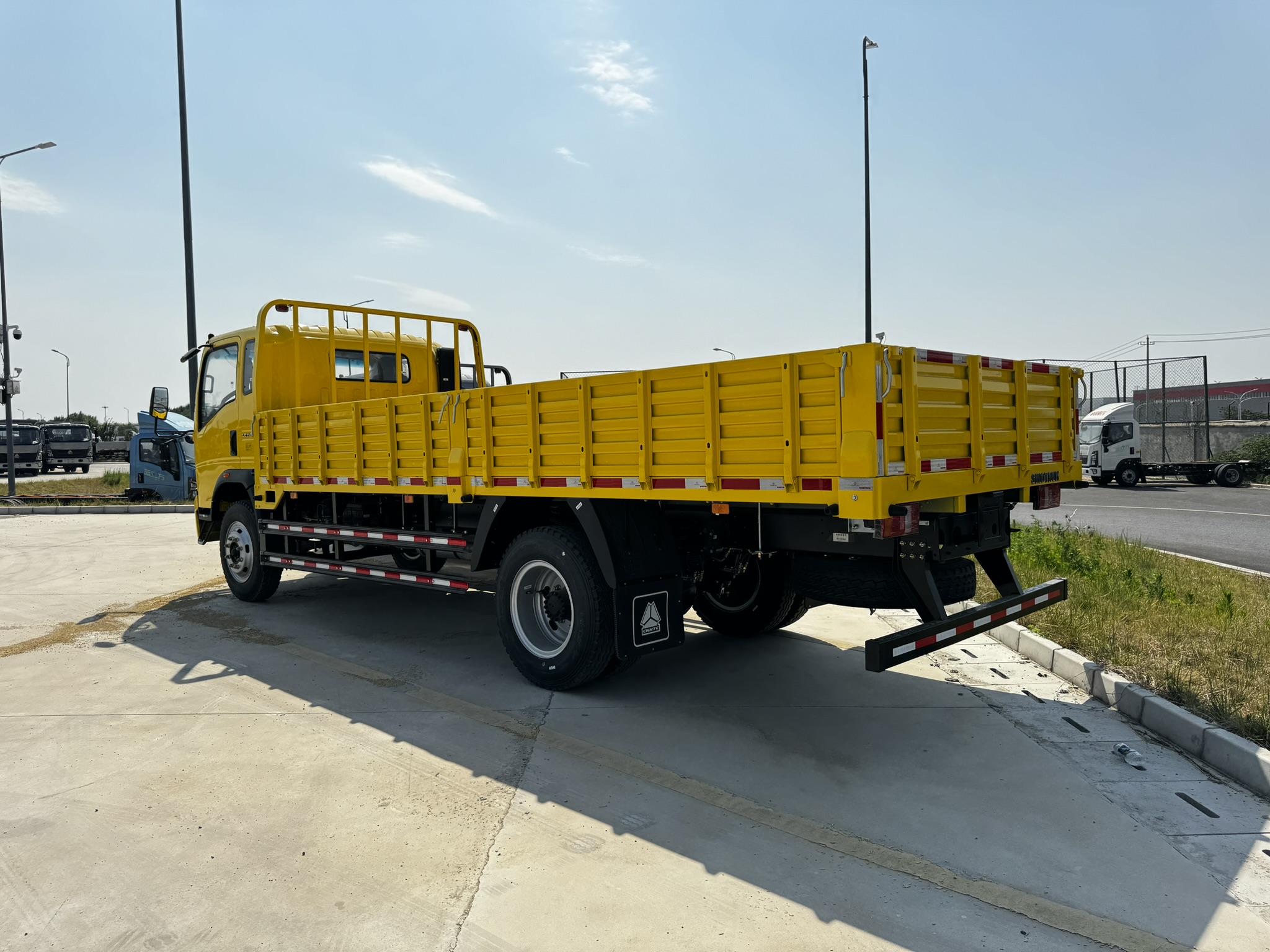
A light truck is flexible when its cargo area supports the product flow. Box bodies can protect packaged goods; dropside or platform arrangements may simplify access for loads handled from the side; and lift-assist equipment may be relevant where manual handling is not suitable. The correct choice depends on cargo dimensions, package stability, loading equipment, weather exposure, and the receiving team’s process.
For urban logistics, cargo delivery is often constrained by handling time rather than road distance. Review the number of touches needed from warehouse to vehicle, vehicle to curb, and curb to receiver. A body layout that reduces re-stacking or long carries can improve the workflow even when the payload is unchanged.
4. Payload and volume can be balanced against route reality
A light truck should be selected with both mass and cubic volume in mind. Bulky, low-density packages can fill the body before reaching a practical payload limit. Dense cargo can reach a weight limit while plenty of physical space remains. Either mismatch can reduce route efficiency or create pressure to overload.
Start with a simple route profile: typical shipment weight, typical shipment volume, maximum single item, stops per run, and anticipated backhaul. Then compare it with the manufacturer-confirmed payload, body volume, axle limits, and load-securing arrangement for the exact light duty truck configuration. Do not rely on a generic category label or an unverified advertised capacity.
Operating factors that deserve equal attention
- Stop duration: Map the time spent finding a legal position, opening the cargo area, unloading, obtaining proof of delivery, and rejoining traffic.
- Loading discipline: Secure cargo for the actual route, especially where frequent braking, turns, or uneven access roads are expected.
- Idle management: U.S. EPA freight guidance identifies reducing unnecessary idling and creep time as a useful operating practice. Route design and realistic appointment planning matter alongside vehicle choice.
- Service access: A fleet should verify routine inspection points, maintenance support, tire strategy, and parts identification for the final configuration.
- Driver workload: Cab visibility, entry and exit frequency, cargo-door operation, and safe access around the vehicle can affect whether a transport vehicle works well over repeated shifts.
When a light truck may not be the right fit
Urban logistics does not automatically mean “smaller is better.” A light truck may be unsuitable when the route consistently requires more payload or volume than the vehicle can legally and safely carry, when cargo needs specialized temperature control or handling equipment, or when a site’s access conditions demand another body style. It may also be inefficient if deliveries can be consolidated into fewer, larger drops served by a different vehicle class.
The decision comes down to matching the vehicle to the duty cycle. A transport vehicle that is easy to place but needs multiple extra trips may not be the economical choice. Conversely, a large vehicle that cannot reliably access the delivery point may create hidden labor and delay costs.
A practical light truck selection checklist
- Document typical cargo weight, volume, dimensions, and securing needs.
- Map route constraints, including street width, curb rules, loading-bay access, and height limits.
- Estimate stops per shift and realistic dwell time at each stop.
- Confirm payload, axle limits, body dimensions, and cargo-access details for the exact light truck configuration.
- Review loading equipment, driver safety, maintenance access, and local compliance requirements.
- Run a representative route trial before standardizing a fleet decision.
Conclusion
A light truck is suitable for urban logistics when it provides the right balance of cargo capability, access, maneuverability, and handling efficiency for a defined route. Its strongest role is usually in structured, multi-stop cargo delivery where the vehicle can reach receiving points without compromising safe loading or legal payload limits. Treat a light duty truck as a route-specific business tool: verify the configuration, test the workflow, and measure the full delivery cycle before making a fleet commitment.