 EN

What Are the Main Truck Categories Covered by the Term Camion?
In French- and Spanish-influenced markets, camion is commonly used for a truck or lorry. It is a useful everyday term, but it is not one universal engineering or legal category. A camion might be a small delivery vehicle, a rigid freight truck, a tractor unit hauling a trailer, or a purpose-built vehicle for a particular load. For fleet planning, the better question is not simply “What is a camion?” but “What work must this camion perform?”
From a fleet procurement viewpoint, that distinction matters. Payload, road conditions, loading method, route length, maneuvering space, and service support can change which cargo vehicle makes sense. The sections below group the main commercial truck categories by layout and job, then separate those practical names from formal weight classes.
Camion is a broad transport term, not a single specification
In ordinary conversation, camion often means a goods-carrying truck. Dictionary and translation sources also show that the word can have broader local meanings, so buyers should confirm what a supplier, operator, or regulation means in context. One market may use camion for almost any cargo vehicle; another may reserve it for a larger road-going truck.
That is why commercial truck categories are usually described in two layers. The first is the physical layout and body: rigid truck, tractor unit, box body, tipper, tanker, and so on. The second is a legal or operational class based on permitted mass, axles, dimensions, licensing, or route rules. A name alone does not establish payload or compliance.
1. Light-duty delivery camion and vans
The light end of the camion range covers vans, pickup-based cargo vehicles, and compact box trucks used for urban or regional distribution. These vehicles prioritize access, parking, stop frequency, and operating economy over maximum payload. An enclosed body protects parcels and general freight, while a pickup or dropside body can suit short, mixed-load work.
For this category, assess door arrangement, cargo-floor height, turning space, and the weight of the real load rather than judging by cargo volume alone. A cargo vehicle that looks spacious can reach its permitted mass before it is physically full.
2. Medium-duty rigid trucks
A rigid camion has its cab and cargo body on one permanent chassis. This group includes curtain-sided trucks, box trucks, platform trucks, and service bodies. It is common where a business wants a self-contained vehicle for scheduled distribution, equipment transport, or site deliveries without coupling a separate trailer.
Rigid commercial truck categories offer a direct relationship between wheelbase, body length, and maneuverability. The trade-off is that the truck cannot leave one body behind and collect another as a tractor unit can. If the route includes tight yards or frequent unloading, that simplicity may be useful. If loads vary sharply from day to day, a different layout may provide more flexibility.
3. Heavy truck tractor units and semi-trailers
A heavy truck often consists of a tractor unit and a semi-trailer. The tractor carries the engine and fifth-wheel coupling, while the trailer supplies the cargo platform or specialized body. In many markets this combination is still described broadly as a camion, even though its working configuration depends on the attached trailer.
This arrangement can support long-haul freight and changing assignments because the tractor may couple to different trailers. A fleet can match a curtain-sider, flatbed, refrigerated trailer, or tanker to the load. The practical checks are coupling compatibility, axle layout, route restrictions, loading equipment, and available service support. Capacity versus maneuverability is a real trade-off: a longer articulated combination may carry more, but it may be less suitable for constrained sites.
4. Open-body cargo vehicles: flatbeds, dropsides, and low-loaders
Open-body camion types are designed for freight that does not need a sealed enclosure. Flatbeds and dropsides can carry palletized goods, construction materials, machinery, or long items when correct restraint points and load-securing practices are used. Low-loaders are more specialized cargo vehicle combinations intended to move tall or heavy equipment while managing overall transport height.
Versatility is different from universal suitability. A flatbed may be adaptable, yet it still needs appropriate restraint equipment, load distribution, and weather planning. A useful checkpoint is the unloading task: before deciding, relate the body type to the actual equipment, dock, crane, or forklift available at both ends of the route.
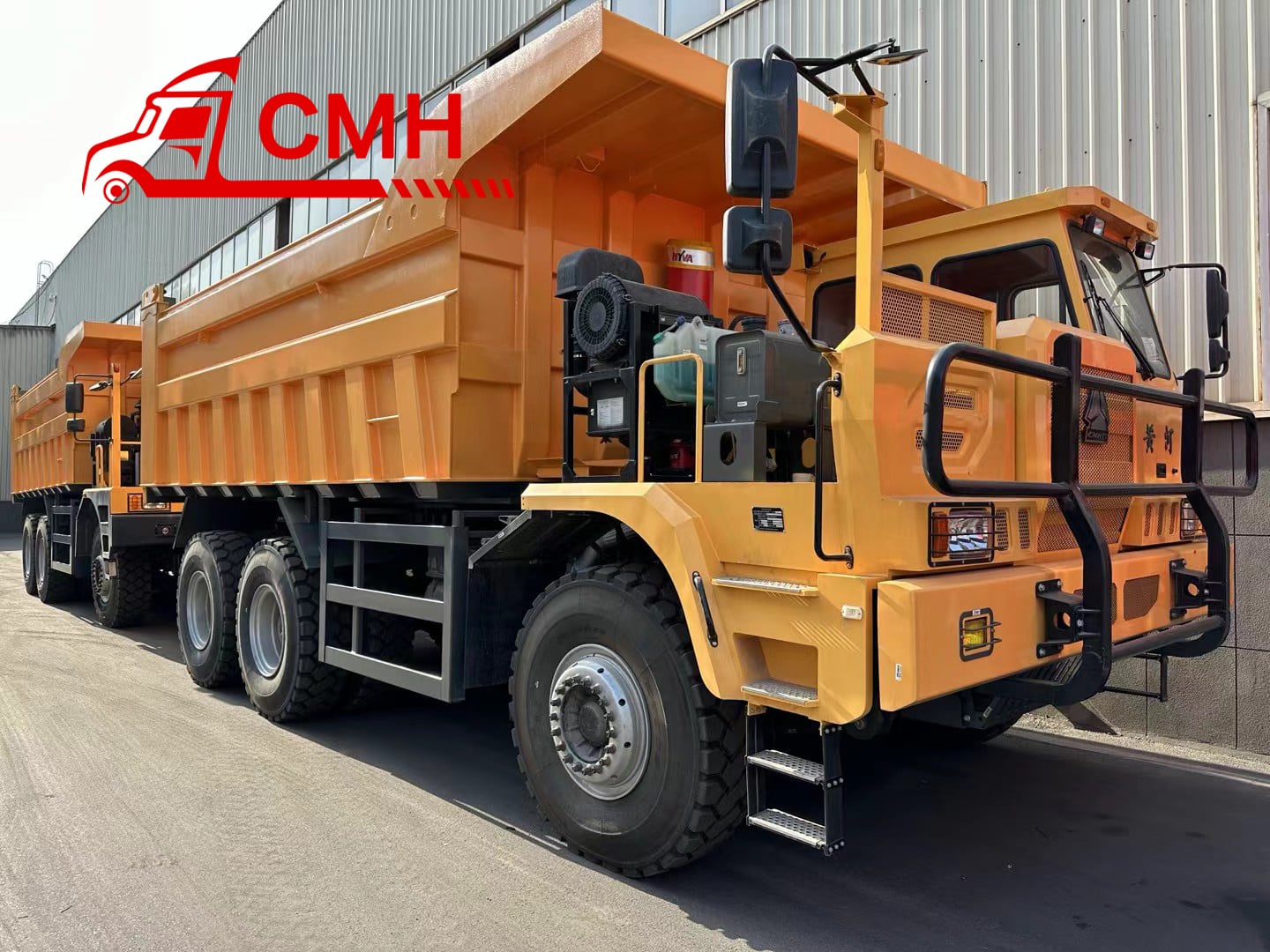
5. Tippers, mixers, and other construction-oriented camion types
For bulk material and site work, the relevant camion may be a tipper (dump truck), concrete mixer, or chassis prepared for a municipal or construction body. A tipper uses a raising body to discharge loose material. Its fit depends on material type, body volume, payload limits, terrain, and the stability of the unloading area.
Road conditions alter configuration priorities. A heavy truck used on prepared highways may need a different axle, tire, suspension, or body approach from one entering uneven worksites. Buyers should verify the final configuration against local rules and the intended duty cycle rather than treating a generic model name as a complete answer.
6. Tankers, refrigerated vehicles, and other specialized bodies
Some commercial truck categories are defined chiefly by the cargo they protect or contain. Tankers move liquids or bulk materials; refrigerated bodies control temperature for suitable freight; refuse collectors, vehicle carriers, and recovery trucks perform specialized tasks. This kind of camion should be evaluated as a system: body, pumping or cooling equipment, safety procedures, loading method, inspection access, and applicable regulation all matter.
It is especially important not to assume that one tank configuration suits every liquid or that one insulated body meets every temperature requirement. Confirm the load characteristics, cleaning process, discharge method, and any required approvals for the actual operation.
How legal truck classes fit in
Body style and formal category are not the same. For example, the EU uses N categories for goods vehicles: N1 is up to 3.5 tonnes maximum mass, N2 is above 3.5 tonnes up to 12 tonnes, and N3 is above 12 tonnes. A box-body camion or a tanker can fall into different mass classes depending on its completed configuration. Other countries use different systems, so the registration documents and local rules remain the authority.
A practical way to classify the right camion
Start with the freight and the operating pattern, then compare commercial truck categories against that brief:
- Load: weight, volume, dimensions, temperature needs, and whether it is liquid, bulk, palletized, or machinery.
- Route: distance, grades, urban access, road surface, and legal limits.
- Handling: dock, forklift, crane, pump, or tipper unloading requirements.
- Configuration: rigid truck versus tractor-and-trailer, axle layout, and body type.
- Lifecycle needs: inspection access, maintenance planning, driver familiarity, and local support.
In short, camion is an umbrella term for cargo-carrying trucks, from light delivery vehicles to articulated heavy truck combinations and specialized work bodies. The right camion category follows the task, not the label: clarify the load and route first, then verify the final vehicle specification before purchase or operation.