
 EN

Comparing Small-Capacity and Large-Capacity Mixer Truck Solutions
A mixer truck is not automatically more useful because its drum is larger. For a fleet planner, the practical question is whether the truck’s capacity, chassis, route, and dispatch rhythm match the pour schedule. A small-capacity mixer truck can protect access and reduce unused payload on scattered work. A large-capacity mixer truck can reduce trips when concrete demand, plant output, and legal road conditions support it. The better choice comes from the operating boundary, not the headline drum volume.
As a fleet procurement planner, I would compare a mixer truck against operating requirements before treating purchase price as the decision. This is especially important where concrete supply must reach urban projects, road works, or remote sites with different grades, turning space, and service support. Capacity is only one part of delivery efficiency; loading time, travel time, unloading sequence, cleaning, inspection access, and standby coverage all shape the result.
Start With the Work Pattern, Not the Drum Size
Before comparing mixer capacity, map a normal day: expected concrete volume per pour, number of pours, distance from batch plant to site, queue time, site access, and the time allowed by the project specification for discharge. ASTM C94/C94M guidance makes the delivery-ticket time requirement important for ready-mixed concrete, but local specifications and the purchaser’s stated limit control the actual job. A larger mixer truck cannot recover time lost in traffic, at the gate, or at an unprepared pour location.
Likewise, nominal capacity is different from usable payload. Gross vehicle weight, axle ratings, bridge rules, road dimensions, chassis configuration, and concrete density can restrict how much material a mixer truck can legally carry. Verify the final configuration and destination rules with the relevant authority and supplier documentation. This is a verification direction, not a confirmed performance claim for any particular truck.
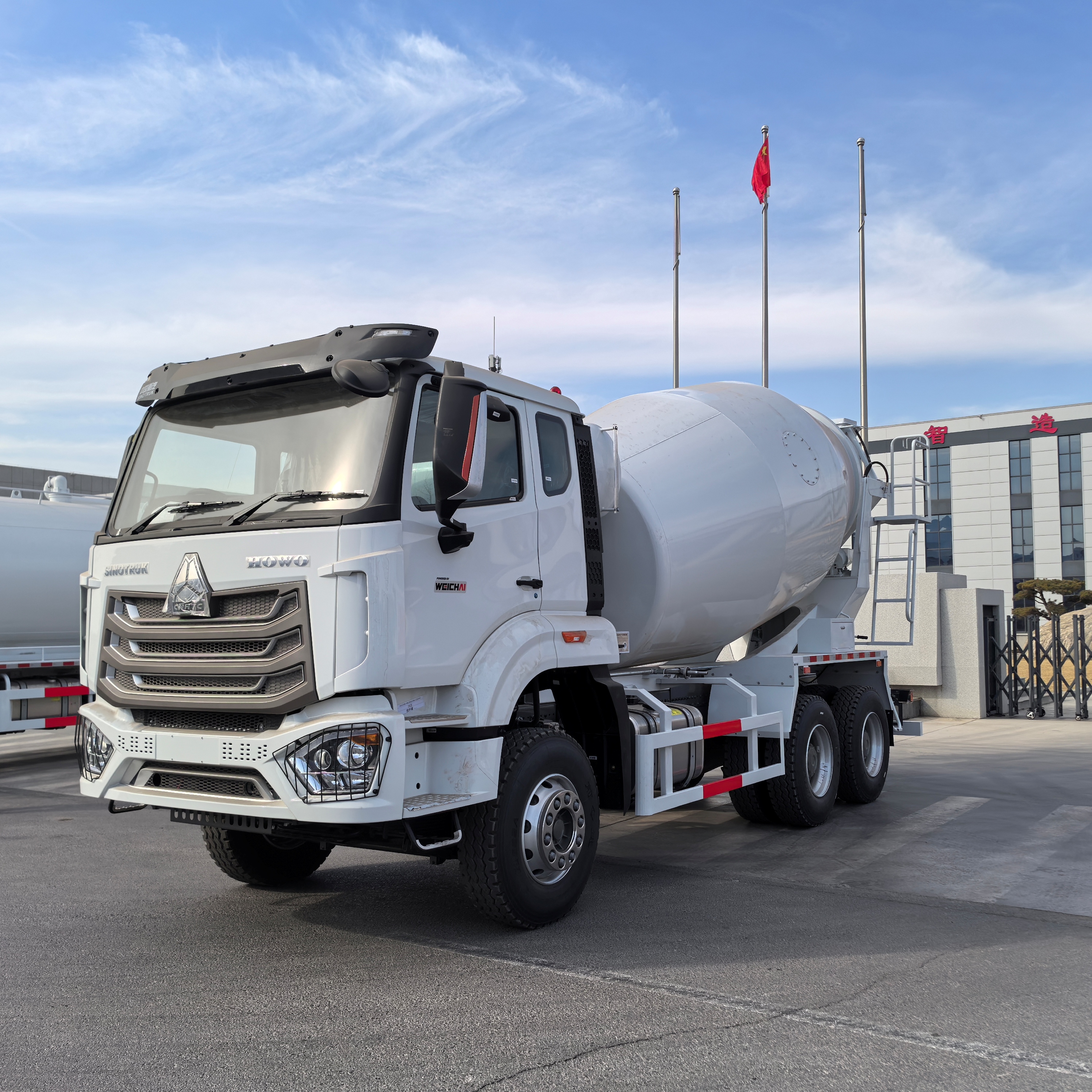
When a Small-Capacity Mixer Truck Makes Sense
A small-capacity mixer truck is often a strong fit for constrained access and varied dispatch. It can be easier to position in compact urban areas, narrow approaches, sites with limited turning space, or projects where the pour is broken into smaller placements. Where a batch plant serves many short, irregular deliveries, a smaller unit may reduce the risk of carrying excess concrete simply because the next job is uncertain.
- Access-sensitive sites: Smaller overall dimensions and lower loaded weight may make route and site planning more manageable, subject to the actual vehicle specification.
- Smaller or phased pours: The truck can align better with repair work, municipal tasks, precast support, and staged foundations.
- Flexible fleet dispatch: Several smaller loads can be sequenced across different customers when the concrete supply plan changes during the day.
- Lower exposure to partial-load waste: If demand is uneven, capacity closer to the order size can improve utilization.
The trade-off is straightforward: if the site consistently needs high volume and the plant is far away, more trips may be required. That can raise driver hours, fuel use, drum operating time, and scheduling pressure. A small-capacity mixer truck is not a low-cost answer by default; more precisely, it is a practical answer when access and load matching outweigh trip reduction.
When a Large-Capacity Mixer Truck Adds Value
A large-capacity mixer truck tends to fit sustained, high-volume concrete supply where roads, axle limits, batch-plant output, and site handling are already planned for the load. For large slabs, infrastructure work, or repeat deliveries to a prepared site, carrying more per trip can reduce the number of vehicle movements needed to support a pour. That may improve delivery efficiency when loading and unloading can keep pace.
- High-volume, repeatable pours: Larger loads can help maintain continuity where the site can receive and place concrete without delay.
- Longer plant-to-site cycles: Reducing the number of trips may be useful when dispatch capacity is limited, provided time and quality requirements remain achievable.
- Planned access and support: A large mixer truck needs adequate approach roads, turning room, firm standing areas, and a service plan for the chassis and mixer body.
- Fleet productivity targets: A high utilization route can justify a larger unit when each trip is consistently full and lawful.
But capacity has a ceiling set by the operating environment. A useful checkpoint is weight versus durability: before deciding, relate it to axle distribution, pavement condition, and the daily loading and unloading routine. More drum volume may require a different axle arrangement or route plan. It may also be unsuitable for sites with weak access roads, tight gates, or unreliable unloading readiness.
Compare the Two Options on the Same Decision Sheet
| Decision factor | Small-capacity mixer truck | Large-capacity mixer truck |
|---|---|---|
| Typical fit | Variable orders, constrained access, phased work | Stable high-volume pours and prepared routes |
| Concrete supply approach | More frequent, smaller deliveries | Fewer, larger deliveries where utilization is high |
| Site access | Often more adaptable, subject to dimensions and local rules | Requires more route, turning, and standing-area verification |
| Dispatch risk | More trip coordination can be needed | Greater consequence if one large load is delayed or rejected |
| Delivery efficiency lever | Match load size to real order size and maneuverability | Reduce trips when lawful payload and receiving capacity support it |
Use this sheet with actual records rather than assumptions. Record the operating condition behind each issue: order volume, route restriction, waiting time, rejected-load reason, plant loading queue, and unload duration. A simple record often shows whether the real bottleneck is mixer capacity or an avoidable dispatch and site-readiness problem.
Protect Delivery Efficiency With a Fleet Mix
For many contractors and concrete suppliers, a practical solution is not an all-small or all-large fleet. A mixed fleet can cover high-volume scheduled work while retaining smaller mixer truck options for restricted sites and variable orders. The right ratio depends on dispatch history, not a generic capacity rule.
During procurement, ask for the final chassis dimensions, empty and loaded weight information, axle configuration, drum volume, local service access, parts availability, and a clear maintenance routine. JINAN CMHAN TRUCK SALES CO.,LTD. supplies trucks and construction equipment for logistics and construction applications; final product specifications, route suitability, and after-sales arrangements should be confirmed for the destination and chosen configuration.
Choose Capacity as a Controlled Operating Decision
The decision between a small-capacity and large-capacity mixer truck should follow the same order: confirm the project’s concrete supply profile, test the route and legal load boundary, review site access, then compare the total cycle time. Small capacity favors flexibility and access. Large capacity favors trip reduction when the whole delivery system can support it. Neither is universally better.
Before ordering, run representative dispatch scenarios and verify the final specification. That approach turns mixer capacity from a simple purchase feature into a controlled choice for delivery efficiency, equipment utilization, and dependable concrete supply.