 EN

What Are the Main Applications of an Oil Tank Truck?
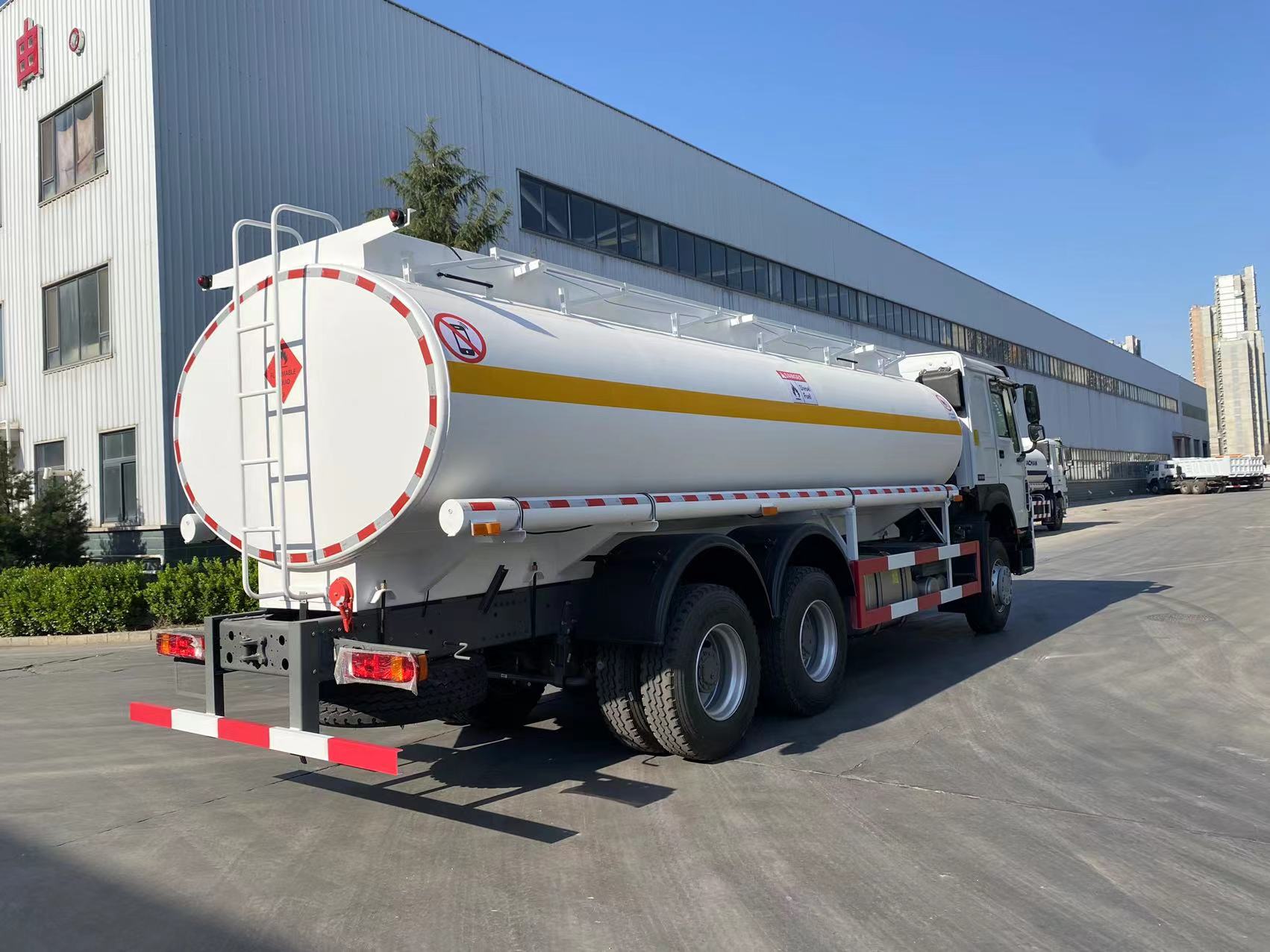
An oil tank truck is a road vehicle designed to move liquid petroleum products or related fluids between terminals, depots, customer sites, and mobile work locations. Its value is not simply that it carries a large volume of liquid. It provides a controlled way to load, transport, meter or transfer a specified medium where fixed pipelines are unavailable or impractical. From a fleet-procurement viewpoint, the first question is therefore not “Which tank is biggest?” but “What will this vehicle carry, where will it travel, and how will it unload?”
The terms fuel tank truck and oil tanker truck are often used broadly. In practice, the appropriate configuration depends on the product, route, delivery pattern, site conditions, and local rules. This article maps the main tanker truck applications and the operational questions behind them. It is general guidance rather than a substitute for jurisdiction-specific compliance, final specifications, or professional safety review.
1. Retail and commercial fuel distribution
A core application of an oil tank truck is delivering refined fuel from a terminal or depot to retail stations, commercial tanks, fleet yards, generators, and other authorized storage points. Depending on the local supply chain, a delivery may involve gasoline, diesel, heating oil, or another approved petroleum product. Where a route serves multiple customers or grades, compartment layout and delivery sequencing become practical planning issues.
For this type of fuel transportation, the delivery process matters as much as tank volume. A fleet needs to confirm product segregation, loading procedure, hose routing, transfer connections, grounding or bonding practices where applicable, spill response equipment, and safe access at the receiver’s fill point. Local regulations vary, but they commonly address vehicle inspection, driver qualification, hazardous-materials handling, and prevention of overfill or release. The right question is whether the tank, transfer system, and customer-site routine work together for the specific delivery task.
2. Fleet-yard and mobile refueling
An oil tank truck can also support controlled refueling at a customer’s own operating base. Contractors, freight fleets, mining or quarry support teams, agricultural operators, and municipal fleets may need fuel delivered to equipment that returns to a defined yard or works away from public filling stations. This can reduce travel for refueling when the site has suitable procedures and the relevant permissions are in place.
Mobile refueling should not be treated as a generic “drive up and dispense” service. A useful checkpoint is unloading access: before deciding, relate it to the actual parking layout, ignition-source controls, ground conditions, traffic management, receiving-tank capacity, and spill-response plan. The site must be able to receive the intended quantity safely. If the work area changes frequently, maneuverability and safe hose management may be more important than maximum capacity.
3. Construction, infrastructure, and remote-project supply
Road projects, earthmoving operations, temporary plants, and remote industrial work often rely on fuel delivered by truck because permanent fuel infrastructure is not present at the work face. In this setting, an oil tank truck may supply approved storage arrangements or support equipment and generators according to the project’s operational controls.
Route quality, site access, and daily duty cycle should guide the configuration review. A larger tank is not automatically better if tight entrances, uneven surfaces, limited turning space, or partial-load routes create a different operational risk. A fuel tank truck selected for remote work may need a well-defined service routine for hoses, valves, access points, tires, and braking systems because small defects can interrupt an entire project’s fuel supply. Confirm the final vehicle specification and project safety requirements before assigning it to the task.
4. Agricultural and seasonal equipment support
Agricultural operations can use tanker truck applications to move approved fuels to farms, irrigation pumps, harvest equipment, or seasonal work locations. The application is especially relevant when equipment is spread across fields or when travel to a conventional station would consume valuable operating time. Delivery planning may be seasonal, so the tank truck’s utilization pattern can change sharply during planting or harvest periods.
Here, capacity versus maneuverability is a real trade-off. A unit sized for long rural runs may not be suitable for every farm track, loading area, or weather condition. Before planning an agricultural route, clarify the carried product, road restrictions, grade changes, ground bearing conditions, transfer point, and receiving capacity. This avoids choosing an oil tanker truck based on capacity alone while overlooking access and unloading constraints.
5. Heating-oil and local energy deliveries
In markets where heating oil remains part of the energy supply mix, tank trucks deliver fuel to residential, commercial, or institutional storage systems. These routes often require frequent stops, careful delivery scheduling, and attention to the condition and accessibility of the receiving installation. The tanker may be configured for the delivery pattern, but the driver still needs a safe and verified transfer environment at every stop.
This application illustrates why a truck should be evaluated as a system rather than as a tank body alone. Tank capacity, compartment arrangement, pump and hose compatibility, route density, service access, and the local delivery rules all affect whether an oil tank truck fits the operation. If the route is stable and receiving locations are consistently accessible, a repeatable inspection and delivery routine may be practical. If locations vary widely, the fleet should put more emphasis on route and site verification.
6. Lubricant, waste-oil, and specialty-fluid collection or delivery
Some fleets use tank vehicles for lubricants, approved waste-oil collection, or other specialty fluids. These jobs are often more configuration-sensitive than ordinary bulk fuel delivery because product compatibility, contamination control, recovery method, and disposal or receiving procedures can differ. A tank truck should not be assumed suitable for a fluid merely because it has a similar appearance or volume requirement.
First clarify the medium and its handling requirements, then compare the tank, seals, pump, hoses, compartment cleaning process, and destination workflow. For collection work, the operator also needs clear rules for identifying the material and confirming that the receiving point is authorized. This is where the phrase tanker truck applications becomes useful: the same vehicle category can cover very different tasks, but the technical and regulatory boundaries change with the liquid and jurisdiction.
How to match an oil tank truck to the application
Before choosing or deploying an oil tank truck, build the decision around the operating task:
- Define the carried medium. Identify the exact product, any segregation needs, and the applicable handling requirements.
- Map the route and delivery pattern. Record trip distance, road condition, number of stops, access limits, and expected load variation.
- Review the transfer workflow. Confirm how loading and unloading occur, including hose length, fittings, pump needs, receiving capacity, and emergency controls.
- Check inspection and service access. Plan routine checks for the tank, valves, hoses, connections, chassis, and safety equipment; a checklist is not a substitute for task-specific inspection.
- Verify local requirements and final specifications. Compliance, driver credentials, placarding, testing, and permitted delivery conditions depend on location and product.
JINAN CMHAN TRUCK SALES CO.,LTD. serves commercial-vehicle buyers across logistics, road-construction, municipal, and industrial-goods transport contexts. For a procurement discussion, describe the medium, required capacity range, route, unloading method, site conditions, and destination market first. That information supports a configuration review rather than an unsupported one-size-fits-all recommendation.
Conclusion
The main applications of an oil tank truck include refined-fuel distribution, fleet-yard or mobile refueling, remote-project supply, agricultural equipment support, heating-oil delivery, and selected specialty-fluid or waste-oil work. The common thread is controlled liquid transfer, but each application calls for a different review of cargo compatibility, route conditions, unloading practice, inspection access, and local compliance.
For buyers comparing a fuel tank truck or oil tanker truck, start with the operating scenario, not a generic model name. Once the medium, route, delivery workflow, and local requirements are clear, the final tank and chassis specification can be checked against the actual job.