 EN

Comparing Top Loading and Bottom Loading Tank Truck Solutions
Choosing an oil tank truck is not only a question of tank volume or chassis preference. The loading orientation changes where people work, which connections they manage, how a depot interfaces with the vehicle, and what must be checked before each transfer. For fleet buyers comparing an oil tank truck for fuel distribution, the better solution is the one that fits the carried product, terminal arrangement, delivery pattern, operator training, and applicable rules—not the one that looks simpler on a quotation.
This comparison is written for procurement and operations teams that need a practical way to specify an oil tank truck. It does not replace an engineering review, tank specification, or local hazardous-materials requirements.
What changes when the loading point changes?
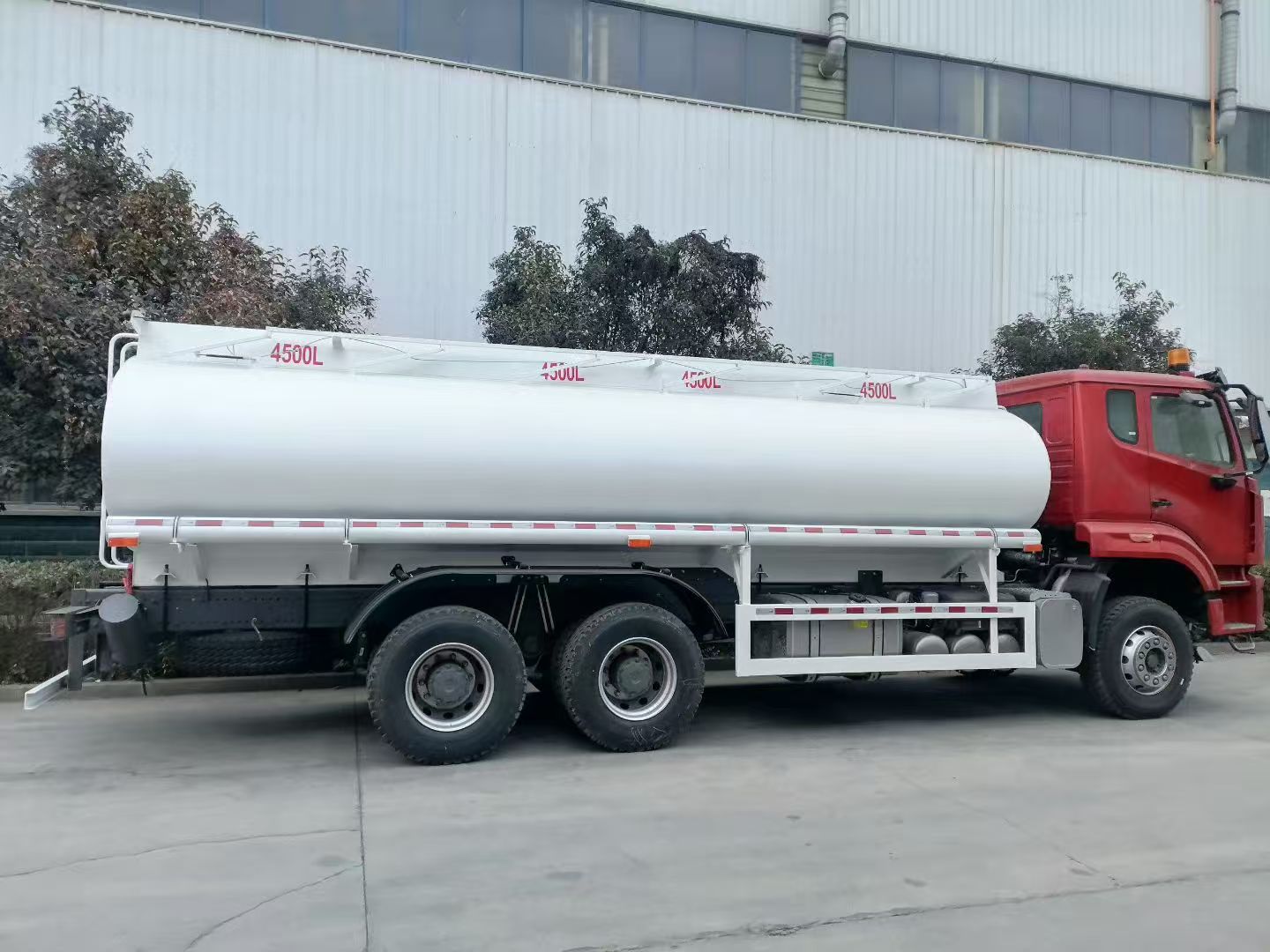
A top-loading oil tank truck is filled through a dome or hatch on the tank roof. The operator typically accesses the tank from an elevated work area or vehicle walkway and connects or positions the loading equipment above the tank. A bottom-loading oil tank truck receives product through lower-side connections, normally using a dedicated manifold and a controlled fuel loading system.
The distinction matters because it shifts the operating sequence. With top loading, access, fall protection, vapor control, and hatch handling are central questions. With bottom loading, the quality of couplings, valve logic, hose routing, overfill controls, and compatibility with the rack become more prominent. Either layout can be suitable when it is specified for the site and medium.
Side-by-side comparison for an oil tank truck
| Decision area | Top loading | Bottom loading |
|---|---|---|
| Primary connection point | Tank-top dome or hatch | Lower-side manifold connections |
| Operator access focus | Safe elevated access and hatch-area workflow | Ground-level connection management and hose routing |
| Terminal fit | Can suit facilities designed around overhead filling | Can suit racks designed for a compatible bottom fuel loading system |
| Key pre-transfer checks | Access condition, hatch closure, grounding/bonding where required, loading position | Coupler condition, valve position, hose integrity, interlocks and connection confirmation |
| Operational trade-off | Direct visual access to the tank opening, with elevated-work considerations | Potentially streamlined ground-level connections, with more interface dependencies |
These are planning comparisons, not blanket performance claims. The final oil tank truck configuration must be confirmed against the actual terminal, product class, loading rate, compartment plan, and jurisdiction.
When top loading can be a sensible choice
Top loading can be a practical fit where the loading site is already arranged for overhead transfer, where a fleet needs a straightforward tank-top filling process, or where the operating team has established controls for elevated access. It may also be chosen where the facility does not have compatible lower-rack hardware for each compartment and loading sequence.
That does not make top loading a low-control option. A top-loading oil tank truck should be evaluated around the complete access system: platform position, guardrails or other fall-protection arrangements required by the site, surface condition, lighting, hatch hardware, and the method used to verify closure before travel. Ask a simple question during the specification review: can an operator complete every step without improvising the work position?
When bottom loading can be a sensible choice
Bottom loading is often considered when a terminal and vehicle are designed as a matched system. The lower connections can support a repeatable ground-level workflow, especially for a multi-compartment oil tank truck serving structured distribution routes. The benefit is conditional: the rack, adapter pattern, valve arrangement, metering or preset arrangement, vapor-recovery requirements, and emergency-stop logic must work together.
A bottom-loading oil tank truck is therefore not simply “connect and load.” Procurement teams should map the connection sequence, identify which valves are manually confirmed or interlocked, and define how operators verify a secure, product-correct connection. A poorly matched manifold creates delays and workarounds; a verified interface supports a more repeatable tanker operation.
Safety and compliance questions should drive the decision
Loading orientation does not remove the need for disciplined transfer controls. As a U.S.-specific example, 49 CFR 177.834 requires qualified attendance during cargo-tank loading and unloading and includes requirements addressing fire sources, vehicle movement, hose condition, and closure security. It also describes a 25-foot attendance benchmark in the relevant operating condition. Local law may differ, so the requirement for each oil tank truck must be verified before service.
The same verification mindset applies to capacity and pressure. U.S. 49 CFR 173.33 states that cargo-tank loading or unloading rates must not exceed the rate indicated on the tank specification plate; when no rate is marked, the applicable pressure limit governs. In practical terms, the fuel loading system, tank construction, product, and terminal procedure are a single decision set. No loading style should be selected independently of that set.
- Confirm the product and compartment allocation for the planned petroleum transport work.
- Match connection standards, hose sizes, adapters, valves, and emergency controls to the terminal or customer site.
- Review grounding or bonding, vapor handling, overfill protection, and the site emergency procedure where applicable.
- Define inspection points before loading, before departure, and before unloading.
- Train operators on the specific vehicle and facility workflow rather than relying on a generic tanker operation routine.
Build the specification around the route, not a label
An oil tank truck that works well on one route may be a poor match for another. A depot-to-industrial-site schedule may favor predictable rack interfaces and standardized unloading connections. A route involving smaller facilities, mixed site conditions, or less uniform infrastructure may call for a different balance of flexibility, access, and transfer equipment. This is where the loading-system decision becomes a logistics solution, not merely a tank feature.
Start with the loading site, then trace the product path through the vehicle and delivery point. Record the product types, compartment count, expected loading rate, elevation and access conditions, delivery hardware, emergency shutoff expectations, cleaning needs, and maintenance access. This produces a clearer request for quotation and gives the supplier a defined basis for configuration review.
A practical procurement checklist
- Describe the product, route, daily delivery pattern, and site constraints for the proposed oil tank truck.
- State whether the loading terminal supports top loading, bottom loading, or both, and obtain its interface requirements.
- Request confirmation of the tank specification, compartment layout, loading-rate limits, and compatibility of the fuel loading system.
- Review safe access or ground-level connection workflow with the people who will perform the tanker operation.
- Confirm local compliance, inspection, documentation, and emergency-response requirements before placing the vehicle into petroleum transport.
Make the choice as part of a verified logistics solution
Top loading and bottom loading are both viable approaches to specifying an oil tank truck. Top loading may align with established overhead facilities and access-controlled work practices. Bottom loading may align with compatible rack infrastructure and a tightly managed ground-level transfer sequence. Neither option is inherently right for every fleet.
For a durable logistics solution, bring the terminal operator, fleet manager, maintenance team, and vehicle supplier into the same specification review. JINAN CMHAN TRUCK SALES CO.,LTD. works in commercial-truck and trailer supply for logistics and transport applications; buyers should provide their actual loading and delivery conditions so final vehicle details can be verified against the intended duty cycle.
FAQ
Is bottom loading inherently safer for an oil tank truck?
No. Bottom loading can reduce some elevated-access tasks, but its suitability depends on a compatible terminal interface, maintained hoses and couplings, correct valve logic, operator procedures, and local requirements. A safety review must cover the whole transfer process.
Can one oil tank truck use both top and bottom loading?
Some configurations may be designed for more than one loading method, but feasibility depends on the tank specification, product, fittings, controls, and approved operating procedure. Confirm the final arrangement with the manufacturer, terminal, and applicable authority.
What information should a buyer provide before requesting a quotation?
Provide the carried medium, compartment plan, loading-site interface, loading and unloading method, route and duty cycle, required documentation, and the local rules that apply to the intended petroleum transport work.