 EN

What Are the Main Applications of a Trailer Truck?
A trailer truck is often discussed as though it were one universal vehicle. In practice, it is a transport system: a truck tractor supplies power and a trailer body is chosen around the load, route, loading method, and operating routine. That distinction matters. A trailer that works well for palletized consumer goods may be a poor fit for steel sections, machinery, bulk material, or temperature-sensitive freight.
From an operator viewpoint, the useful question is not simply “What can this trailer carry?” More precisely, ask what the load needs during loading, transit, unloading, and daily inspection. The main trailer truck applications span general freight, container work, construction supply, machinery movement, agricultural and bulk-haul tasks, and specialized deliveries. Each application changes the balance between protection, access, payload distribution, securement, and turnaround time.
How a Trailer Truck Supports Modern Cargo Transportation
In cargo transportation, a trailer truck gives logistics teams a flexible way to pair a tractor unit with a body designed for a particular job. The tractor can be allocated to different trailers as schedules change, while the trailer choice can be aligned with cargo shape and handling equipment. This is one reason the format appears in long-distance freight, regional distribution, construction projects, and cross-border supply chains.
The value is not only in carrying volume. A well-matched trailer can simplify dock work, protect freight from weather, create safe tie-down points, or make an awkward load easier to position. A useful checkpoint is payload distribution; before deciding, relate it to the actual loading and unloading routine. Axle loading, deck height, turning space, road surface, and the availability of forklifts or cranes should be reviewed together rather than treated as separate afterthoughts.
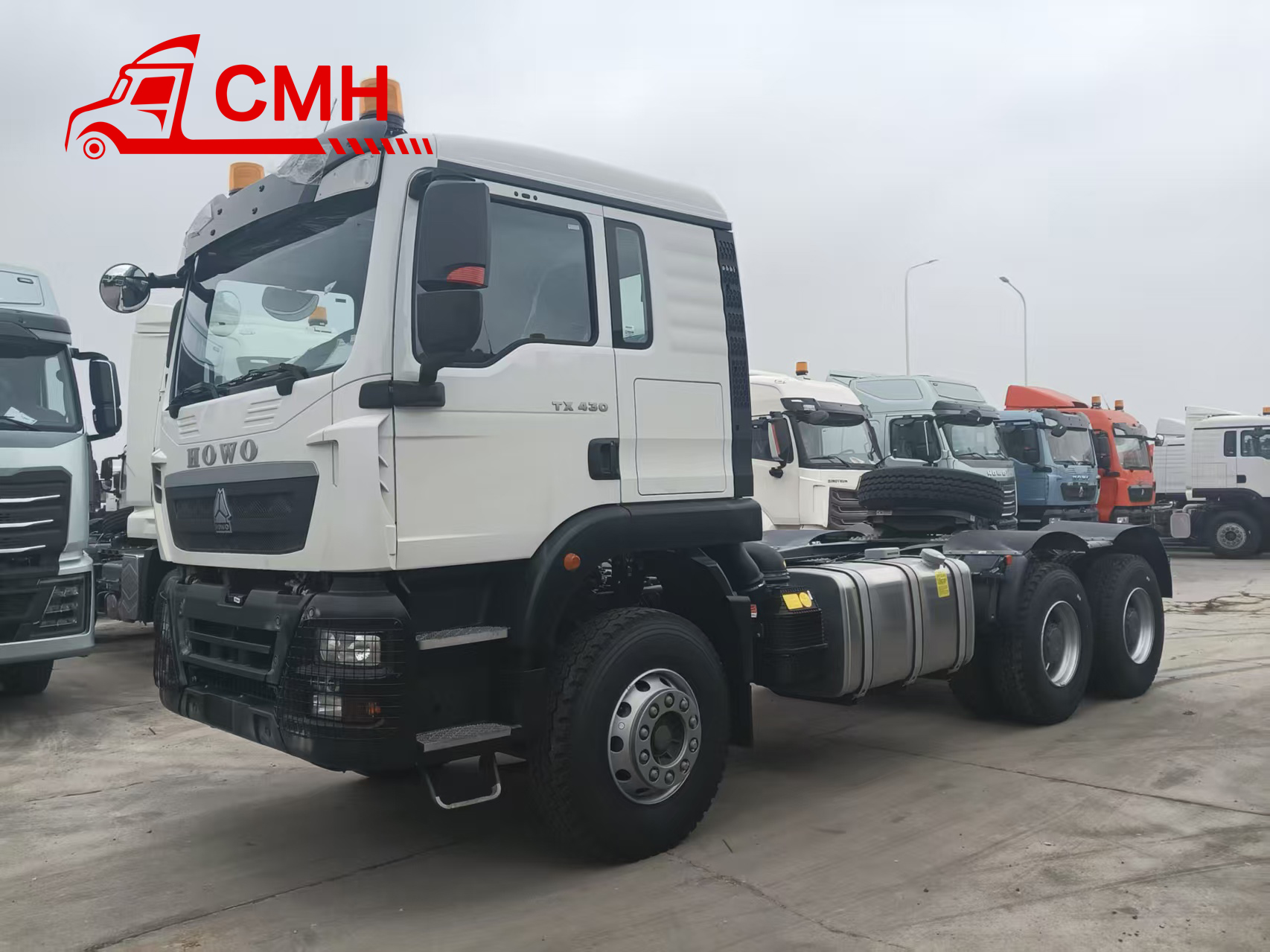 A trailer arrangement should be matched to cargo handling and route conditions.
Main Trailer Truck Applications
1. General Freight and Distribution
General freight is one of the most familiar trailer truck applications. Enclosed van or curtain-side configurations are commonly considered when shippers need to move cartons, palletized goods, retail stock, packaged components, or mixed loads between factories, warehouses, and distribution centers. The enclosed body helps manage weather exposure, while side or rear access affects how quickly a crew can load at each stop.
For this type of freight truck work, planners should map the delivery sequence before selecting a body style. Multi-stop routes may benefit from access that reduces rehandling, whereas a dedicated full-load route may prioritize consistent internal space and load restraint. It is not simply a volume issue; more precisely, the cargo’s stacking limits, packaging strength, and unloading sequence all matter.
2. Long-Haul and Intercity Freight
Long-haul freight uses a trailer truck to move large consignments over extended road networks. This can include manufactured products, consumer goods, building supplies, and non-perishable packaged cargo. The operating focus shifts toward route planning, fuel management, driver comfort, maintenance intervals, and dependable cargo protection.
A commercial truck assigned to long routes should be evaluated as a complete operating package. Check the compatibility of the tractor and trailer, the expected road conditions, the availability of service support, and how easily routine inspection points can be reached. By inspection access, we mean whether items such as tires, lights, couplings, landing gear, and visible securement equipment can be checked safely and consistently before departure and during the route.
3. Construction Materials and Project Supply
Construction and infrastructure projects often require a trailer truck for materials that are long, heavy, irregular, or delivered to changing job sites. Flatbeds and other open-deck formats can be suitable for structural steel, pipe, precast items, machinery components, and packaged building materials when loading access is a priority. Their open layout can work well with cranes or forklifts, but it also demands a clear plan for weather exposure and load restraint.
Cargo type should drive the restraint method. For example, a load that can roll, shift, or concentrate weight in one area needs a different plan from stable pallets. In the United States, cargo-securement rules in 49 CFR Part 393 Subpart I address preventing cargo from leaking, spilling, blowing, falling, or shifting in ways that affect stability or maneuverability. That is a useful reminder of the planning principle, not a universal rulebook: operators should confirm the requirements that apply in their own jurisdiction and project.
4. Machinery and Equipment Transport
Moving excavators, loaders, generators, agricultural machinery, or industrial equipment is a specialized trailer truck application. The selection process begins with verified equipment dimensions, mass, center of gravity, approach angle, and loading method. A low-bed, low-loader, or equipment trailer may be considered when height clearance, deck height, or ramp access is central to the job.
Here, choosing by nominal capacity alone is risky. The loading angle, tie-down positions, axle placement, and route restrictions may be just as important. Before operation, confirm load dimensions, permitted gross and axle weights, securement points, and route limits for the actual task. When the shipment crosses borders or passes through controlled project areas, verify documentation and local transport requirements early rather than discovering a mismatch at dispatch.
5. Container and Port-Linked Transport
Container chassis and related trailer arrangements connect port, rail, warehouse, and inland road legs. Select the setup around container size, locking interface, terminal workflow, destination access, axle distribution, and yard maneuvering space. Check container condition, booking timing, documentation, and handling availability at both ends; those handoffs can matter as much as distance.
6. Agricultural, Bulk, and Commodity Hauling
Trailer trucks also haul agricultural products, feed, harvested materials, and other commodities. The body choice depends on whether the load is packaged, loose, moisture-sensitive, dusty, or discharged by tipping, walking-floor, conveyor, or another method. Cleaning, residue control, and moisture protection affect body material, lining, covers, and time between loads.
7. Temperature-Controlled and Sensitive Goods
Refrigerated or insulated configurations serve food, pharmaceuticals, flowers, and other goods whose condition depends on managed temperatures. This is a distinct trailer truck application because the body, refrigeration equipment, loading discipline, and dwell time at delivery all affect the shipment.
A buyer should define the actual temperature range, loading temperature, route duration, door-opening frequency, and monitoring process before specifying equipment. A reefer body does not automatically make a shipment compliant with every product requirement. The shipper and operator still need verified procedures for the cargo and destination market.
What Changes from One Application to Another?
The most practical way to compare a commercial truck and trailer setup is to start with the operating constraint. The table below turns that approach into a quick planning tool.
| Application | Typical trailer priority | Questions to verify |
|---|---|---|
| General freight | Weather protection and efficient access | How are pallets loaded, stacked, and delivered? |
| Long-haul distribution | Reliable cargo protection and serviceability | What are the route, stop pattern, and inspection routine? |
| Construction supply | Loading access and securement planning | Can the cargo shift, roll, or be exposed to weather? |
| Equipment transport | Deck height, ramps, and weight distribution | What are the verified dimensions, loading method, and route limits? |
| Container work | Compatible locks and terminal workflow | Which container, terminal, and destination constraints apply? |
| Sensitive goods | Environmental control and handling discipline | What condition must be maintained from loading to delivery? |
A Practical Selection Checklist
- Describe the load accurately. Record dimensions, mass, center of gravity, packaging, and sensitivity to weather or temperature.
- Map the handling process. Identify whether forklifts, cranes, ramps, docks, or manual work will be used at origin and destination.
- Review the route. Consider road condition, turning space, bridge or height restrictions, and applicable local regulations.
- Plan securement before loading day. Confirm that the trailer and equipment offer appropriate restraint points and that responsible staff understand the procedure.
- Allow for lifecycle work. Include inspection access, parts support, cleaning, tire checks, and downtime planning in the decision.
Conclusion: Match the Trailer Truck to the Work
The main applications of a trailer truck range from everyday freight distribution to construction supply, container transport, machinery moves, bulk commodities, and temperature-controlled delivery. A suitable option is rarely defined by one headline specification. It is defined by how the body, tractor, cargo, route, loading method, and inspection routine work together.
For logistics companies, contractors, and cargo owners, the next step is to turn the actual job into a written requirement before requesting a configuration. Start with the load and workflow, then verify the trailer arrangement against local rules and service conditions. That approach helps make a freight truck decision more practical, safer to operate, and easier to manage over its working life.