 EN

Oil Tank Truck Solutions for Fuel Stations, Mining Sites, and Industrial Facilities.
Choosing an oil tank truck is less about finding the largest tank and more about matching a fuel-delivery system to a real operating routine. A fleet procurement planner should begin with three questions: what product will be carried, where will transfers take place, and who will inspect the vehicle before it returns to service? Those answers shape capacity, compartment layout, pumping arrangement, access points, and the documentation needed for reliable fuel supply.
An oil tank truck may support very different work at a retail fuel station, a remote mine, or an industrial plant. The vehicle should therefore be specified around the carried medium, route, duty cycle, receiving equipment, and applicable local rules rather than around a brochure label. Final configuration, safety equipment, and compliance requirements should be confirmed for the destination and intended service.
Start With the Delivery Task, Not the Tank Size
The first useful distinction is between volume and usable delivery capacity. An oil tank truck that appears efficient on paper can be a poor fit if access roads restrict maneuvering, the receiving tank accepts only a limited volume, or the unloading sequence creates long waits. Capacity must also be considered alongside axle loading, payload distribution, fuel density, route conditions, and the number of drops per shift.
For an oil tank truck serving a high-turnover station, compartment planning can matter as much as total volume. Separate products, scheduled deliveries, and the order in which compartments discharge all affect the delivery routine. For mine support, the priority may shift toward controlled access, on-site traffic separation, and a configuration that fits unpaved or restricted routes. At an industrial facility, the receiving connection, pump compatibility, filtration expectations, and the plant’s delivery window may govern the specification.
What will the oil tank truck actually carry, and how will it be unloaded? That plain question prevents a common mistake: treating every tank configuration as interchangeable. Product compatibility, seals, valves, hoses, vents, and transfer controls must be reviewed for the intended medium. A supplier should document which details are included in the final specification and which require site-side confirmation.
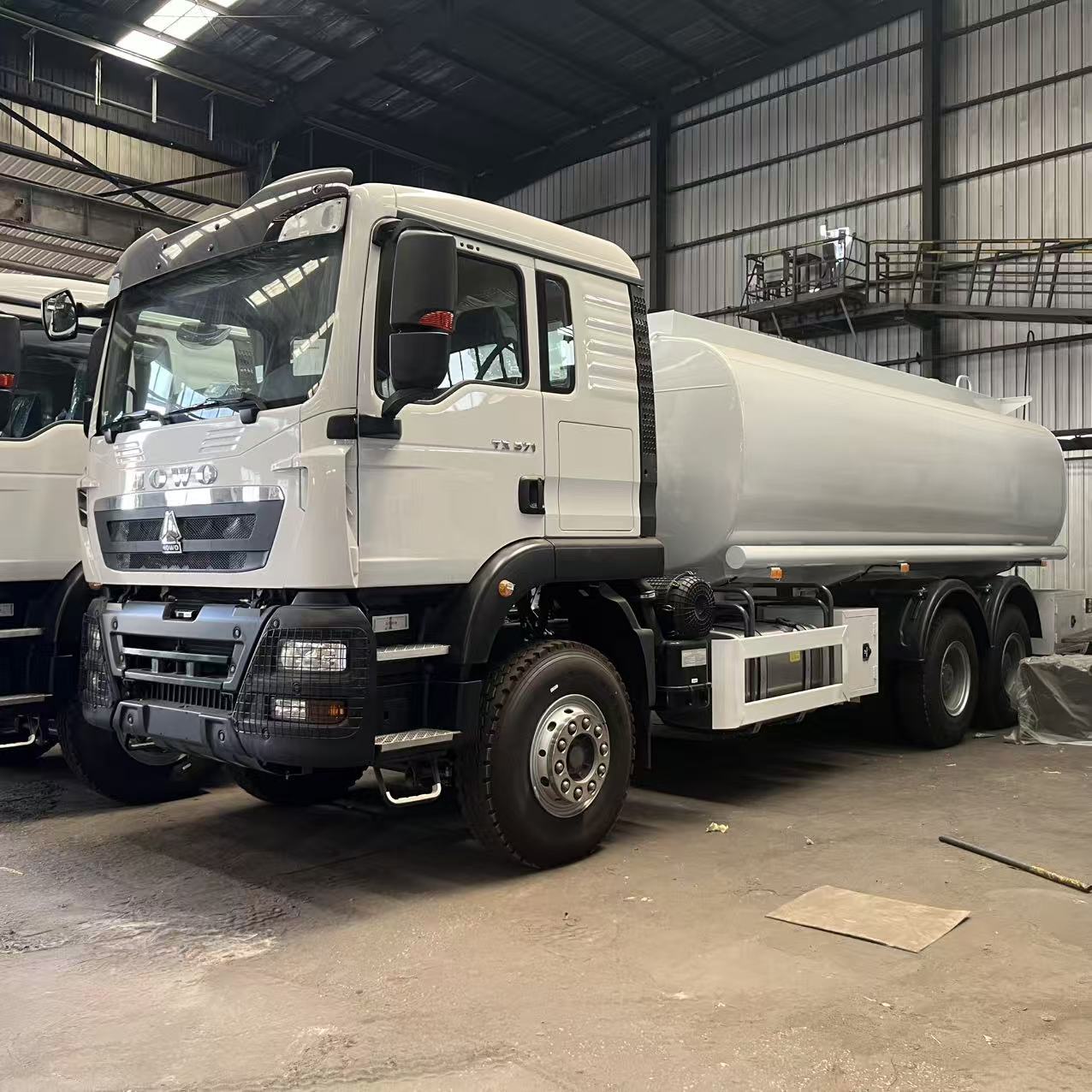 Fuel-transfer planning should connect the vehicle, receiving equipment, and site controls.
Fuel-Station Delivery: Prioritize Repeatable, Controlled Transfers
At fuel stations, an oil tank truck often works in compact delivery areas shared with customers, staff, and other vehicles. The practical goal is a predictable transfer process with clear positioning, safe hose routing, adequate receiving capacity, and a defined emergency response procedure. Before transfer, the team should confirm the destination tank, product allocation, hose condition, valve alignment, and available capacity. The transfer should be attended by qualified personnel according to the site procedure and applicable regulations.
A station-focused oil tank truck should be evaluated for maneuverability, compartment sequence, discharge arrangement, access to routine inspection points, and compatibility with the station’s unloading connection. Bottom-loading or vapor-management features may be relevant in some jurisdictions and operations, but their applicability must be verified rather than assumed. It is not simply a tank issue; more precisely, the vehicle and the receiving site form one transfer system.
Mining Sites: Build Around Site Access and Fuel Control
Mine-site fuel supply adds an operating environment that differs from urban delivery. An oil tank truck may encounter uneven ground, dust, changing traffic patterns, restricted zones, and equipment movement around the refueling point. In this setting, route survey, turning space, ground condition, visibility, and separation from mobile equipment are central selection factors. A tank truck that is suitable for paved distribution may need a different chassis, access arrangement, or operating plan for a mine.
The configuration review should include where the oil tank truck will park during transfer, how the area will be controlled, where hoses will run, and how leaks or spills would be contained under the site’s approved plan. Inspection access matters here: operators need a practical way to check lines, couplings, valves, ladders, and visible tank areas without improvising access. Larger capacity is not automatically better if it reduces maneuverability or creates a mismatch with the site’s planned fuel consumption.
Mining teams should also connect the tanker fleet plan to the wider petroleum logistics workflow. Delivery frequency, contingency stock, refueling windows, maintenance support, and operator handover procedures can influence whether one larger unit or several task-specific units provide the more resilient fuel supply model.
Industrial Facilities: Match the Vehicle to the Receiving Process
For industrial transport, the most important interface is often the point where the oil tank truck meets plant operations. Facilities may have fixed unloading bays, restricted arrival times, site permits, designated grounding or bonding practices, and production schedules that cannot tolerate an unplanned interruption. The vehicle should be reviewed against the receiving connection, required flow control, hose reach, product cleanliness expectations, and the responsibility split between driver and facility staff.
An oil tank truck used for industrial supply should also support traceable routines. The team may need to record the delivered product, compartment used, transfer time, inspection observations, and any exception before departure. That is the specification side; the next question is how it behaves in the daily routine. Easy access to valves, drains, hose storage, and walk-around inspection points can reduce avoidable delays and make defects easier to identify before the next route.
Configuration Checks That Affect Daily Reliability
Use this list when comparing an oil tank truck for a defined route:
- Carried medium and segregation: confirm product compatibility and whether compartment separation is required.
- Capacity and route fit: compare payload, axle limits, terrain, turning space, and number of deliveries rather than capacity alone.
- Transfer equipment: verify pump, meter, hose, valve, vent, and connection requirements with the final operating process.
- Inspection access: check whether routine points can be reached safely and consistently by the responsible crew.
- Site controls: review parking position, traffic separation, spill response, communications, and local regulatory obligations.
- Service planning: ask how the tanker fleet will handle spares, maintenance records, cleaning, and downtime coverage.
These checks help compare oil tank truck solutions on operational fit, not just purchase price. A lower initial price can become less attractive if the design complicates inspection, delays unloading, or leaves no practical plan for service support. Conversely, more features are not automatically better when they introduce maintenance decisions the operating team cannot sustain.
Turn the Specification Into an Operating Agreement
Before committing to an oil tank truck, convert the quotation into a shared review between procurement, operations, maintenance, and safety personnel. List the product, route, delivery points, expected delivery frequency, receiving equipment, inspection responsibilities, and documents that must accompany the vehicle. Then mark every item that is confirmed by a specification sheet, every item that must be verified at the delivery site, and every local requirement that needs competent regulatory review.
This approach gives fuel stations, mining sites, and industrial facilities a clearer basis for selecting an oil tank truck. The right choice may depend on details that should be verified with the final specification, but a task-led review will make the trade-offs visible early. When fuel supply, industrial transport, and tanker fleet planning are considered together, the resulting solution is more likely to support safe, repeatable petroleum logistics over the vehicle’s working life.