 EN

How Does an Oil Tank Truck Perform Under Long-Haul Transport Conditions?
An oil tank truck on a long route is judged by more than how much liquid it can carry. The useful question for a fleet buyer is whether the vehicle, tank arrangement, operating routine, and service plan fit the roads, delivery rhythm, and cargo profile it will actually face. For a logistics company handling repeated fuel delivery, that fit has a direct effect on safety, uptime, and tanker efficiency.
From a fleet-procurement viewpoint, long-haul performance starts before departure. A well-matched oil tank truck can support predictable runs; a poorly matched one may turn ordinary grades, crosswinds, partial loads, or unloading stops into operating constraints. The specification side matters, but so does the daily routine around it.
What long-haul conditions ask of an oil tank truck
Long-distance work combines factors that are easy to consider separately but demanding in combination: sustained highway speed, changing pavement, temperature swings, repeated braking, overnight parking, and variable delivery-site access. An oil tank truck must also manage a moving liquid load. Unlike a dry cargo body, the cargo can shift as the vehicle accelerates, brakes, or turns. That is why route planning and smooth driver inputs remain central to long-haul operation.
Capacity is not a complete performance measure. A larger tank may improve volume moved per trip when route limits, axle loading, terminal access, and delivery demand all support it. But larger capacity is not automatically better. It can reduce maneuverability at tighter fuel delivery locations and can change how the driver experiences a partly filled tank. The practical starting point is to compare planned payload, legal limits, route geometry, and delivery frequency together.
Liquid movement is a major operating variable
For an oil tank truck, load condition can change the driving task. When a compartment is partly filled, liquid movement can affect the vehicle’s response during braking and directional changes. Tank design features and compartment arrangements are selected for defined applications, but they do not remove the need for measured driving. FMCSA rollover-prevention guidance similarly emphasizes avoiding sudden movements for cargo-tank vehicles.
That is the specification side; the next question is how it behaves in the daily routine. Dispatchers should identify routes with frequent roundabouts, steep approaches, uneven shoulders, or repeated stop-and-go traffic. Drivers can then anticipate speed changes rather than react late. This approach is especially relevant when a long haul tanker makes multiple drops and returns with a changing load condition.
- Plan braking and lane changes early rather than making abrupt corrections.
- Confirm cargo distribution and compartment status before leaving each loading or delivery point.
- Match driving expectations to rain, wind, gradients, and road surface rather than relying on a single “normal” route assumption.
- Record operating conditions when an issue is observed, so maintenance teams can separate a repeat pattern from a one-time event.
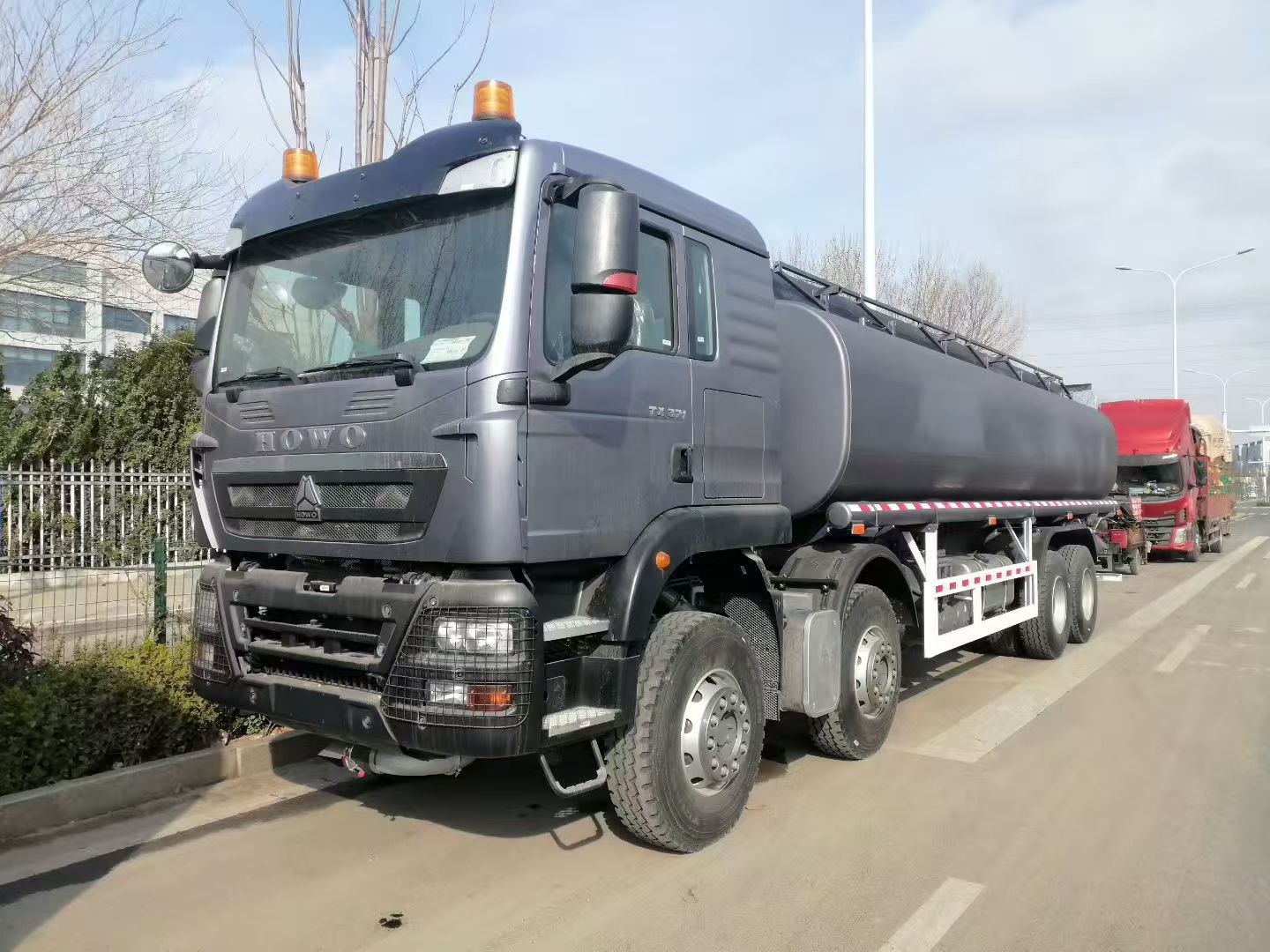 Long-haul tanker performance depends on route conditions, load state, and operating discipline.
Fuel delivery performance depends on the whole workflow
Reliable fuel delivery is not simply a matter of arriving with product onboard. A long-haul oil tank truck needs a workable sequence for loading, transit, site access, discharge, documentation, and return. Delays at any point can reduce tanker efficiency even if the truck itself has no mechanical fault.
Start with loading discipline. The operator should verify the cargo type, quantity, compartment allocation, closures, and applicable paperwork before the vehicle joins the route. At delivery, the driver needs enough space and a safe approach for the site’s actual unloading arrangement. A route that looks efficient on a map may not be efficient if every stop requires difficult positioning, excessive waiting, or repeated repositioning.
For cross-border or remote operations, the same principle applies with an added planning layer: fuel availability, service access, road restrictions, and communication procedures should be considered before assigning an oil tank truck to a regular lane. If the route and payload are stable, this may be a practical starting point for establishing a repeatable operating standard.
How to protect tanker efficiency on extended routes
Tanker efficiency has two sides. One is productive movement: carrying the intended load, completing deliveries, and reducing avoidable empty distance. The other is operational consistency: avoiding unscheduled stops, unnecessary tire wear, rushed inspections, and preventable delays. An oil tank truck is more likely to support consistent long-distance work when both sides are managed.
Preventive checks are more valuable when they are tied to the route. Before a long run, inspect items that can be affected by mileage and vibration, including tires, wheel-end areas, lights, visible piping or hose connections, closures, access steps, and areas where fasteners or brackets merit visual attention. Check for signs of leakage, damage, or abnormal wear according to the applicable maintenance program. Requirements vary by cargo, tank specification, and jurisdiction, so a fleet should use its governing rules and manufacturer documentation rather than a generic checklist as a substitute.
During operation, capture useful evidence: recurring delivery delays, unusual fuel use, tire condition, brake feel, or repeated difficulty at a particular unloading site. These notes help a transport vehicle manager decide whether the cause is route design, loading practice, service scheduling, or vehicle configuration. They are more actionable than a broad conclusion that the truck is “inefficient.”
Configuration questions to resolve before purchase or deployment
Before selecting an oil tank truck for a long-haul lane, procurement and operations teams should answer a short list of task-specific questions:
- What liquid will be transported, and what tank specification, lining, fittings, and procedures are required for it?
- What are the typical full-load, partial-load, and return-trip conditions?
- Which roads, bridge limits, grades, climate conditions, and delivery sites define the real operating environment?
- How will the vehicle be inspected, serviced, and supported away from the home base?
- What loading and discharge workflow will drivers follow at each recurring location?
These questions help prevent a common procurement mistake: treating a standard configuration as though it suits every route. An oil tank truck should be evaluated as a system, not only as a tank volume and chassis combination. The correct answer may differ between a highway corridor with scheduled depot drops and a mixed route with rough access roads and smaller delivery points.
A practical long-haul operating routine
For consistent performance, turn the above decisions into a repeatable routine. Before dispatch, verify load status, visible safety-critical condition, route changes, weather, and site instructions. During transit, maintain smooth inputs and adapt speed to the changing load and road environment. At each fuel delivery point, confirm the approach, positioning, and discharge process before starting work. After the run, record defects and route observations while they are still specific.
That routine does not guarantee identical results on every trip. It does give the fleet a way to improve an oil tank truck based on observed conditions instead of assumptions. Over time, inspection notes and utilization records can reveal whether the issue is driver training, a recurring road constraint, a maintenance gap, or a configuration question that needs review.
Conclusion
An oil tank truck can perform reliably under long-haul transport conditions when its configuration, payload plan, driving practices, and maintenance routine match the work. Smooth operation, careful management of partial loads, route-aware inspection, and disciplined fuel delivery procedures are the foundation. For buyers and fleet operators, the most useful measure of tanker efficiency is not a brochure claim; it is whether the vehicle supports safe, repeatable deliveries on the routes it is expected to run.