 EN

How to Select the Right Camion for Construction and Logistics?
Choosing a camion is not a matter of picking the largest vehicle or the lowest quoted price. For a fleet buyer, the useful starting point is the work the vehicle must complete: what it carries, where it travels, how often it runs, and how it is loaded and unloaded. A construction truck that spends its day moving aggregate into rough sites faces a different duty cycle from a logistics truck running scheduled deliveries on paved roads. Treating both jobs as the same can lead to a poor camion selection.
In this guide, camion is used in the broad sense of a commercial truck or cargo vehicle. The final specification should be checked against local regulations, axle and weight limits, road conditions, and the actual operating task.
Start with the task, not the model name
Before comparing a camion, write a short operating brief. Include the normal payload, the heaviest expected load, cargo dimensions, loading method, route length, grades, unpaved sections, daily trips, and expected seasonal conditions. This turns a vague purchase request into criteria that can be checked.
For a construction truck, ask whether the job involves loose material, equipment, concrete, water, or packaged supplies. Each task changes the appropriate body, loading workflow, center-of-gravity considerations, and cleaning routine. For a logistics truck, record delivery frequency, dock access, turning space, stop-start driving, and the need to protect goods from weather or shifting in transit.
A camion that looks flexible on a brochure may still be a poor fit if its body layout, loading height, or maneuverability conflicts with the daily routine. First clarify the task, then compare configurations, and only then discuss price.
Match payload and body to the cargo vehicle workflow
Payload is more than a single maximum number. A practical camion selection review considers how weight is distributed, whether the load changes from trip to trip, and how it is restrained. A cargo vehicle carrying palletized goods may need a different body arrangement from one moving tools, pipe, machinery, or aggregate.
- Loose bulk materials: Consider discharge workflow, ground conditions at the unloading point, and the stability implications of uneven loading.
- Equipment and long loads: Review deck access, tie-down planning, loading equipment, and the space needed for safe handling.
- Packaged logistics cargo: Check internal volume, loading-door access, protection from weather, and repeatable cargo-restraint practices.
- Variable loads: Document the common and exceptional load cases rather than choosing a camion only for one ideal trip.
Where cargo restraint is relevant, the securement system and inspection routine should be reviewed for the actual load and the rules that apply in the operating jurisdiction. A flat deck can be versatile, but versatility is different from suitability for every load.
Separate construction truck requirements from logistics truck requirements
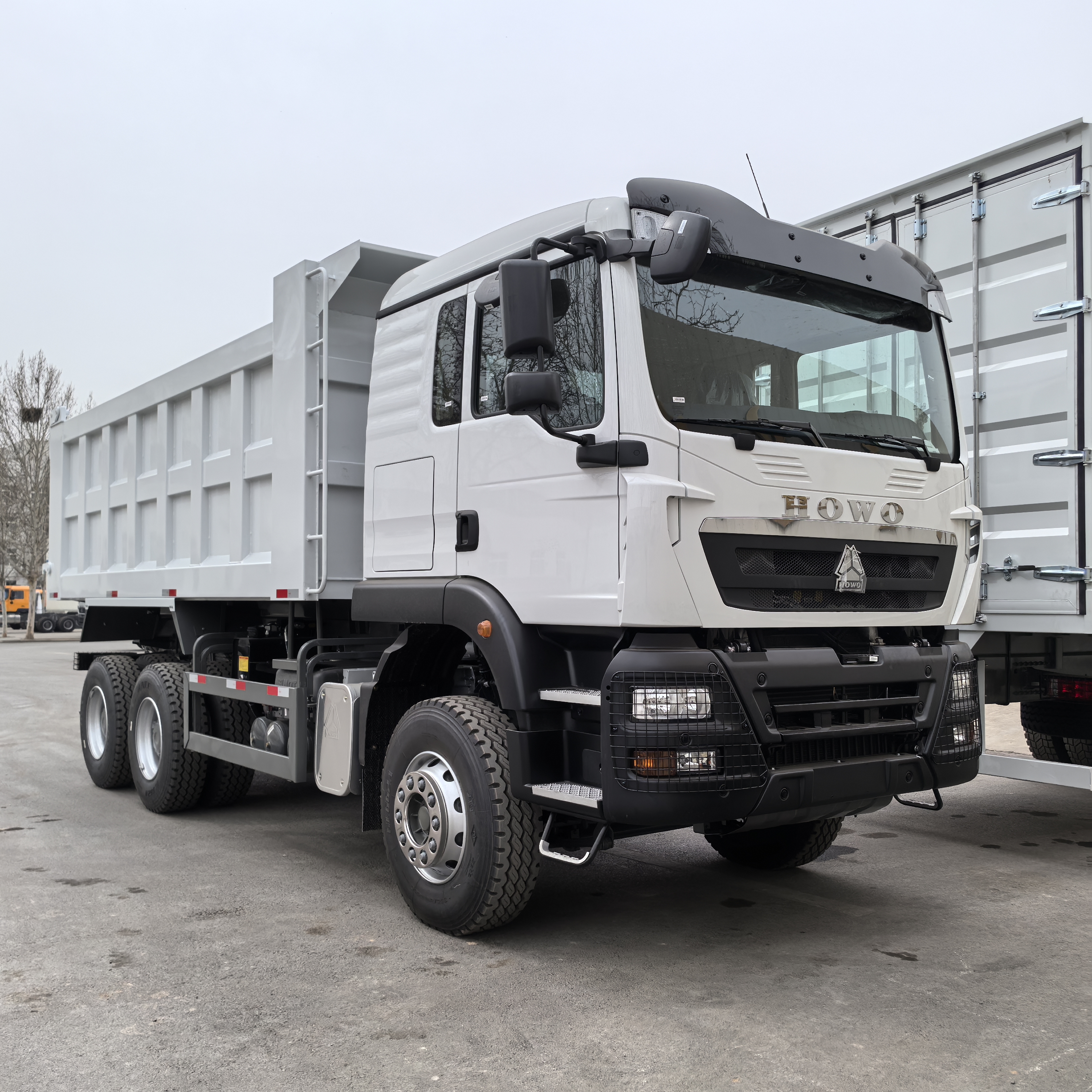
A construction truck is usually defined by site access and task intensity. Rough surfaces, mud, gradients, repeated loading cycles, and limited turning room can change the priority given to traction, clearance, suspension configuration, body robustness, and approach angles. Larger capacity is not automatically better if the vehicle cannot enter the site, turn safely, or work with the available loader.
A logistics truck often puts more emphasis on predictable route efficiency, delivery access, cargo protection, driver workflow, and maintenance planning. That does not mean a logistics camion has light-duty requirements; dense urban stops, long highway runs, and frequent dock operations create their own wear and service needs.
For either application, relate the camion to the duty cycle rather than relying on a generic label. Ask how many hours it will operate, how many loaded and unloaded trips it will make, how much idling is expected, and whether the route changes in rain, heat, or seasonal work peaks.
Check road conditions, dimensions, and maneuverability together
Route planning is a core part of camion selection. Confirm road surface quality, steep sections, bridge or axle restrictions, turning radii, site entrances, and loading-bay dimensions. A high-capacity camion may be productive on an open route but inefficient if it must repeatedly reverse into narrow yards or wait for access at a congested project site.
Road conditions also affect priorities for tires, suspension, protection, and maintenance intervals. These are configuration questions, not guarantees. The relevant technical question is whether the selected setup suits the documented route and load pattern. Where the application is unclear, request a configuration review based on actual payload, route, and operating hours.
Include service access and lifecycle cost in the decision
The purchase price of a camion is only one line in the decision. Review routine inspection access, expected service intervals, parts identification, workshop capability, and the consequences of downtime. A lower initial price does not by itself answer the operating-cost question if the camion is difficult to inspect, poorly matched to its workload, or repeatedly unavailable during critical jobs.
In a fleet discussion, include operators and maintenance staff early. Operators can explain loading and unloading constraints; maintenance teams can identify access points and parts-planning concerns. This makes the camion selection process more complete than a comparison of headline capacity or engine output alone.
Use a specification-confirmation checklist before ordering
Before finalizing a camion, confirm the following items in writing:
- The intended cargo, normal payload, exceptional load, and load distribution.
- Typical route, road condition, gradients, distance, and site-access constraints.
- Body type, loading and unloading workflow, and cargo-restraint requirements.
- Required dimensions, axle and weight limits, and applicable local compliance checks.
- Driver visibility, maneuvering needs, routine inspection access, and safe working procedures.
- Maintenance plan, verified parts information, delivery documentation, and handover checks.
This checklist does not replace professional engineering, safety, or regulatory advice. It helps ensure the camion is evaluated against real work rather than a generic configuration.
Make the final camion decision conditional on verified facts
The right camion for construction and logistics is the one that aligns with the duty cycle, cargo workflow, route, and support plan you can verify. For heavy site work, prioritize task fit and access conditions. For scheduled freight, prioritize cargo protection, delivery workflow, and predictable service planning. If the route and payload are stable, this is a practical starting point; if they vary widely, specify the most demanding recurring condition and review the trade-offs before purchase.
JINAN CMHAN TRUCK SALES CO.,LTD. works in truck, semi-trailer, and construction-equipment categories for logistics and construction applications. A useful inquiry should include the operating brief above so the proposed camion configuration can be checked against the actual project requirements.