 EN

How to Choose a Trailer Truck for Heavy Cargo Transportation?
Choosing a trailer truck for heavy cargo is not a matter of finding the largest deck or the lowest quoted price. A workable decision starts with the load, the route, and the loading routine, then checks whether the tractor, trailer, restraints, and support plan fit together. From a fleet-procurement perspective, that order prevents a common mistake: buying a versatile-looking unit that is awkward, costly, or unsuitable in daily work.
For a heavy cargo truck, begin with a written operating brief. Describe what moves, how often it moves, where it loads and unloads, and what restrictions apply before comparing configurations. Specifications matter, but so does how the equipment behaves in the daily routine.
Start With the Cargo, Not the Trailer Model
The first task in trailer selection is to define the cargo as a real load rather than a single weight figure. Record the heaviest item, its dimensions, center of gravity, contact points, lifting method, and whether it is machinery, steel, containers, construction materials, or mixed freight. A trailer truck that suits a long, uniform load may not suit a compact machine with concentrated axle loads.
Ask direct questions: Will the load be driven, craned, forked, or winched onto the deck? Does it need a low loading angle? Will it need blocking, dunnage, chains, straps, or dedicated restraint points? These details determine whether a flat deck, lowbed, skeletal arrangement, drop deck, or another configuration deserves further review. Versatility is different from being suitable for every load.
Payload distribution deserves the same attention as gross cargo weight. An unevenly placed machine can change axle loading and stability even when the total mass appears acceptable. For a trailer truck, confirm the planned loading position and weight distribution with the final specification and applicable transport rules.
Match Deck Type and Height to the Job
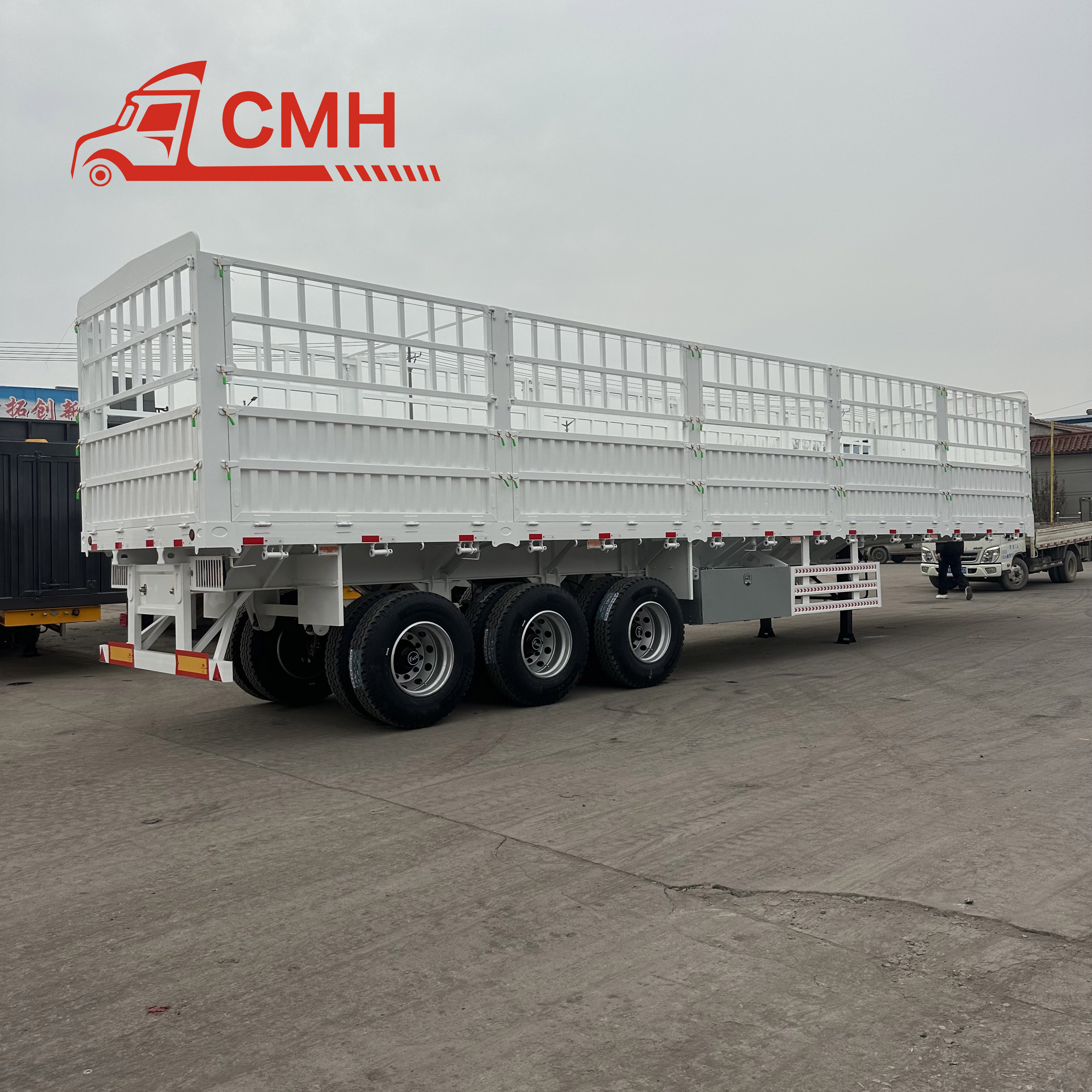
Deck geometry affects more than appearance. A flat deck can be useful when side access and flexible loading are priorities. A lower deck may be relevant when height restrictions or tall machinery are part of the job. A specialized arrangement may help a repeated task, but it may reduce flexibility for other freight transportation work.
During trailer selection, compare usable deck length and width, floor condition, ramp needs, load-bearing areas, lashing-point placement, and clearance around the cargo. If a forklift or crane handles the load, make sure the intended loading method has room to work safely. If equipment is driven aboard, evaluate approach angle and traction conditions. The trailer truck should fit the loading workflow rather than push crews toward improvised methods.
Check Tractor and Trailer Compatibility
A trailer cannot be chosen in isolation from its prime mover. Confirm fifth-wheel compatibility, coupling height, electrical and air connections, tractor power, driveline suitability, turning behavior, and the combined axle arrangement. The relevant technical question is whether the tractor-trailer combination suits the actual route and duty cycle.
For a heavy cargo truck, road surface, gradients, turning space, bridge limits, and site access can all change the preferred configuration. Road conditions alter priorities: a setup that works on predictable paved routes may need a different review for rough access roads, construction sites, or long-distance export deliveries. Before operation, confirm axle, tire, brake, suspension, and coupling requirements for the actual task.
Build Cargo Securement Into the Purchase Decision
Cargo restraint is not an accessory to add at the end of a purchase. The trailer truck should provide appropriate, inspectable securement locations for the load types it will carry. Consider lashing points, deck condition, blocking and bracing space, chain or strap routing, and access for inspection after loading.
For example, U.S. FMCSA guidance treats securement, working load limits, blocking, and bracing as core requirements and includes specific provisions for heavy vehicles, equipment, and machinery. That example is not a universal legal rule. Every freight transportation project must verify the regulations, permits, and load-securement requirements in the jurisdictions where it operates. A checklist is not a substitute for task-specific inspection.
Ask the supplier to explain which configuration details must be confirmed before the order is released. Do not treat generic photographs or broad product descriptions as proof of suitability. The right choice may depend on details that should be verified with the final specification.
Evaluate the Route Before Finalizing the Trailer Truck
Route planning should happen before, not after, the trailer truck arrives. Identify typical travel distances, gradients, road condition, height or width constraints, turning radii, loading-site surface, and locations where permits or escorts may be required. Oversize and overweight work often requires route surveys and obstacle checks, so a configuration that looks efficient on paper may be impractical on a regular lane.
Clarify the task first, compare configurations next, and discuss price only after that. Include the destination receiving conditions as well: can the site unload the cargo, provide enough maneuvering space, and support the intended hauling equipment? These questions are especially important for cross-border or project-based deliveries where operating assumptions may change between departure and handover.
Compare Lifetime Fit, Not Only Initial Cost
A lower initial price does not by itself answer the operating-cost question. Compare expected inspection access, wear areas, serviceability, parts planning, corrosion exposure, and downtime implications. If the route and payload are stable, a more task-specific trailer truck may be a practical starting point. If loads vary widely, a configuration with adaptable deck and restraint options may be more valuable, provided it still meets the heaviest recurring task.
Request a like-for-like comparison. Each quotation should state the proposed configuration, included components, cargo assumptions, tractor interface, delivery scope, and items that need buyer confirmation. This makes trailer selection more transparent and reduces the risk of comparing unequal offers.
A Practical Trailer Truck Buying Checklist
- Define maximum cargo mass, dimensions, center of gravity, and loading method.
- Map the normal route, site access, legal limits, permit needs, and seasonal road conditions.
- Match deck type, loading height, ramps, and restraint points to the intended cargo.
- Confirm tractor compatibility, coupling details, combined axle arrangement, and braking interfaces.
- Review how cargo will be secured, inspected, loaded, and unloaded on every recurring task.
- Compare maintenance access, documentation, spares planning, and configuration-confirmation steps.
Make the Final Choice on Verified Information
A well-matched trailer truck is not necessarily the biggest or most heavily equipped option. It is the configuration that matches the cargo, tractor, route, loading method, and support plan with the fewest unverified assumptions. For buyers planning heavy cargo transportation, collect the operating brief first, use it to compare proposals on equal criteria, and confirm the final specification before placing the order. That disciplined approach gives a heavy cargo truck a better chance of working as intended from the first load onward.