 EN

Aluminum Tank Trucks Help Increase Payload While Maintaining Safety Standards
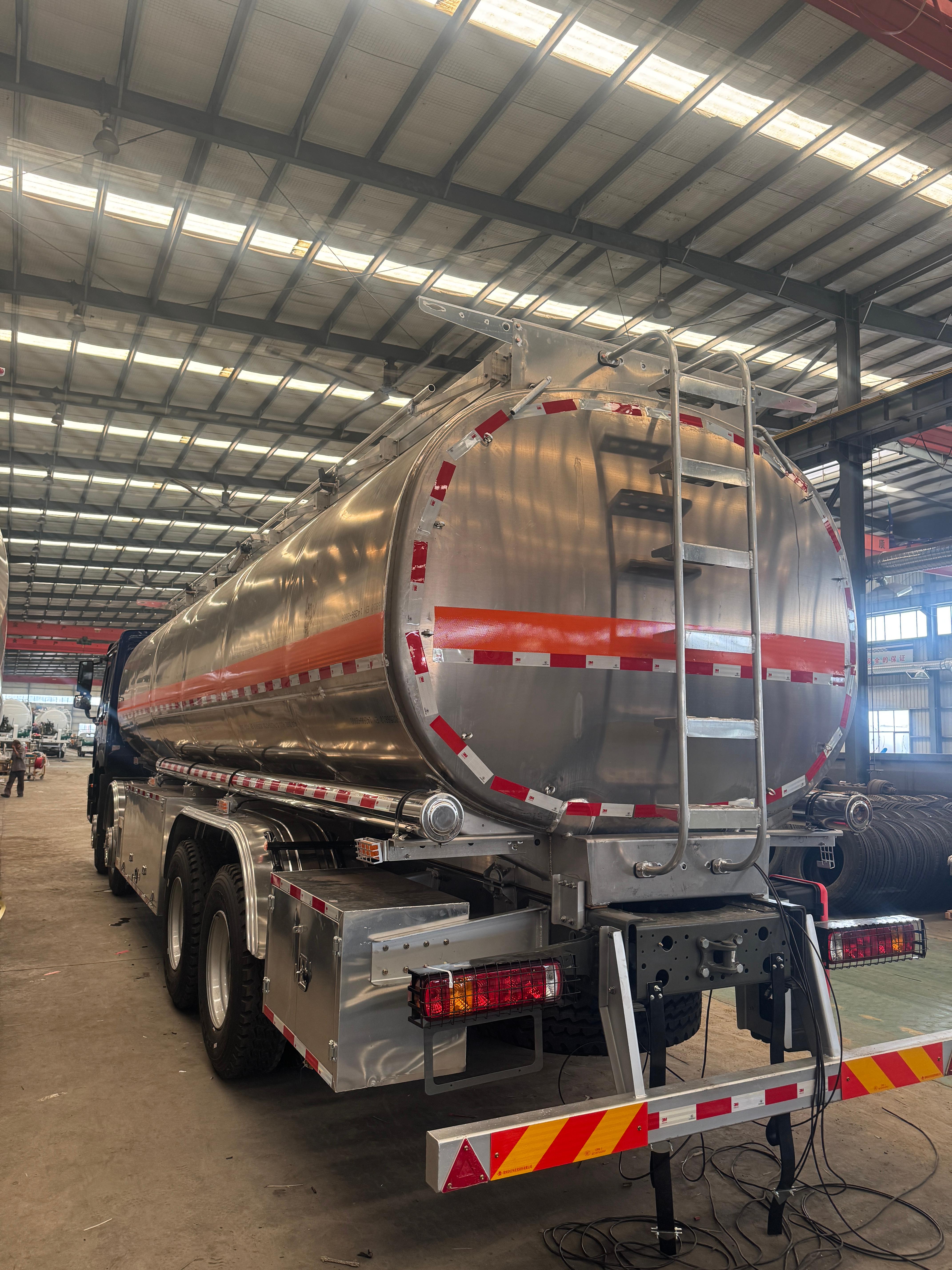
For a fleet buyer, an aluminum tank truck is not simply a lighter version of a conventional tanker. It is a transport vehicle whose usable payload depends on the complete specification: tare mass, product density, axle ratings, route limits, compartment arrangement, and the safeguards needed for the liquid being carried. Lower vehicle mass can create room for more product, but only after the finished configuration has been checked against the applicable legal and engineering limits.
This distinction matters in fuel logistics. A buyer may see a lighter shell and assume that every kilogram saved becomes sellable cargo. In practice, an aluminum tanker must still meet the limits of its chassis, running gear, tires, couplings, loading equipment, and operating jurisdiction. The right question is not “How much lighter is the tank?” It is “What is the verified legal payload for this completed vehicle on our routes and with our product?”
Why Aluminum Can Improve Payload Capacity
Payload capacity begins with the difference between gross vehicle weight and the empty, ready-to-operate weight of the truck. When an aluminum tank truck reduces tare mass compared with an otherwise comparable configuration, that reduction may be available for cargo. For fuel operations with frequent, repeatable routes, even a modest tare-weight reduction can be operationally meaningful—provided the vehicle remains within certified axle, tire, suspension, and bridge-law limits.
Aluminum is commonly considered for petroleum and refined-fuel service because a well-engineered aluminum tanker can combine lower mass with corrosion resistance in the intended environment. That does not make aluminum the correct choice for every liquid. Cargo chemistry, temperature, cleaning process, pressure requirements, and local regulations must all be assessed. Highly corrosive products, pressure service, or a demanding cleaning regime may point to a different material or liner strategy.
A practical specification review should calculate payload from the actual finished vehicle, not a catalog shell weight. Include the chassis, tank body, compartments, piping, pump or meter package, hose reels, spill-control equipment, ladders, guards, fire-safety equipment, driver, and any market-specific accessories. Then compare the result with the legal gross and axle limits for the route. That is the defensible way to convert a lightweight aluminum tanker concept into usable payload capacity.
Safety Standards Are Part of the Payload Equation
A lighter tank is not a license to remove safety margin. The shell, heads, welds, manholes, vents, emergency shutoff systems, grounding provisions, walkways, and protection for fittings must be selected for the cargo and service conditions. Compartment layout and surge control also influence how the transport vehicle behaves during braking, cornering, and partial-load operation. A tank that appears efficient on paper can be a poor operating choice if liquid movement, axle loading, or unloading controls have not been engineered into the whole vehicle.
U.S. buyers can use 49 CFR 180.407 as one example of the principle. It states that a specification cargo tank due for a required test or inspection may not be filled, offered for transportation, or transported until that requirement has been completed. The regulation also calls for inspection of structural attachments for corrosion or damage and describes pressure-test requirements. These provisions are not universal design instructions for every market, but they illustrate a critical procurement rule: the material decision must be backed by inspection, documentation, and fit-for-service verification.
For export and regional operations, confirm the rules that apply where the truck will be registered, loaded, and operated. Do not assume that a design accepted in one jurisdiction automatically satisfies another. The supplier should be asked to identify the intended standard, the approved cargo service, the documented test requirements, and any limits on pressure, loading method, or operating temperature.
Match the Aluminum Tank Truck to the Product and Route
Fuel logistics is a system, not just a tank purchase. Product density changes the mass carried at a given volume, while hills, surface conditions, loading-site clearance, delivery frequency, and axle restrictions affect the configuration that is practical. An aluminum tank truck used for diesel distribution may need a different compartment plan and accessory package from a unit used for gasoline, aviation fuel, or non-hazardous liquid. Start with the duty cycle before choosing capacity.
- Product profile: confirm density range, chemical compatibility, flash-point implications, contamination sensitivity, and cleaning requirements.
- Route profile: record gross-weight limits, axle limits, bridge restrictions, grades, road surface, turning constraints, and delivery-site access.
- Load profile: define number of compartments, partial-load frequency, metering needs, hose length, pump duty, and expected unloading method.
- Safety profile: specify the required vents, valves, emergency controls, bonding or grounding, fall protection, guards, markings, and inspection access.
This approach prevents a common mistake: selecting the largest nominal volume first and trying to solve compliance afterward. The better sequence is to establish legal mass, axle distribution, and safety equipment first; calculate usable volume for the product density next; then finalize the tank geometry and chassis configuration.
A Procurement Checklist for an Aluminum Tanker
Before approving an aluminum tanker, ask for evidence that ties the proposed configuration to the actual job. A technically useful quotation should identify the assumed chassis and axle layout, the calculated tare weight, rated gross limits, cargo density assumption, compartment volumes, and the safety equipment included in the estimate. It should also state which items remain subject to final engineering confirmation.
- Request a completed-vehicle weight estimate, not only a tank-body weight.
- Check axle-by-axle loading for full and representative partial-load conditions.
- Confirm compatibility of the tank material, seals, valves, and piping with the planned cargo.
- Review surge-management features, compartment layout, and unloading controls with operations personnel.
- Verify the applicable certification, testing, marking, and inspection path in the destination market.
- Plan a handover inspection that includes fittings, supports, closures, emergency devices, and documentation.
The merchant profile for JINAN CMHAN TRUCK SALES CO.,LTD. identifies trucks and semi-trailers for logistics and industrial transport. For any proposed tanker configuration, buyers should request current, configuration-specific evidence rather than relying on generic product claims. That verification-first approach supports safer purchasing decisions across different routes and markets.
Operating Discipline Protects the Expected Payload Benefit
The value of an aluminum tank truck continues after delivery. Daily walk-arounds, leak checks, closure checks, and prompt investigation of dents, abrasions, or damaged attachments help protect the tank’s service condition. Keep cleaning practices compatible with the material system, record inspections, and avoid unauthorized modifications that can change weight distribution or compromise lading retention.
During loading, dispatch should use verified product density and the approved mass limits—not just nominal compartment volume. During unloading, operators need a procedure that addresses parking surface, bonding or grounding where required, hose condition, valve sequence, and protection of the public area. These controls preserve both the safety case and the payload calculation that justified the aluminum tanker in the first place.
Choose Verified Usable Capacity, Not a Lightweight Claim
An aluminum tank truck can help a fleet pursue higher payload capacity because lower tare mass may leave more of the allowable gross weight for product. The benefit is real only when it is verified for the completed transport vehicle, intended cargo, axle layout, route, and governing safety standards. Treat material selection as one part of a documented engineering and operations review.
For fuel logistics buyers, the strongest specification is not the one with the largest advertised volume. It is the one that delivers a compliant, inspectable, and workable payload on every planned route. Ask for the weight calculation, safety equipment list, test and inspection evidence, and destination-market compliance path before finalizing the order.
Frequently Asked Questions
Can an aluminum tank truck carry more product than a steel tanker?
It can. Lower tare mass may improve available payload, but final capacity is limited by the completed vehicle weight, axle ratings, legal gross limits, product density, safety equipment, and route restrictions.
Is an aluminum tanker suitable for every liquid?
No. Material suitability depends on cargo chemistry, temperature, pressure service, cleaning method, and the regulations that apply. Confirm compatibility and the intended service with qualified engineering and compliance personnel.
Which safety checks matter before putting a tanker into service?
Review required test and inspection records, structural attachments, closures, valves, vents, piping, emergency controls, markings, and the documents that confirm the approved cargo service and operating limits.