 EN

How to Prevent Fuel Contamination During Oil Tank Truck Deliveries?
Fuel contamination seldom comes from one dramatic failure. In routine fuel transport, it often enters through small gaps: a poorly cleaned compartment, a wet hose end, an open fill point, an unverified previous product, or a receiving tank that has not been checked before unloading. For operators responsible for an oil tank truck, the most reliable approach is to control the delivery as a documented sequence rather than treat cleanliness as a final visual check.
From a maintenance-coordinator viewpoint, an oil tank truck must work with loading, unloading, and daily inspection routines. The aim is to identify where water, sediment, cross-product residue, air-borne debris, or microbial growth can enter and to stop the transfer before an uncertain load reaches the customer tank.
Why fuel quality can change during tanker delivery
Fuel quality is affected by the entire path between the terminal and the receiving tank. An oil tank truck can carry clean product at loading but still introduce contamination at delivery if the tank interior, compartment seals, vents, piping, hoses, filters, or couplings are not controlled. Water and sediment deserve particular attention because they can settle in low points, move when the truck is disturbed, and be difficult to detect from a sample taken only near the surface.
Cross-product contamination is another common risk. A compartment, manifold, hose, or recovery line used for a different product may retain enough residue to affect the intended load. What will the oil tank truck actually carry, and how will it be unloaded? That direct question should guide the cleaning method, equipment segregation, and verification record for every route.
Industry guidance for diesel distribution emphasizes control of water and sediment and notes that fuel should be visually free of undissolved water, sediment, and suspended matter at delivery. This is a useful operating boundary, not a substitute for the customer’s applicable specification, local regulation, or laboratory test plan.
Build a contamination-prevention chain before the truck is loaded
1. Confirm product compatibility and the previous load
Before dispatch, document the grade, additive status, compartment assignment, prior product, and required cleaning condition. Do not rely on a driver’s memory or a generic truck label. A practical release record links the loading instruction to the compartment number, seal numbers, hose arrangement, and any flushing or draining completed before loading. For an oil tank truck serving more than one product stream, dedicated equipment or a clearly controlled changeover process reduces ambiguity.
2. Inspect low points, vents, and closures
Routine inspection should focus on places that collect water or debris: tank sumps, drain points, manhole gaskets, breathers, fill caps, valve cavities, and hose ends. By inspection access, we mean whether those routine check points can be reached safely and consistently. If a drain point cannot be checked without improvised access or the seal condition cannot be seen, it is not a dependable control point.
3. Keep loading equipment clean and closed
Use clean, capped connections and verify that filters, strainers, and any water-separation equipment are maintained according to the site procedure. An oil tank truck should not be loaded through visibly damaged hoses, uncapped couplings, or equipment with unexplained leakage. Record abnormal filter condition or unusual drained material before release; this gives the loading team a reason to investigate rather than pass a problem downstream.
Control the tanker delivery from departure to arrival
A seal matters only when the team treats it as part of a chain of custody. Record the seal identifier after loading, protect access points during transit, and compare the seal at the receiving site before discharge begins. If the seal is missing, broken, or inconsistent with the documents, pause the tanker delivery and follow the agreed escalation process. Continuing to unload because the schedule is tight can turn an unresolved truck issue into a receiving-tank issue.
During fuel transport, minimize opportunities for rainwater, dust, or unauthorized access to enter the system. Park in a way that protects hose ends and keeps them off contaminated surfaces. After heavy rain, long idle periods, or a route that exposes the vehicle to significant dust, add a documented visual check before connecting. A checklist is not a substitute for task-specific inspection, but it ensures that ordinary checks are not skipped when operations are busy.
Verify the receiving side before unloading
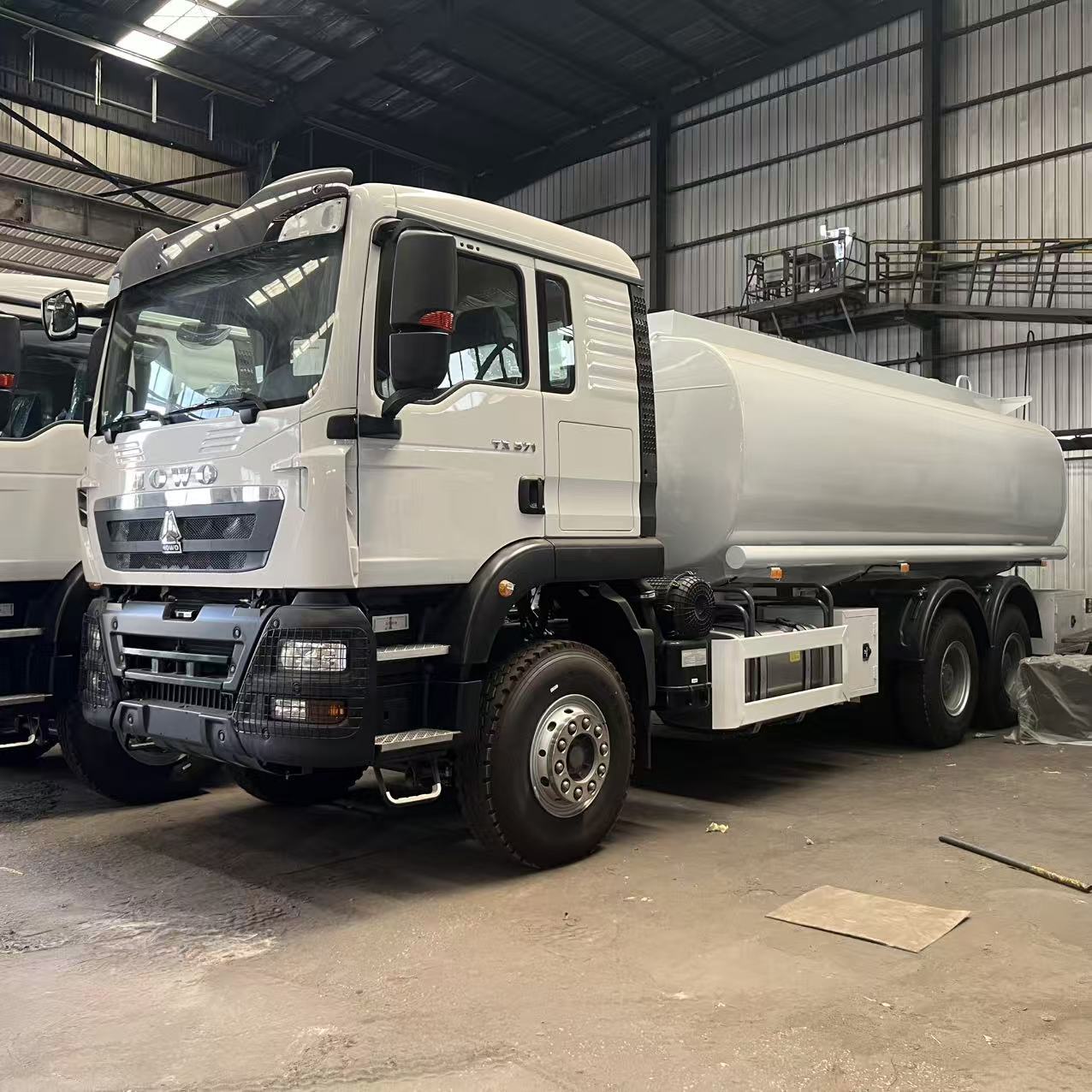
Contamination prevention is shared between carrier and receiver. Before an oil tank truck begins discharge, confirm the correct receiving tank, product label, available capacity, and fill connection. Inspect the fill point for standing water, debris, broken caps, damaged gaskets, or signs that the wrong connection could be used. The receiver should also follow its own procedure for checking tank condition and for isolating unsuitable fuel.
Where site procedures require it, take a representative sample before transfer and retain it with the delivery record. A sample is most useful when it is labeled with the date, truck or compartment, product, receiving tank, and collection point. Do not use one clear-looking sample as proof that every part of a system is clean; water and sediment can collect at low points. If a sample shows free water, visible solids, haze, unexpected odor, or a color change, stop the delivery and escalate for assessment.
Use filtration as a control, not a cure-all
Point-of-delivery filtration can help manage particulate and free-water risks, but its effectiveness depends on equipment selection, flow rate, maintenance, and the actual contamination present. Monitor filter condition and differential pressure where the system provides that indication. If a filter loads unusually quickly, treat that as evidence to investigate the source, not simply as a reason to replace the element and continue.
Equipment is only one part of the control; the daily routine decides whether it works as intended. The correct filter arrangement and inspection frequency should be verified against the product, flow conditions, site requirements, and final configuration. Avoid inventing a universal micron rating or claiming a filter will solve cross-product contamination, dissolved water, or a badly maintained receiving tank.
A practical stop-and-escalate checklist
- Before loading: confirm product, compartment, previous load, cleaning status, hose allocation, and release documentation.
- Before departure: inspect closures, drain points, seals, hose caps, and visible leakage; record the seal identifiers.
- At arrival: confirm the receiving tank, product, capacity, access condition, and matching seals before any connection is opened.
- Before transfer: examine couplings and fill points, perform required sampling, and verify that filtration or water-control equipment is ready.
- During discharge: watch for abnormal flow, leaks, filter alarms, unexpected pressure change, or signs of water or solids.
- After delivery: close and cap equipment, record quantities and observations, retain required samples, and report any deviation before the truck returns to service.
Separate observed symptoms from presumed causes. For example, a hazy sample may justify holding the load, but it does not by itself prove whether the source is the oil tank truck, loading rack, hose, or receiver. Good records make this investigation faster and protect both parties from unsupported conclusions.
Make fuel quality a repeatable operating discipline
The strongest contamination prevention program is built around repeatable checks, clear ownership, and an agreed stop authority. JINAN CMHAN TRUCK SALES CO.,LTD. supports commercial-vehicle content for logistics and industrial-goods transport; for a fuel-delivery application, the final tank, piping, filtration, and inspection arrangement must be confirmed against the carried medium, route, and site procedure.
Start with the task, then set the checks: identify the fuel, control the compartment and equipment, protect the load in transit, inspect the receiving side, sample when required, and stop when the evidence is uncertain. This sequence helps an oil tank truck operator protect fuel quality without making unsupported claims about a specific truck configuration.
FAQ: Fuel contamination during oil tank truck deliveries
What are the main contamination risks during fuel delivery?
Common risks include free water, sediment, dust, cross-product residue, poor seals, dirty hoses or couplings, and contamination already present in the receiving system. The appropriate response depends on the product and site procedure.
Should a tanker delivery be stopped if fuel looks hazy?
Yes. Treat unexpected haze, visible water, solids, odor changes, broken seals, or mismatched paperwork as a reason to pause and investigate under the agreed escalation process.
Can filtration replace tank cleaning and inspection?
No. Filtration is one control point. It does not replace compatible equipment, cleaning records, protected connections, sampling, or inspection of the receiving tank.