
 EN

How to Configure a Maintenance Truck for Heavy Equipment Service?
A well-planned maintenance truck turns travel time into productive field service. Instead of sending a technician back to the depot for a fitting, fluid, or lifting tool, the truck carries a controlled set of tools and supplies to the machine. For fleets serving excavators, loaders, road-building equipment, or haulage assets, the goal is not to fit every accessory available. The goal is to create a dependable mobile repair workshop around the work your technicians perform most often.
Start with the service call, not the body catalogue. List the jobs that create the most downtime, where they happen, the heaviest item normally handled, and the parts or fluids consumed on site. That short exercise gives a far better basis for maintenance truck configuration than choosing cabinets first.
1. Define the service mission and payload before truck customization
Write down a typical week of calls: planned inspections, hose replacement, lubrication, battery work, welding preparation, component change-outs, and emergency recovery. Then group the cargo into tools, consumables, parts, lifting gear, and safety equipment. This shows what must be on the truck every day and what can stay in a depot kit.
Payload is the first non-negotiable calculation. Include the body, crane or lifting device, compressors, generators, tanks, drawers, tools, technicians, and a realistic fluid and parts load. Leave a margin for the unexpected component that comes back from a machine. A truck that is already near its rated capacity when it leaves the yard is not a flexible field-service asset.
Also map the operating environment. Soft ground, mine roads, congested construction sites, highway shoulders, and city projects call for different wheelbases, traction choices, access layouts, lighting, and storage protection. The right maintenance truck configuration is therefore a service-process decision as much as a vehicle decision.
2. Build the body around safe access and an organized workflow
A mobile repair workshop should let the technician find a tool without unloading half the vehicle. Put frequently used hand tools and test equipment between waist and shoulder height. Store heavier items low and close to the body centerline. Separate clean parts from oily recovery items, and use labelled drawers or bins for fittings, seals, electrical connectors, and fasteners.
- Road-side access: choose doors, drawers, and work surfaces that can be used without stepping into traffic where possible.
- Work zone: provide a protected bench or pull-out worktop for hose assembly, measurements, and small repairs.
- Parts control: use dedicated compartments so replacement parts remain clean, dry, and traceable.
- Recovery control: allocate sealed containers for waste oil, used filters, rags, and damaged components.
Truck customization should also include weather resistance. Dust seals, drain paths, durable latches, interior lighting, and corrosion-resistant surfaces matter because service work continues in rain, heat, and unpaved locations. A cabinet layout that looks tidy in a workshop but cannot be opened safely in the field will slow every call.
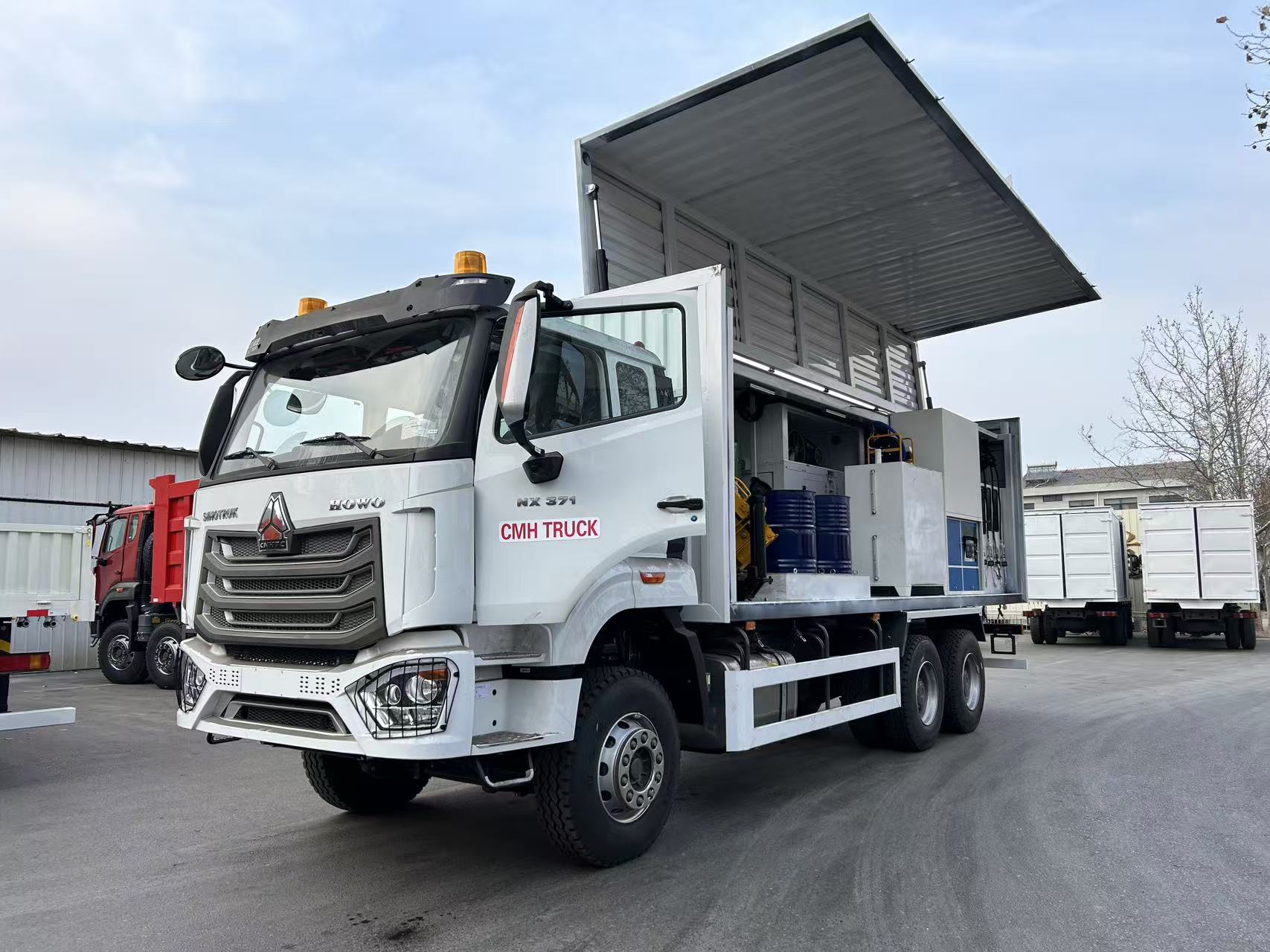
3. Specify the service equipment in functional packages
Rather than buying a long, disconnected accessory list, create service equipment packages that match the mission. A basic inspection-and-repair package may include hand tools, torque tools, diagnostic equipment, lighting, jump-start capability, a fire extinguisher, spill response materials, and suitable PPE. A hydraulic package can add hose tools, caps and plugs, approved fluid handling, and contamination-control supplies. A fabrication package may add an air source, power generation, welding capability, and clearly managed cylinders where permitted.
Power and air demand deserve the same attention as storage. Record the voltage, starting load, duty cycle, and connector needs of your real tools. Then decide whether the maintenance truck needs an engine-driven power take-off, generator, inverter, compressor, or a combination. Size each system for reliable service, but avoid carrying power equipment that is rarely used and consumes payload every day.
Fluid systems need containment and identification. Keep clean lubricant, coolant, and hydraulic fluid separate from waste streams. Use labelled transfer equipment and a simple replenishment record. This reduces the chance of cross-contamination and lets the dispatcher see what must be restocked before the next shift.
4. Treat lifting and safety systems as engineered choices
When a service crane, winch, or other lifting device is part of the plan, match its capacity and reach to the actual components technicians handle. The load chart, mounting arrangement, stability requirements, and operating radius all matter. Do not select a crane by maximum capacity alone; a load may be light enough at short reach but not at the reach required beside the machine.
Include the supporting items in the layout: rated rigging storage, outrigger controls, ground pads, exclusion-zone markers, and a place for inspection records. OSHA notes that vehicle-maintenance activities can include mobile maintenance on highways, so traffic exposure, visibility, and site controls should be planned before a roadside call begins. Inspection guidance for service-truck cranes also points users toward regular documented checks; confirm the applicable local rules, the equipment maker’s instructions, and the relevant standards before operating.
At a minimum, specify high-visibility lighting, warning devices, a first-aid kit, fire protection suited to the hazards, wheel chocks, and spill-control supplies. Add lockout/tagout materials where field isolation is part of the job. Good safety provisions protect people, but they also keep a small service problem from becoming a longer interruption.
5. Make communication, inventory, and maintenance part of the design
A well-managed maintenance truck is connected to the service system behind it. Give technicians a way to receive work orders, record machine details, capture photos, and report parts used. A basic digital checklist can cover pre-trip inspection, stock levels, crane or compressor checks, and close-out notes. That information helps the planner refine the truck load over time instead of relying on memory.
Set minimum and maximum quantities for fast-moving consumables. Review the list after the first month: items repeatedly borrowed from the depot belong on the truck, while rarely used items may be better as dispatchable kits. This cycle is especially useful for contractors and fleets supporting projects across Africa, South America, and Southeast Asia, where travel distances and parts lead times can be significant.
6. Commission the truck before relying on it in the field
Before handover, run a realistic service simulation. Park beside a representative machine, open every compartment, set up the work zone, connect the power and air tools, retrieve a heavy item, and pack the truck again. Ask the technician what required extra walking, awkward lifting, or blocked access. Correct those issues while the truck customization is still easy to adjust.
- Verify actual laden weight and axle loads with normal tools, fluids, and parts aboard.
- Check cabinet latches, lighting, drains, and access steps on uneven ground.
- Test every power, air, fluid-transfer, and lifting function under approved conditions.
- Confirm emergency equipment, documentation, operator training, and inspection routines.
- Create a restocking and preventive-maintenance schedule for the truck itself.
Conclusion: configure for the jobs that protect uptime
A productive maintenance truck is a purpose-built field-service platform, not simply a truck with boxes. Begin with the work order and payload, organize the body for safe access, select service equipment in practical packages, and validate lifting and safety systems before deployment. JINAN CMHAN TRUCK SALES CO.,LTD. supplies trucks, semi-trailers, and construction equipment for international customers; a clear service mission and operating environment help the truck specification team shape a configuration that supports your technicians and your equipment uptime.