 EN

How Does a Water Truck Spraying System Work?
A water truck is more than a tank mounted on a chassis. On a construction site, mine road, farm, or municipal work zone, its spraying system moves stored water through a controlled path so an operator can wet a surface where and when it is needed. Understanding that path helps a fleet choose the right configuration, train operators, and spot early maintenance issues.
As a maintenance coordinator would put it, start with the job rather than the tank size. Dust suppression, road conditioning, compaction support, washdown, and water delivery can demand different flow patterns and controls. That is the specification side; the next question is how the equipment behaves in the daily routine.
The water path: tank, outlet, pump, controls, and spray heads
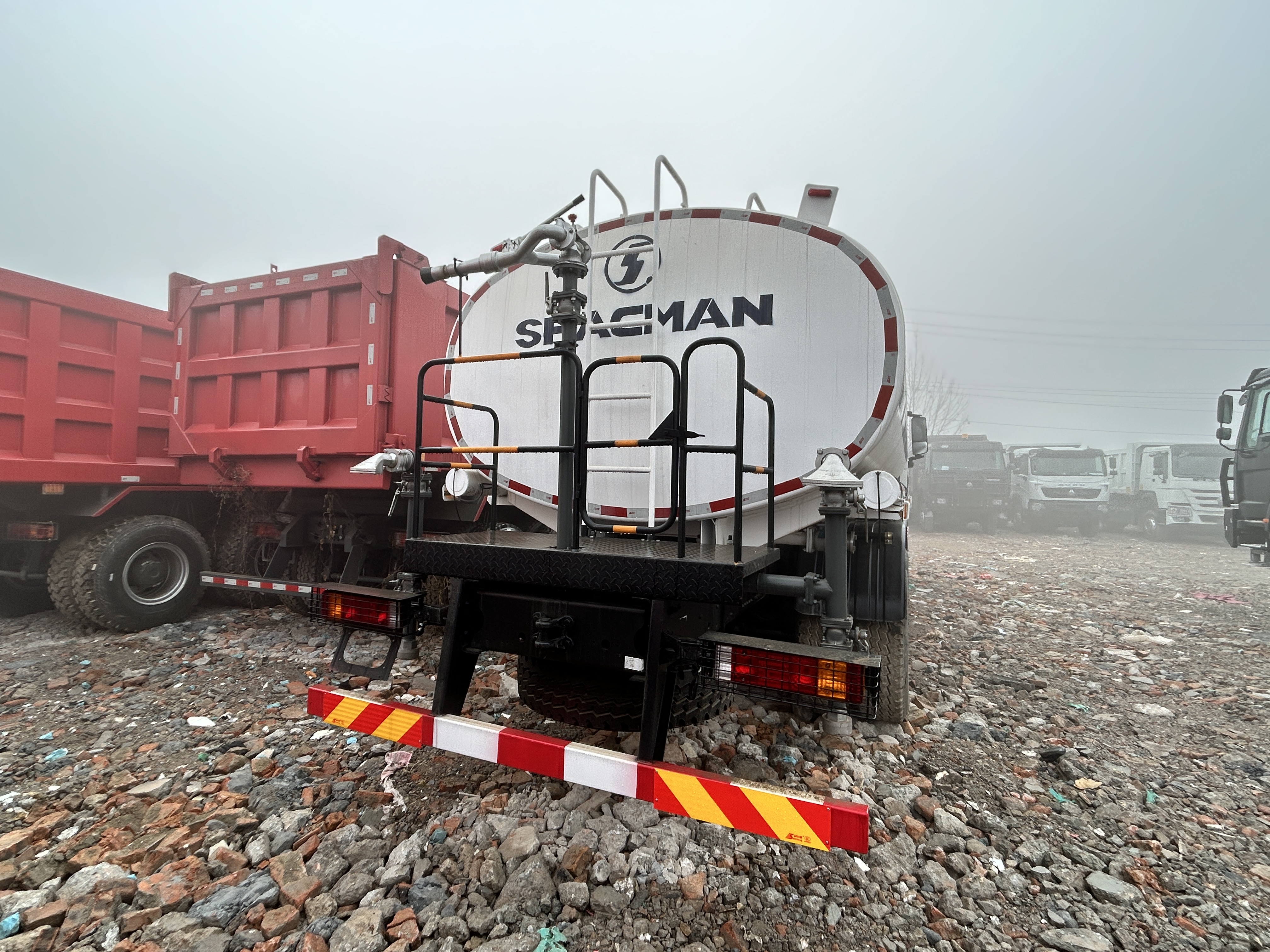
A typical water spraying system begins at the tank. Water leaves through a lower outlet and passes toward a suction line. A shutoff valve lets the operator isolate the tank, while a strainer may catch debris before it reaches the pump. Keeping this inlet area clean matters because restricted suction can reduce flow or contribute to pump problems.
The water truck pump provides the energy that moves water through the system. Depending on the truck specification, it may be driven by a power take-off (PTO), a hydraulic circuit, or a separate engine. Each arrangement has trade-offs rather than a universal winner. A suitable choice depends on the required duty cycle, the desired control response, service support, and how the truck will be used between spray tasks.
After the pump, water typically passes through discharge piping, control valves, and one or more manifolds. The operator can route flow to rear spray bars, side sprays, a hose reel, a hand spray gun, or a front bar if the truck is equipped for it. A pressure gauge and flow behavior give useful operating feedback, but the exact readings and limits must come from the pump and truck documentation.
The final components are the nozzles or spray heads. They turn pressurized water into a pattern suited to the task. A broad, even pattern may help dampen a haul road, while a more directed outlet can help with localized washdown. By inspection access, we mean whether routine check points such as nozzles, valves, and hose fittings can be reached safely and consistently.
What happens during a normal spray cycle?
- Fill and secure the tank. Confirm the intended water source and fill level, then secure caps and check that the tank and truck are suitable for the load. Water weight changes vehicle handling, so capacity alone is not the whole decision.
- Set the water path. Select the intended outlet and make sure unrelated valves are closed or isolated as the equipment manual requires. Inspect hoses, couplings, and visible fittings before engaging the drive.
- Engage the pump correctly. With the truck parked or moving only under the approved operating procedure, engage the PTO, hydraulic system, or auxiliary engine. Let the pump establish stable flow before relying on the spray pattern.
- Open the selected spray control gradually. Water travels from the tank through the pump and piping to the chosen spray bar or hose. The operator adjusts travel speed, engine or hydraulic input, and valve position to obtain workable coverage.
- Monitor the result, not only the controls. Check whether the ground is receiving even coverage, whether a nozzle is clogged, and whether pressure or sound changes unexpectedly. A wet patch beside the truck may point to a leak instead of useful application.
- Shut down in sequence. Close or reduce delivery according to the equipment instructions, disengage the pump drive, and relieve or isolate the system as specified. On some centrifugal-pump configurations, abruptly closing every spray valve while the pump is running at high speed can be inappropriate; follow the manufacturer’s operating procedure for the actual setup.
How spray controls shape real-world coverage
A water spraying system is effective only when its flow pattern fits the surface and vehicle speed. Rear bars are often used for broad road coverage. Side sprays can address shoulders or stockpiles, and hose reels give an operator reach for spot treatment. The controls may be manual, pneumatic, electric, or integrated with a truck-specific control layout. What will the water truck actually treat, and at what speed? That question should guide nozzle choice and control complexity.
A spray truck system can also include recirculation or bypass plumbing. These arrangements can help manage water movement when delivery outlets are not being used, but their purpose and correct valve positions vary by build. Ask the supplier for a labeled plumbing diagram and an operating demonstration for the final configuration rather than assuming two visually similar trucks work the same way.
Why the pump and plumbing deserve routine attention
The pump is central to a reliable water truck, but it is not the only component that affects performance. Suction leaks, blocked strainers, worn seals, loose clamps, damaged hoses, or obstructed nozzles can all change the pattern seen at the ground. If the route and payload are stable, a simple before-shift inspection may be a practical starting point.
- Look for water leaks around the tank outlet, pump, valves, hose connections, and spray bar.
- Check that strainers are clean and that caps, screens, and nozzle inserts are seated correctly.
- Listen for unusual pump noise and note any change in normal pressure or coverage.
- Verify valve response before entering a work area where unintended spraying could create a hazard.
- Drain or protect the system when freezing conditions are possible, following the equipment instructions.
- Record the operating condition behind each issue, such as low tank level, a specific outlet selection, or cold weather, before replacing parts.
It is not simply a pump issue; more precisely, the tank, inlet, drive, piping, and spray heads work as one system. Review inspection notes before replacing components, because a symptom at the nozzle may begin at the suction side.
Choosing water tanker equipment for the application
When comparing water tanker equipment, map the specification to the job: required volume, permitted vehicle weight, route conditions, spray width, expected travel speed, source-water cleanliness, climate, and service access. Larger capacity is not automatically better if it limits maneuverability or reduces useful operating flexibility on the site.
For road-construction and municipal-work applications, buyers should also ask how the controls can be accessed, whether the layout leaves room for routine inspection, and what spares are practical to carry. JINAN CMHAN TRUCK SALES CO.,LTD. serves truck and road-construction equipment contexts, but the final truck, chassis, pump, tank, and spray configuration should be confirmed against local regulations and the supplier’s current specifications.
Common symptoms and first checks
| Observed symptom | First practical checks |
|---|---|
| Weak or uneven spray | Check tank level, valve position, strainer condition, nozzle blockage, and visible suction leaks. |
| No flow after the pump is engaged | Confirm the correct drive engagement, water path, isolation valves, and the pump’s priming requirements. |
| Pressure changes suddenly | Reduce operation safely and inspect for a blocked outlet, air entering the suction side, a leaking connection, or a control position change. |
| Spray continues when it should stop | Isolate the equipment under the approved procedure and inspect the relevant valve or control circuit before returning to service. |
These are diagnostic starting points, not a substitute for the service manual. If a fault involves the PTO, hydraulic system, structural tank mounts, or unsafe controls, use qualified service support.
Key takeaway
A water truck spraying system works by moving water from a secured tank through an appropriate pump, controlled plumbing, and selected spray outlets. The reliable result is not just pressure: it is a balanced match between the water truck, the water truck pump, the spray pattern, the work surface, and the operator’s procedure. Confirm the final specification, train to that exact layout, and make inspection part of every operating routine.