
 EN

Choosing the Right Dump Truck Configuration for Construction Projects.
A dump truck purchase is easiest to get wrong when the discussion begins with body volume or a headline price. For a construction fleet, the better starting point is the job: material density, load frequency, haul distance, road surface, turning space, and unloading routine. From a fleet procurement perspective, the goal is not to present one configuration as universally suitable. It is to match the construction truck to the duty cycle and document the assumptions behind the choice.
This matters because configuration names alone do not establish suitability. A 6x4 dump truck and an 8x4 dump truck can both be capable hauling equipment, but they distribute load, occupy space, and behave on a route differently. Local axle-load rules, final axle ratings, tire choices, body dimensions, and approved gross-weight limits must be confirmed from the final specification rather than assumed from an axle label.
Start With the Hauling Task, Not the Truck Name
Before comparing quotations, write a short operating brief for the dump truck. What material will it carry: dry sand, gravel, excavated soil, demolition debris, or a mixed load? How many trips are expected in a shift? Will loading happen with an excavator, wheel loader, or another method? How steep, soft, congested, or uneven is the site route?
A useful checkpoint is payload distribution; before deciding, relate it to the actual loading and unloading routine. Dense aggregate loaded high at the front, for example, creates a different planning conversation from loose spoil loaded repeatedly on short runs. The relevant technical question is whether the chassis, body, suspension, tires, and tipping arrangement suit the intended load pattern and route—not whether a brochure uses a familiar configuration name.
- Payload and material: confirm legal and configured limits, material density, body volume, and how consistently the load can be distributed.
- Route and ground: note paved-road distance, access-road quality, gradients, turning radius, and soft-ground exposure.
- Cycle time: include queueing, loading, travel, tipping, return, and daily trip count.
- Unloading location: check space, surface condition, overhead clearance, and whether the site procedure supports controlled tipping.
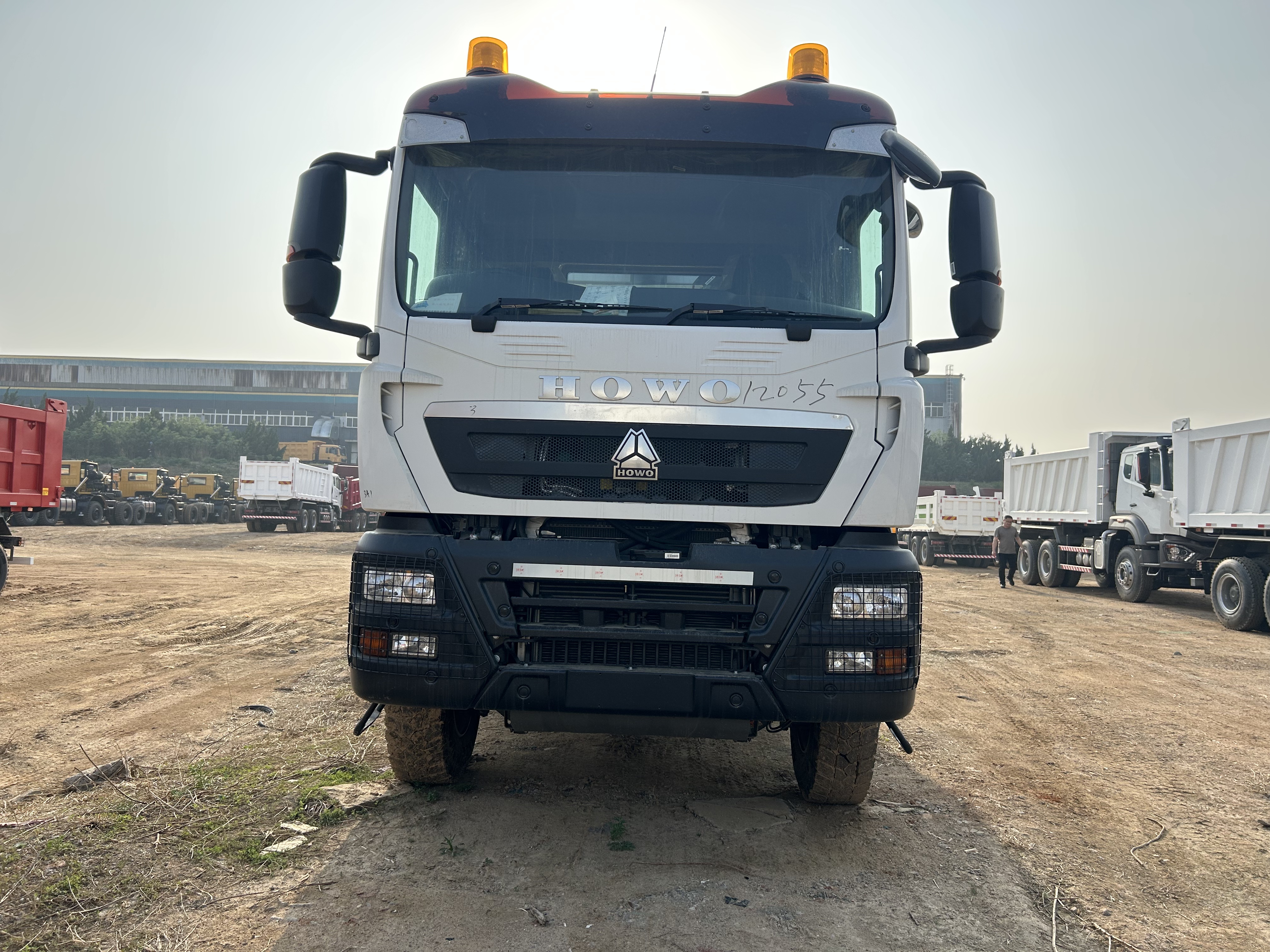
What a 6x4 Dump Truck Can Mean for a Construction Fleet
A 6x4 dump truck generally places drive on two rear axles. In practical selection terms, buyers often examine it when traction, a relatively compact footprint, and routine construction hauling must be balanced. If the route includes loose surfaces or frequent starts under load, the drive arrangement may be relevant; however, final traction and operating behavior also depend on tires, differential options, axle ratings, load distribution, driver practice, and ground conditions.
The maneuverability question is often as important as capacity. On restricted urban sites, narrow access roads, or projects with repeated turns near loading areas, a shorter overall package may simplify the workflow. That is the specification side; the next question is how it behaves in the daily routine. Confirm turning space, approach angles, safe reversing procedures, and whether the truck can queue and tip without creating a bottleneck.
Do not treat a 6x4 label as a permission to carry a particular weight. The final construction truck specification and applicable regulations determine the allowable payload. A sound inquiry should ask for axle ratings, wheelbase, body dimensions, tire specification, suspension type, and the proposed gross-weight basis alongside the configuration designation.
When an 8x4 Dump Truck Deserves Closer Review
An 8x4 dump truck adds axle capacity and changes the way a vehicle occupies the route. It can be worth evaluating where a project needs a heavier-duty hauling plan, long or repeated material moves, or a configuration that spreads load across more axles. Larger capacity is not automatically better, though. More axle positions can affect turning space, vehicle mass, maintenance planning, tire management, and site access.
If the route is stable, wide enough, and built for the expected loading pattern, an 8x4 dump truck may be a practical candidate for detailed specification review. If site geometry is tight or transfers between jobs are frequent, the same configuration can introduce trade-offs. First clarify the task, then compare configurations, and only then discuss price.
For either option, verify that the proposed body and hydraulic tipping system match the material and discharge routine. The supplier should confirm the body length, side height, floor and side material, hoist arrangement, rear-gate design, and any options relevant to the actual operating conditions. These are verification points, not assumptions that can be made from 8x4 alone.
A Side-by-Side Decision Framework
| Decision factor | Questions for a 6x4 dump truck | Questions for an 8x4 dump truck |
|---|---|---|
| Site access | Can it maneuver safely through tight loading and tipping areas? | Does the larger footprint still fit roads, turns, ramps, and staging space? |
| Load planning | Do axle ratings and the proposed body match the expected material and legal operating basis? | Does added axle capacity support the planned duty cycle without creating route or compliance constraints? |
| Road condition | Are drive, tires, suspension, and ground clearance appropriate for the surface and gradients? | Will wheelbase and axle layout remain workable across the full route, not only the main road? |
| Daily workflow | Can the truck load, queue, tip, and return efficiently at the expected trip frequency? | Will the expected volume reduce trips enough to justify its space, service, and operating implications? |
| Maintenance planning | Are inspection points, tire service, and parts support understood for the final configuration? | Have additional tires, axle-related checks, and access requirements been included in the maintenance plan? |
Do Not Separate the Body From the Chassis Decision
The dump body is part of the hauling equipment decision, not an afterthought. A body that is too large for the legal payload of dense material can encourage inconsistent loading. A body selected only for nominal volume may not fit the loading tool, site clearance, or tipping area. Ask how the proposed body works with the loader bucket, material flow, tailgate use, and safe discharge procedure.
Also consider wear and service access. Road conditions alter configuration priorities, and the same is true for maintenance. Daily checks should cover tires, wheel fasteners, hydraulic hoses, body hinges, hoist mounting points, lights, and visible structural condition according to the operator manual and site rules. A checklist is not a substitute for task-specific inspection or professional assessment, but it can make recurring checks more consistent.
Build a Specification Sheet That Suppliers Can Answer
For project procurement, vague requests such as “need a dump truck for construction” usually produce vague comparisons. A more useful request gives suppliers enough context to propose and explain a configuration. Include the material, target payload range subject to legal limits, route profile, expected trips per day, loading equipment, discharge method, climate and surface conditions, local compliance requirements, and service expectations.
- Describe the task and route in measurable terms where possible.
- Ask for the full proposed configuration, not only a 6x4 dump truck or 8x4 dump truck label.
- Compare axle ratings, wheelbase, body dimensions, tipping system, tire specification, and service items on the same basis.
- Check the final specification against local rules, operator requirements, and the planned loading process before order confirmation.
- Keep the approved configuration, inspection points, and handover documentation with the fleet record.
Choose for the Actual Project Conditions
A suitable dump truck configuration fits verified project conditions with the fewest unmanaged compromises. A 6x4 dump truck may be worth prioritizing when maneuverability, traction, and a particular route profile lead the decision. An 8x4 dump truck may merit attention when the planned hauling task, load distribution, and available access support a larger multi-axle arrangement. Neither conclusion should be made before the final truck, body, and operating limits are confirmed.
For construction buyers, the most reliable next step is a configuration review built around the real material, route, loading method, and unloading area. That approach turns a generic construction truck comparison into a defensible procurement decision and gives operators a clearer basis for safe, repeatable hauling equipment use.