 EN

Why Are High-Capacity Water Trucks Preferred for Mining Projects?
On an active mine, a water truck is more than a delivery vehicle. It supports dust control on haul roads, loading areas, stockpiles, and other traffic-heavy zones where dry material can reduce visibility and complicate daily work. That is why many projects evaluate high-capacity units first. The preference is not simply about owning the largest tank. It is about keeping water available where and when the site needs it, with fewer interruptions to the watering cycle.
From a fleet-procurement perspective, the first question is whether the water truck matches the duty cycle, payload, and route conditions. For a mining operation, that means looking beyond nominal tanker capacity to refill distance, road grade, traffic, axle loading, pump and spray-bar output, and the service routine. A larger tank can be a strong fit when those factors align; it is not an automatic answer for every site.
Mining dust management puts water availability under pressure
Haul roads are repeatedly disturbed by large moving equipment. The resulting airborne dust can affect driver visibility, nearby work areas, road condition, and maintenance planning. A CDC study of surface-mine haul roads identifies truck traffic as a major source of fugitive dust and discusses road watering as a control method. In practice, the useful question is not whether a site needs water, but whether its watering plan can keep pace with changing traffic, weather, and road-surface conditions.
A mining water truck has to travel, fill, apply water, and return to the source. If tank volume is too small for the route and the required coverage, the unit spends a larger share of the shift in refill travel. That can leave a gap between applications at the road segment that needs attention. A high-capacity water truck can reduce the number of refill cycles when the water point is remote or the treated area is extensive.
How tanker capacity supports a more stable watering cycle
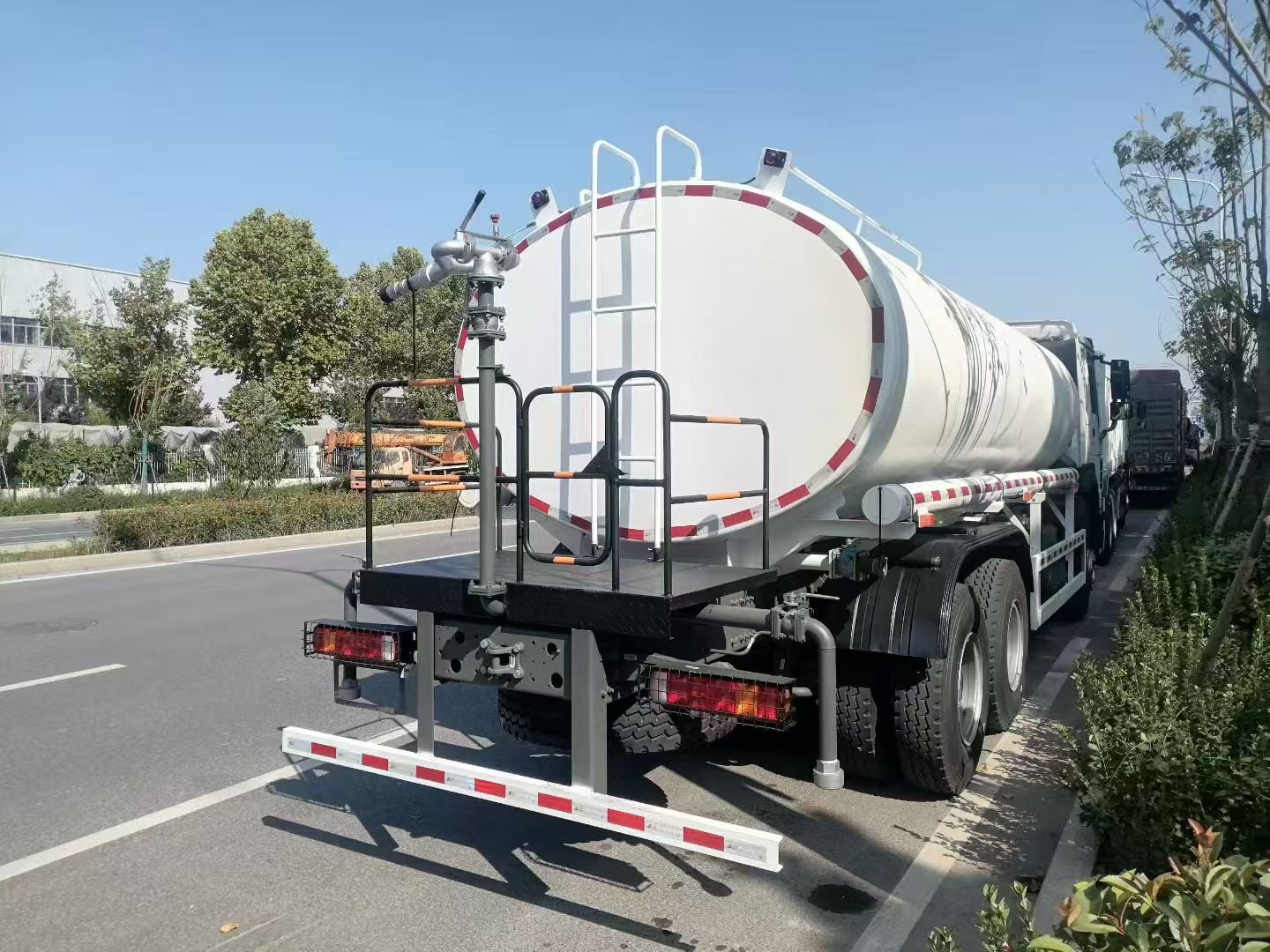
Tanker capacity is operational inventory carried on wheels. More usable water per trip can allow the operator to cover a longer route, make an additional pass over a priority section, or remain on the road during a traffic peak instead of returning to refill. This matters especially when a mine has several active zones and one water truck is expected to serve them in sequence.
Capacity ranges vary by chassis and tank configuration. Supplier listings commonly show water tanks in the 2,000-to-4,000-gallon range, while mining requirements may call for a different configuration. The right number cannot be inferred from a listing alone. A project should estimate the area to be treated, planned application rate, the interval between applications, and the time needed to reach the fill point. Those inputs show whether a larger tank reduces avoidable downtime or merely adds weight that the route does not need.
That is the specification side; the next question is how it behaves in the daily routine. A useful checkpoint is payload distribution: before deciding, relate it to haul-road grades, turning areas, soil condition, and the permitted load on the selected chassis. A tank that is appropriate on a firm, wide route may not suit a constrained service road or a site with limited water access.
Fewer refill trips can protect productive time
Every refill involves travel, queueing, filling, and returning to the treatment route. For a mine, these non-application minutes matter because the water truck is unavailable while it is away from the dust-management task. A larger water truck may improve utilization by carrying more water through each cycle, particularly where the source is distant from the haul road.
However, capacity should be assessed with the rest of the system. A tank that takes longer to fill than the route can tolerate may not improve coverage. Likewise, a large tank does not compensate for an undersized pump, poorly arranged spray nozzles, or a dispatch plan that sends the unit to low-priority areas while a busy road dries out. The practical aim is a repeatable cycle: fill efficiently, apply the required volume evenly, and return before the next high-priority section needs another pass.
High capacity helps crews respond to variable site conditions
Mine conditions change through the shift. Wind, traffic intensity, road grading, material spillage, and dry weather can create dust hotspots that are not obvious in a fixed timetable. A higher-capacity tanker gives the operator more reserve to respond to these areas without immediately abandoning the planned route for a refill.
This reserve also supports coordinated work around heavy equipment. Watering can be scheduled around loading, drilling, hauling, and maintenance activity so the truck does not create unnecessary conflicts at a bottleneck. Still, high capacity should not be treated as permission to over-water. Excess water may soften some road surfaces, create ruts, or introduce traction concerns. The relevant technical question is whether the planned volume and spray pattern suit the actual road material, gradient, drainage, and traffic load.
Capacity alone does not define the right mining water truck
Procurement teams should separate tank volume from total job fit. A larger tank increases carried mass, so the chassis, axles, tires, braking system, and route conditions must be checked against the fully loaded operating state. It is not simply a volume issue; more precisely, water weight distribution, road geometry, and maintenance practice all matter.
- Water source and refill time: Measure distance, queueing, hose or hydrant flow, and fill access before assuming a larger tank solves availability.
- Application system: Confirm pump capacity, spray-bar coverage, nozzle control, and any required cannon or hose functions for the task.
- Route and load limits: Review grades, turning radii, road width, ground condition, and axle-load restrictions at full tank weight.
- Maintenance access: Check tank inspection points, pump servicing access, drainage, filters, and spare-parts planning.
- Dispatch data: Track where dust returns first, how many trips are lost to refill, and whether a larger unit would remove a real bottleneck.
Use dust management data to size the truck
A practical sizing review starts with the daily water demand, not a brochure capacity figure. Map the road sections and work areas that need treatment, estimate the water volume per pass, and note when each section needs to be revisited. Then add the travel time to the water source, refill time, and the number of available operating hours. This creates a working duty-cycle model for the water truck.
If the model shows repeated refill travel during critical dust periods, a higher-capacity configuration may be justified. If the source is close and the roads are restrictive, multiple smaller cycles may be more practical. A lower initial price does not by itself answer the operating-cost question; the relevant comparison is the cost of equipment, water movement, availability, road maintenance, and avoidable delays over the working life of the unit.
Final takeaway
High-capacity water trucks are often preferred for mining projects because they can carry more water into long, demanding dust-management cycles and reduce unproductive refill travel. Their value is greatest when road coverage is broad, the water source is remote, traffic is heavy, and the chassis and application system are matched to the site.
Before selecting a mining water truck, document the actual duty cycle and confirm the fully loaded vehicle configuration for the route. That approach keeps tanker capacity connected to dust management, safety checks, and heavy equipment coordination rather than treating tank size as a stand-alone specification.