 EN

How to Choose the Right Dump Truck Solution for Quarry Operations?
Choosing a dump truck for a quarry is not a matter of selecting the largest body or the lowest quoted price. The right dump truck has to fit the material, haul road, loading tool, daily cycle, dumping point, and maintenance routine. From a fleet-procurement perspective, the first question is whether the proposed dump truck matches the duty cycle before the purchase price becomes the decision.
A quarry truck may carry crushed stone, overburden, sand, or mixed aggregate through short but demanding cycles. That means a practical hauling solution starts with measured site conditions, not a generic brochure specification. First clarify the task, then compare configurations, and only then discuss price.
Start With the Quarry Haul Profile
Document the work your dump truck must perform on a normal shift. Record material density, target payload, bucket size, loading height, one-way distance, road width, grade, turning points, weather exposure, and the number of cycles expected per hour. A dump truck that is well matched to a stable, compacted route may be a poor fit for a steep, wet route with tight loading areas.
Payload is more useful when it is connected to material and loading practice. A body that looks large can still be the wrong choice if the loading machine regularly creates uneven loads, if the material bridges during discharge, or if the route limits safe gross weight. Ask how the loader operator will fill the dump truck, where the load settles, and what prevents repeated overloading. Those questions make the hauling solution operational rather than theoretical.
Road resistance also deserves its own line on the comparison sheet. A Pit & Quarry result notes that compacted dirt or gravel roads can be discussed around 3% rolling resistance in hauling-system planning; the applicable value for a specific quarry should be measured and verified. Grade, rolling resistance, and payload work together, so a dump truck should be assessed against total route demand rather than capacity alone.
Match the Dump Truck Configuration to Material and Loading
Body design and discharge behavior
The material determines what you need to inspect in a dump truck body. Abrasive rock can change liner, floor, and wear-part priorities; sticky or wet material can change the attention given to body shape, discharge angle, and cleanout practice. Do not assume a body configuration fits every quarry material. More precisely, material behavior, loading method, and maintenance practice all matter.
Check the interaction between the loader and the quarry truck. Bucket payload, boom reach, spill control, and loading height affect cycle time as well as component stress. If each pass is too large or poorly centered, the result can be recurring payload imbalance. A useful checkpoint is payload distribution; before deciding, relate it to the actual loading routine.
Powertrain, braking, and traction
A dump truck should have a configuration that the route can support, especially where grades, loose surfaces, or repeated stopping create heat and traction demands. Instead of treating engine output as a stand-alone answer, ask the supplier to explain the selected configuration against the loaded climb, descent control, ambient conditions, and expected cycle frequency. The right choice may depend on details that should be verified with the final specification.
For mining transport, braking strategy is not merely a specification line. Review retarder capability where applicable, service-brake inspection access, tire suitability, and the operating rules for descending loaded and unloaded. A lower initial price does not by itself answer the operating-cost question if it leads to more frequent interruptions, difficult inspections, or a mismatch with the route.
Plan Around the Whole Cycle, Not Only Payload
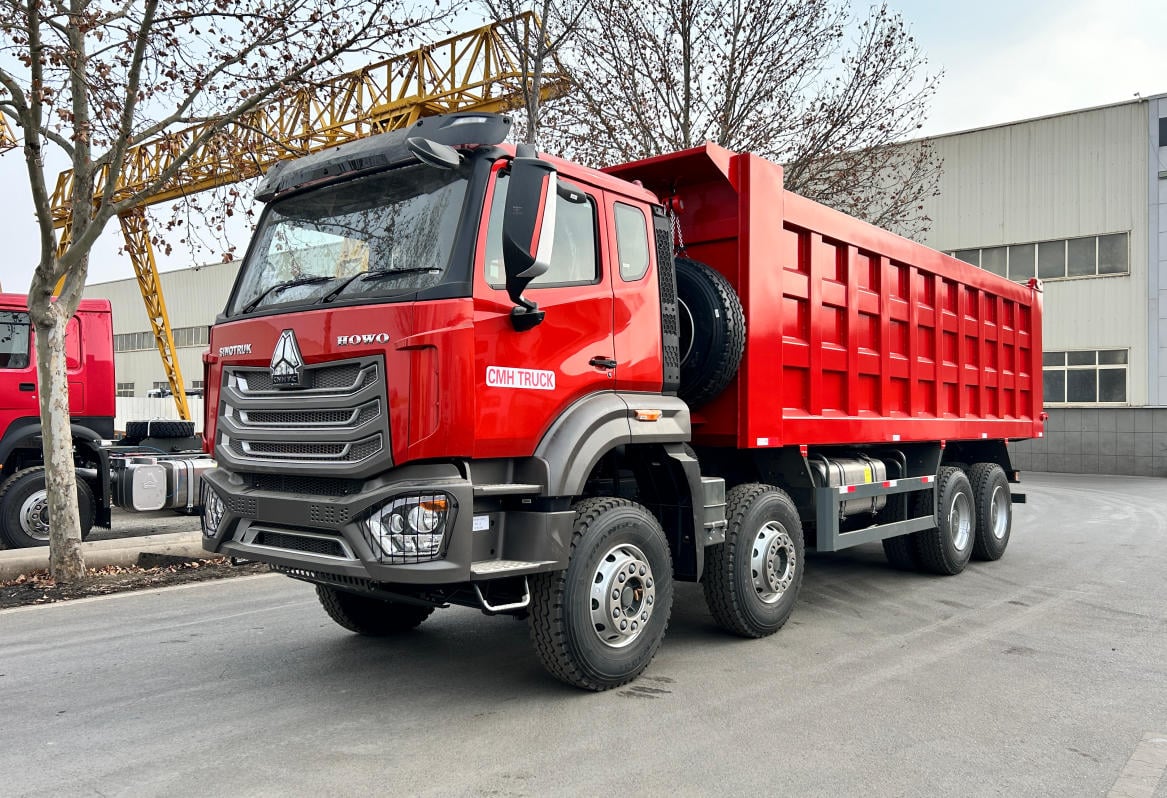
Cycle time combines loading, travel, queueing, dumping, return travel, and delays for fueling or inspection. A suitable dump truck choice is therefore the one that supports a reliable system with the loading equipment and road layout. A larger quarry truck can be sensible when roads, loading equipment, turning radii, and dump areas were designed for it. It may be less useful when it creates bottlenecks or requires the site to accept repeated partial loads.
Build a simple comparison table before making a final decision:
| Decision factor | What to confirm | Why it affects the hauling solution |
|---|---|---|
| Material and payload | Density, moisture, loader bucket size, legal and site limits | Helps prevent chronic overloading or underuse of the dump truck. |
| Haul road | Grade, rolling resistance, width, drainage, turn geometry | Determines whether the quarry truck can move safely and consistently. |
| Dumping area | Ground condition, berm procedure, visibility, turning space | Shapes discharge safety and daily cycle reliability. |
| Maintenance support | Inspection access, routine parts, technician capability, planned downtime | Connects the equipment choice to lifecycle availability. |
Make Safety and Maintainability Part of Selection
Safe quarry operations need site-specific procedures as well as suitable heavy equipment. MSHA guidance for powered truck dumping includes keeping at least one truck width away from the berm and ensuring the dumping berm is in place. Use that point as a verification prompt, not as a substitute for local law, site engineering, training, or operating rules.
Before accepting a dump truck, walk through the daily inspection points with the people who will use and maintain it. Can operators reach required checks safely? Are lights, mirrors or camera systems positioned for the work area? Are tire, brake, hydraulic, and body-pivot checks realistic within a pre-shift routine? In many planning discussions, this is where the configuration details start to matter. A dump truck that is difficult to inspect can create avoidable downtime even when its headline capacity is attractive.
For any quarry truck, clarify parts availability, service response expectations, diagnostic access, and the local plan for wear items before finalizing the order. These are questions to verify with the supplier, not performance promises. The same discipline applies to optional features: define the risk or operational need first, then request the configuration that addresses it.
Compare Total Operating Fit, Not Sticker Price
A procurement comparison should separate purchase cost from utilization, fuel or energy use, planned maintenance, unscheduled downtime, tire wear, and the effect of mismatch on production. This does not require an exact forecast. It requires a clear set of assumptions that can be reviewed: expected payload, cycles, road conditions, shift length, service intervals, and the cost of a stopped dump truck.
For a quarry operation with stable routes and consistent material, a standardized dump truck configuration may simplify training and spares planning. For changing benches, wet seasons, or varied material, a more flexible configuration may be justified. The relevant technical question is whether the selected configuration suits the actual conditions, not whether it looks broadly capable on paper.
A Final Quarry Dump Truck Checklist
- Confirm material type, density range, moisture, and loading method.
- Measure haul distance, grades, rolling resistance, widths, and turn geometry.
- Match payload and body configuration to the loading tool and discharge routine.
- Review braking, traction, visibility, and dumping-area controls for the site.
- Check inspection access, maintenance capability, spare-parts planning, and operator training.
- Ask for a configuration review based on your documented quarry cycle before signing.
The right dump truck solution is a matched system: vehicle, material, loader, road, dump point, people, and maintenance plan. When those elements are reviewed together, buyers can select heavy equipment with a clearer basis for safe mining transport and dependable quarry productivity.