 EN

What Are the Advantages of a Light Truck for Last-Mile Delivery?
For a fleet procurement planner, the useful question is not whether a light truck is automatically better than every larger delivery vehicle. It is whether the duty cycle, payload, route conditions, and stop pattern fit the vehicle. In dense delivery areas, that fit can be valuable: a well-matched light truck can make more practical use of constrained streets, loading areas, and driver time while still carrying commercially useful loads.
That is why light truck delivery deserves a route-level review rather than a simple capacity comparison. Last-mile work often combines short distances, frequent stops, changing curb access, and time-sensitive customer handoffs. A light truck can support that pattern when its body, payload rating, loading arrangement, and service plan are selected for the real operation.
Why vehicle fit matters in last-mile logistics
Last mile logistics is the part of distribution where broad fleet averages can be misleading. A vehicle may have enough theoretical cargo room yet lose time if it is awkward to position at a store, apartment block, depot, or restricted loading zone. Conversely, choosing a vehicle only because it is compact can create its own problem if payload or body volume is insufficient for the daily route.
A light truck gives fleet teams a middle ground in many operations. Compared with a larger commercial unit, it may be easier to place at the point of delivery. Compared with a passenger-oriented vehicle, it may offer a more suitable platform for organized cargo handling. The advantage is conditional, but the decision logic is straightforward: match the light truck to the route’s heaviest realistic load, number of stops, access limits, and driver workflow.
1. Better maneuverability in constrained streets
Urban routes frequently include narrow streets, busy intersections, limited turning space, and temporary obstructions. A properly sized light truck can be easier to guide through those conditions than a larger vehicle. This can reduce the friction of reaching the delivery point, especially where drivers make many short movements between stops.
That does not mean every light truck will suit every city. Turning circle, overall dimensions, body width, mirror placement, visibility, and local restrictions still need confirmation. A useful checkpoint is daily access: before deciding, relate the vehicle to the tightest streets, loading bays, and reversing maneuvers on the planned route. This shifts the conversation from nominal vehicle class to real urban cargo access.
2. More practical parking and curbside positioning
Parking is often a hidden cost in last mile logistics. Time spent circling for a usable position can delay the next delivery, disrupt route timing, and increase driver stress. Compact delivery vehicles can be easier to place in tighter spaces and move through crowded streets, a practical point reflected in industry discussion of urban delivery vehicles. For the operator, the key benefit of a light truck is not a guarantee of parking; it is a better chance of aligning vehicle size with the available curbside environment.
Fleet managers should map where the light truck will actually stop: formal bays, customer yards, street-side spaces, depot lanes, or mixed-access sites. They should also check local curb rules and delivery time windows. That is the specification side; the next question is how the vehicle behaves in the daily routine.
3. A useful balance of payload and delivery frequency
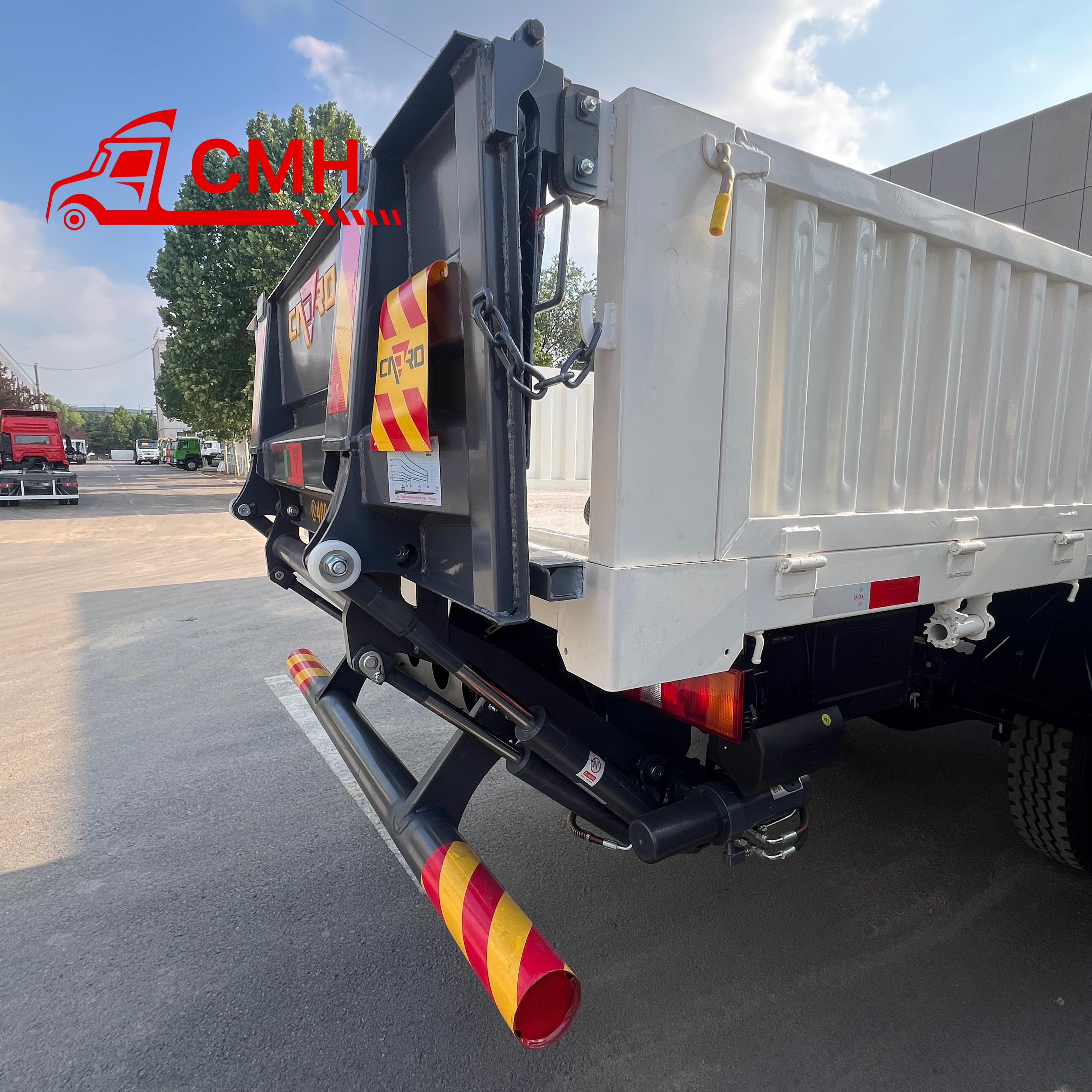
A light truck can be a sensible option when a route needs more commercial carrying capability than a small van can comfortably provide, but does not justify a much larger truck. The right balance can let a fleet carry consolidated orders while preserving access to local delivery areas. This can be particularly helpful for packaged goods, replenishment work, parts distribution, or bulky but manageable consignments.
Payload alone is not enough. A light truck should be assessed with the body weight, driver and equipment allowance, load distribution, cargo restraint plan, and the load’s changing profile during the day. It is not simply a capacity issue; more precisely, axle loading, loading sequence, and unloading practice all matter. Where deliveries include dense, irregular urban cargo, a lower but well-organized load can be more useful than a larger but poorly accessible load.
4. Faster loading and unloading workflow
The loading arrangement can be one of the most direct advantages of a light truck. Depending on the confirmed body configuration, the platform may support a workflow that keeps cartons, roll cages, tools, or replenishment stock easier to reach. Drivers can work more efficiently when the cargo area, door arrangement, restraint equipment, and unloading method match the stop sequence.
For light truck delivery, consider what happens at the first stop, middle stops, and final stop. Are items stacked in route order? Does the driver need to use a hand trolley? Is there safe space to open doors? Does the load require protection from weather or movement? These questions reveal whether the proposed delivery vehicle improves the workflow or merely changes the vehicle category.
5. Route flexibility as demand changes
A light truck can give a fleet flexibility when demand varies by district, season, customer type, or delivery window. One day’s work may involve multiple small drops; another may involve fewer, heavier commercial deliveries. A fleet that understands its route bands can assign a light truck to the tasks where access and useful payload matter most, rather than using the same vehicle for every job.
This flexibility needs operating discipline. Dispatch should record common load types, stop density, failed-delivery causes, and access barriers. Maintenance planning should reflect the stop-start duty cycle. If the route and payload are stable, a light truck may be a practical starting point. If the route regularly exceeds the selected vehicle’s payload, cargo volume, or access limits, the specification should be revisited rather than pushed beyond its intended use.
6. Potentially clearer total-cost control
A lower initial price does not by itself answer the operating-cost question. Still, a right-sized light truck can make cost control easier by avoiding a mismatch between vehicle scale and task. The relevant comparison includes utilization, fuel or energy use, maintenance access, tire wear, parking exposure, driver time, and missed-delivery risk. A light truck that completes its route cleanly may be more useful than a larger option that repeatedly encounters access or under-utilization issues.
Do not assume the result in advance. Compare actual route data, local regulations, expected service support, and the confirmed vehicle specification. This is especially important when adding a new delivery vehicle type to an existing fleet, because spare parts, driver familiarity, and workshop capability can affect the total operating picture.
How to decide whether a light truck fits your route
Before selecting a light truck, use a practical review:
- List the typical and peak payload, including packaging and handling equipment.
- Map stop density, street width, loading access, parking constraints, and delivery windows.
- Define the cargo body and loading method needed for the goods.
- Check local size, weight, curbside, and emissions requirements.
- Confirm service coverage, inspection needs, and driver training requirements.
- Run a route trial or specification review before committing to a fleet-wide change.
The main advantage of a light truck for last-mile work is therefore fit. It can combine commercially useful carrying ability with maneuverability and flexible deployment, but only when the vehicle is configured around the route. For operators managing last mile logistics, that route-first approach is more reliable than assuming that larger capacity or smaller dimensions alone will solve the delivery problem.