 EN

How to Choose an Aluminum Tank Truck for Fuel Transportation?
Choosing an aluminum tank truck for fuel transportation starts with the job, not with a capacity figure or a catalog photo. A truck that looks suitable can still be a poor fit if the fuel, route, delivery points, unloading method, or local approval requirements were not defined first. From a fleet-procurement viewpoint, the practical question is whether the proposed aluminum tank truck matches the operating cycle your team will repeat every day.
This matters because search results for an aluminum tank truck often mix road-going fuel tankers with auxiliary truck fuel tanks. They are not the same purchase. An aluminum fuel tanker is a transport asset whose tank, chassis, piping, safety equipment, and paperwork must be reviewed together for the intended fuel-delivery task.
Start with the fuel and delivery task
Before comparing quotations, write a short duty profile. Identify the fuel to be carried, expected load frequency, daily distance, loading method, discharge method, delivery-site access, and whether the truck will work on paved highways, mixed roads, or restricted sites. This profile gives a supplier enough context to recommend a configuration, but it also gives your own team a way to compare proposals fairly.
Ask a direct question: what will the tank truck actually carry, and how will it be unloaded? Fuel characteristics and the intended operating process can affect the required tank arrangement, seals, valves, pumping or gravity-discharge setup, and cleaning approach. Local regulations and the final approved specification should govern the final decision; a general article cannot replace a qualified compliance review.
Choose capacity by route, payload, and delivery pattern
Tank volume is important, but larger capacity is not automatically better. The right aluminum tank truck capacity depends on legal vehicle limits, axle loading, route gradients, turning space, and the volume normally delivered at each stop. A vehicle that is efficient on a long highway route may be inconvenient for short, congested delivery runs with limited maneuvering room.
Review the tank together with the chassis and axle plan. Request the proposed tare weight, rated payload basis, axle configuration, and the assumptions behind the volume recommendation. Then compare those details with the roads and delivery locations you actually use. Capacity alone does not describe payload distribution or operating stability.
When compartments matter
Compartment layout can be relevant when deliveries require separate grades, multiple drops, or more controlled load management. The useful comparison is not simply the number of compartments. Confirm the working volume of each section, fill and discharge routing, isolation points, manhole access, and the loading sequence your operators expect to use. A fuel transport truck should support the delivery routine rather than force the routine to adapt to a generic tank layout.
Evaluate the aluminum tank as a system
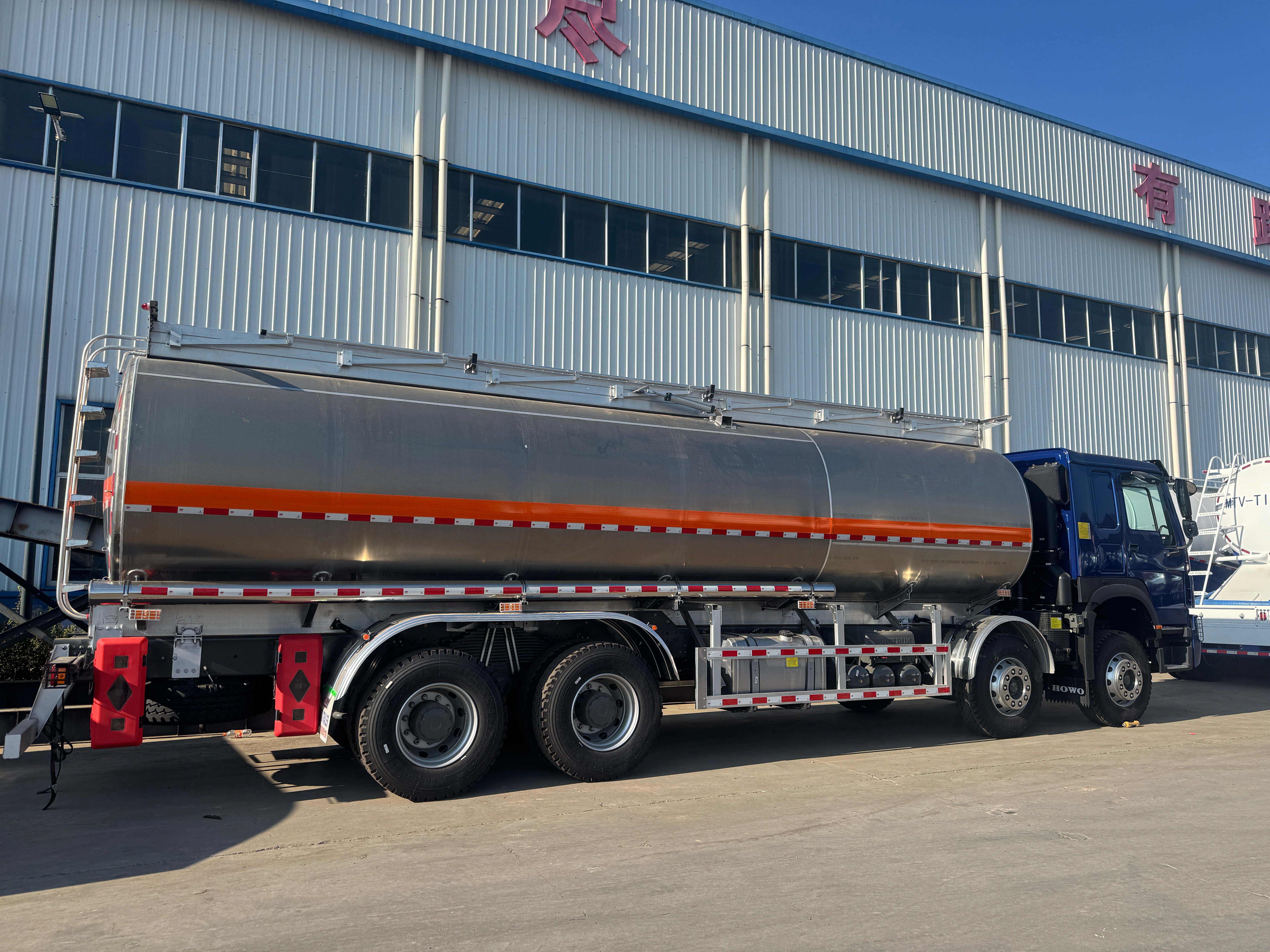
An aluminum tank can be attractive where weight management is a priority, but aluminum does not remove every material-care or inspection decision. Exposure, cleaning practice, drainage, dissimilar-metal contact, storage conditions, and repair procedures all deserve a configuration-level discussion. Ask what is included in the final tank specification and what maintenance instructions apply to the delivered vehicle.
For a practical tanker selection, inspect the accessible details: weld areas, mounts, walkways, handrails, manhole covers, piping protection, valve placement, and the route of any product lines. By inspection access, we mean whether routine check points can be reached safely and consistently. A useful checkpoint is access around valves and drainage areas; before deciding, relate it to the actual loading and unloading routine.
Match safety equipment to the operating environment
Fuel transportation requires task-specific safeguards, not a generic promise that a truck is “safe.” Confirm the equipment package against the authority and customer requirements that apply in the operating location. The review may include emergency shutoff arrangements, grounding or bonding provisions where required, fire-safety equipment, signage, lighting, spill-response provisions, and access protection. The relevant technical question is whether each item suits the planned fuel, route, and delivery workflow.
Also examine how the driver will work around the vehicle. Consider steps, anti-slip walking surfaces, guardrails, hose handling, cabinet access, and the sequence for loading and unloading. Operator feedback is valuable here because it can reveal a mismatch between a paper configuration and the routine that happens at a depot or delivery point.
Use a supplier comparison sheet, not a price-only comparison
For each aluminum fuel tanker proposal, ask suppliers to respond to the same list of requirements. This makes differences visible and helps prevent a lower initial price from obscuring missing scope. JINAN CMHAN TRUCK SALES CO.,LTD. works in trucks, semi-trailers, and construction equipment export; for any supplier, request documentation tied to the final configuration rather than relying on broad product claims.
| Comparison area | What to confirm |
|---|---|
| Operating task | Fuel type, delivery pattern, route, climate, and unloading method |
| Tank arrangement | Material specification, volume, compartments, access, piping, and drainage |
| Vehicle integration | Chassis, axle arrangement, payload basis, tires, and maneuvering needs |
| Safety and approval | Applicable local rules, required equipment, documents, and acceptance process |
| Service planning | Inspection access, spare-parts identification, maintenance instructions, and handover records |
That is the specification side; the next question is how it behaves in the daily routine. Ask for a clear configuration confirmation before production or shipment, and check that the final documents identify the same components discussed during the quotation stage.
Plan the inspection and handover process
Pre-delivery inspection should connect the approved specification to the physical aluminum tank truck. Check workmanship, labeling, accessible hardware, walkways, valve operation, line routing, and the records supplied with the vehicle. Treat this as a verification direction, not a claim that every item is present on every truck. The final inspection list must reflect the fuel, destination, and applicable authority requirements.
For export orders, add shipment preparation and receiving conditions to the review. Confirm what documents will travel with the vehicle, what receiving equipment is available, and who will verify the configuration at handover. This is especially useful when the buyer, operator, and receiving team are in different locations.
Frequently Asked Questions
Is an aluminum tank truck the right choice for every fuel-transport task?
No. Material choice should be assessed with the fuel carried, operating environment, maintenance practice, applicable rules, and final vehicle specification. Aluminum can be one part of a suitable solution, but it is not a universal answer.
What information should I send when requesting an aluminum fuel tanker quotation?
Provide the fuel type, target volume, delivery pattern, route conditions, destination country or region, unloading method, required approvals, and any preferred chassis or axle arrangement. Better inputs lead to a more useful configuration review.
How can I compare fuel transport truck quotations fairly?
Give each supplier the same duty profile and compare the documented tank layout, chassis assumptions, safety equipment, approval scope, service access, and handover documents before comparing price.
Make the final choice conditional on verified fit
A practical way to choose an aluminum tank truck is to move in sequence: clarify the transport task, map it to capacity and compartment needs, evaluate the aluminum tank and chassis as one system, verify safety and approval requirements, and confirm the delivered configuration in writing. If the route and payload are stable, that sequence may give your team a practical starting point. If they are still changing, resolve those operating details before treating a quotation as a final specification.