
 EN
EN

How Does Trailer Truck Load Distribution Affect Road Stability?
A trailer truck can feel composed on a straight, smooth road and still become difficult to control when the load is placed poorly. The reason is simple: cargo position changes the forces carried by the tractor, trailer axles, tires, suspension, and fifth-wheel connection. Good trailer load distribution is therefore not only a payload-planning exercise. It is a road-stability and truck-handling decision that should be checked before every departure.
For an operator, the practical question is not simply whether a trailer truck is under its gross limit. It is whether the cargo loading plan keeps each axle and tire within its ratings, keeps the center of mass low and near the vehicle centerline, and keeps the load from moving as the route changes. That distinction matters on bends, ramps, uneven pavement, braking zones, and wet surfaces.
Why trailer load distribution changes the way a trailer truck behaves
A loaded trailer truck is a connected system. When cargo sits too far forward, too far rearward, too high, or too far to one side, it changes normal tire force and the way the combination responds to steering, braking, and road irregularities. The trailer may remain legal in gross mass yet still have an axle, tire, or coupling problem. Conversely, an apparently balanced trailer truck can become unstable if the cargo shifts after a hard brake or a lane change.
Trailer load distribution influences four operating conditions at once:
- Steering traction: Too little load on the tractor’s steering axle can reduce the tire grip available for directional control.
- Drive and braking traction: Axle loading affects how consistently the tractor and trailer tires can transmit braking and driving forces.
- Roll response: A high or off-center center of mass raises the overturning demand during turns, roundabouts, crosswinds, and evasive maneuvers.
- Road contact: Uneven cargo loading can overload selected tires while leaving others lightly loaded, making truck handling less predictable on rough pavement.
FMCSA safety analysis notes that unequal weight across commercial-vehicle tires can reduce stopping power as well as roll and maneuvering stability. That is a useful reminder that cargo loading should be assessed across the vehicle, not only from front to back.
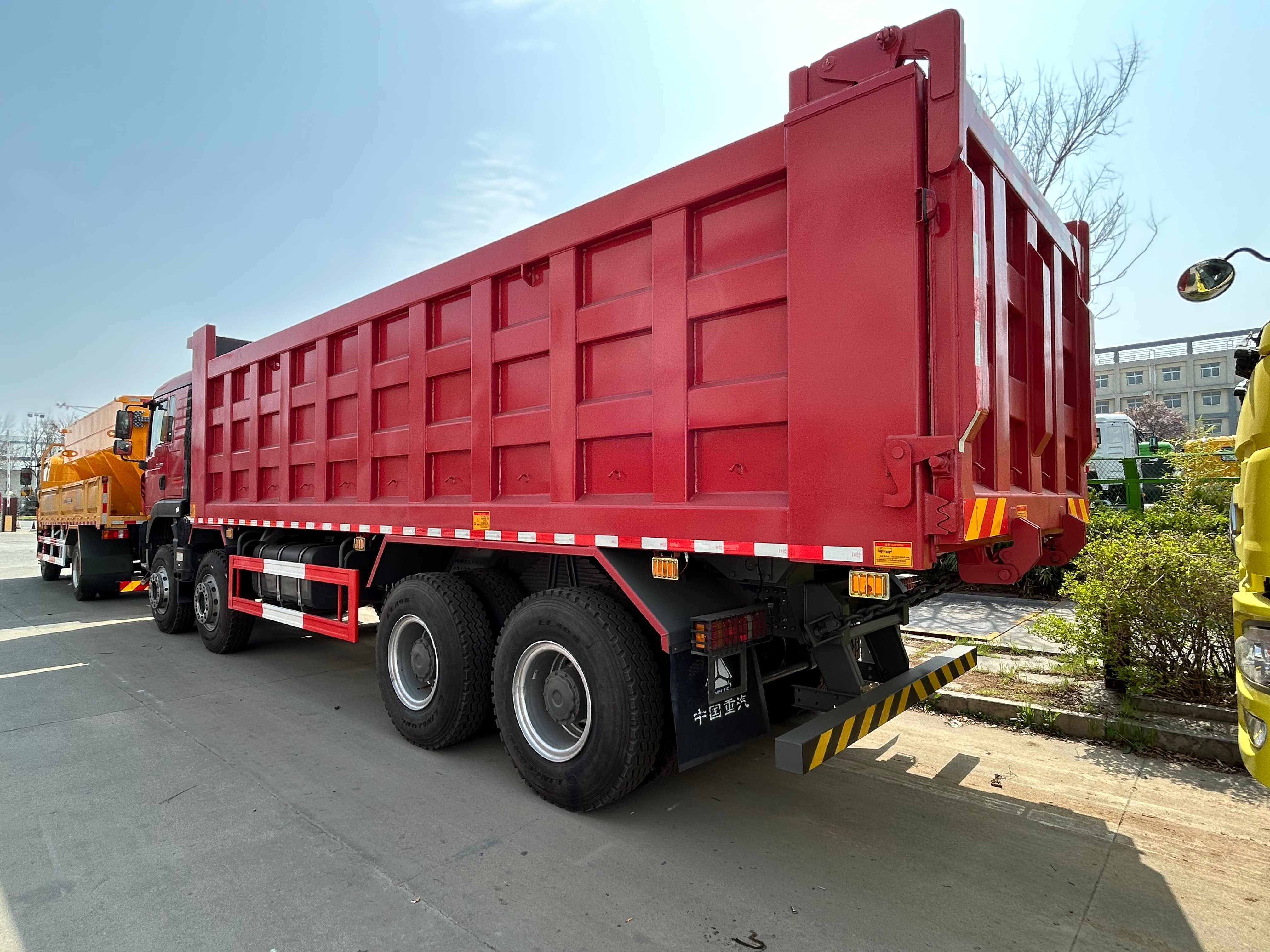
Front-to-rear balance: protect the tractor, coupling, and trailer axles
Longitudinal balance is the front-to-rear part of trailer load distribution. Cargo placed forward of the trailer’s axle group generally increases load carried through the coupling and tractor. Cargo placed too far rearward can reduce coupling load and can make a trailer truck more prone to sway or poor steering feel. The exact acceptable position depends on the tractor, trailer geometry, axle configuration, cargo mass, and the applicable ratings; it should not be inferred from a generic loading diagram.
For a trailer truck carrying dense freight, start with the approved loading plan, axle ratings, tire ratings, and cargo dimensions. Place the heaviest compatible pieces low and close to the intended longitudinal balance point, then scale the completed combination. If a scale result is outside the allowed distribution, rework the cargo loading plan instead of assuming the gross total makes it acceptable. Route-specific limits may also differ by jurisdiction and axle configuration.
Pay particular attention to concentrated equipment, pallet stacks, coils, machinery, and partial loads. A partial load can create a worse trailer load distribution than a full, evenly arranged load because one dense item may dominate axle weight and coupling force.
Side-to-side balance: a direct road stability concern
Side-to-side balance is often missed when crews focus only on axle totals. If cargo is heavier on one side, the trailer truck leans more on that side, changes tire loading, and may react differently in left and right turns. This is especially important when the road has camber, potholes, shoulders, wind exposure, or repeated tight turns.
Keep comparable cargo masses paired across the trailer centerline whenever the shipment allows it. If the cargo cannot be symmetrical, document the asymmetry, verify individual wheel or axle readings where available, and adjust the operating plan. Reduced cornering speed, a revised route, or an alternative loading pattern may be necessary. These are operational decisions, not just warehouse decisions.
Height matters as much as lateral position. Heavy cargo placed high raises the center of gravity and increases body roll. A low, centered cargo loading arrangement gives the trailer truck more margin when road stability is challenged by a curve, abrupt steering input, or a surface change.
Securement preserves the load distribution you planned
A correct trailer load distribution at the dock is not enough if it cannot survive transit. Braking, acceleration, vibration, and cornering can shift cargo and alter truck handling within seconds. Cargo securement is therefore part of stability management. FMCSA cargo-securement rules apply to cargo-carrying commercial motor vehicles in interstate commerce, but a compliant plan must still be matched to the specific freight, trailer, route, and local requirements.
Use restraints, blocking, bracing, dunnage, and tie-down arrangements that are appropriate to the cargo and verified before dispatch. Check that the cargo loading method prevents forward, rearward, lateral, and vertical movement as applicable. Do not use securement hardware to compensate for a poor trailer load distribution; first establish the correct placement, then secure that placement.
A practical pre-departure check for trailer truck road stability
- Confirm the cargo weight, dimensions, center-of-mass information, and any handling limits.
- Review the trailer truck’s axle, tire, coupling, and gross-weight ratings against the planned cargo loading arrangement.
- Place heavy freight low, close to the centerline, and according to the approved trailer load distribution plan.
- Check side-to-side arrangement before the cargo is restrained.
- Apply cargo securement suited to the freight and inspect it after loading.
- Use certified scale data or other approved measurement to confirm actual axle and gross weights.
- Inspect tires, suspension, coupling components, and securement after the first route segment and whenever conditions or cargo change.
Adjust truck handling to the real load and road
Even a well-loaded trailer truck needs a driving plan that reflects its real condition. Reduce speed before curves, leave more braking distance, avoid abrupt steering, and be cautious on crowned roads, soft shoulders, high winds, and uneven surfaces. If the load is unusually tall, dense, asymmetrical, or difficult to secure, treat road stability as a reduced-margin condition. The right response may be a different route, additional checks, or a revised cargo loading configuration.
Put simply, trailer load distribution affects road stability because it changes how force is shared across the tractor, trailer, axles, and tires. Good cargo loading keeps the trailer truck predictable; poor cargo loading can undermine steering, braking, and rollover resistance even before an obvious incident occurs. Build the plan from verified ratings and scale results, secure the load, and align truck handling with the route ahead.