
 EN

Different Semi Trailer Axle Layouts Suit Different Payload Requirements.
Choosing a semi trailer is not simply a choice between two or three trailer axles. The useful question is whether the whole axle layout suits the cargo, its center of gravity, the loading routine, the route, and the applicable weight rules. From a commercial-vehicle selection advisor’s perspective, a practical review starts with duty cycle and payload distribution rather than a headline carrying capacity.
A heavier layout can spread load over more contact points, but it can also add tare weight, affect maneuverability, and introduce equipment that must be specified and maintained correctly. A lighter layout may be efficient for stable, moderate loads while leaving less flexibility for dense cargo. The right semi trailer configuration is therefore a matched system: tractor fifth-wheel load, trailer frame, suspension, tires, brakes, axle group, and cargo placement all need to work together.
Start with payload distribution, not payload alone
Payload requirements describe more than total mass. A compact load of steel coils, machinery, or packaged material can create concentrated forces even when the total shipment is within the trailer’s nominal capacity. Long, light cargo may have the opposite profile: more volume but a lower mass concentration. Before comparing a trailer axle layout, document the loaded weight, cargo dimensions, expected center of gravity, loading sequence, and whether the load changes from trip to trip.
The first calculation is a distribution check. Part of the cargo load transfers through the kingpin to the tractor, while the remainder is carried by the trailer axle group. Moving a load forward or rearward can change both readings. That is why a load that appears acceptable on a gross-weight basis can still overload one axle group or reduce steering-axle loading. If the route and payload are stable, that analysis can become a repeatable loading plan. If they vary, the specification should allow enough adjustment and verification margin.
Regulatory limits also matter. For example, U.S. Interstate rules commonly reference a 34,000-pound maximum for a tandem axle group, but actual limits depend on axle spacing, gross combination weight, route, permits, and local jurisdiction. This is an illustration, not a universal design value. Verify current rules where the semi trailer will operate before finalizing an axle configuration.
How common axle layouts address different work
Tandem axle layouts for predictable freight
A tandem arrangement is a common starting point for general freight because it balances capacity, tire footprint, cost, and handling in a familiar format. It can suit dry freight, palletized goods, and other loads with consistent placement when the required legal axle loads and gross combination weight are met. For a buyer with repeat routes and controlled loading, a tandem semi trailer may simplify operations.
Its limitation is not that it is inherently light-duty; it is that its axle-group loading margin may be narrower when dense cargo is concentrated or when changing load positions shifts weight sharply. In those cases, measure axle weights in loaded conditions rather than relying on an empty-trailer assumption.
Tri-axle layouts for higher or more demanding distributions
A tri-axle heavy cargo trailer can be considered when a project calls for a broader load-bearing arrangement, subject to the full vehicle design and local rules. A third trailer axle may help distribute load across a larger group, but it does not automatically authorize a higher payload. Bridge formulas, axle spacing, suspension ratings, tire ratings, trailer structure, and permit requirements can still be the limiting factors.
Tri-axle layouts can also change turning behavior and tire scrub, particularly in tight yards or urban delivery points. The trade-off is worth evaluating when the business regularly carries dense, relatively stable loads, but it should be weighed against route geometry, maintenance planning, and operating cost.
Sliding axle groups for changing cargo positions
A sliding tandem or sliding tri-axle group supports load balancing by moving the axle group relative to the trailer body within its designed range. This can be useful where pallet counts, load positions, or regional axle limits vary. It is not a substitute for weighing the vehicle: the operator still needs a safe loading plan and must confirm that kingpin and axle-group loads comply with the applicable limits.
When reviewing a sliding trailer axle layout, ask how often adjustment will be needed, whether the yard provides safe space for it, and how the locking mechanism and rails will be inspected. A feature that is useful in theory becomes valuable only when it fits the daily dispatch and loading routine.
Liftable or auxiliary axles for variable duty cycles
Liftable or auxiliary axles may be relevant for variable loads, subject to local regulation and the detailed specification. With lighter loads, lifting an axle can reduce rolling resistance and tire wear in permitted conditions. With heavier loads, deploying it can help distribute the load across the designed axle group. The decision should account for the control system, suspension behavior, legal restrictions, and the actual frequency of light versus heavy trips.
For fleets that alternate between low-density volume freight and dense machinery or construction material, this flexibility may be worth evaluating. For a single, stable duty cycle, a simpler fixed arrangement may be easier to manage.
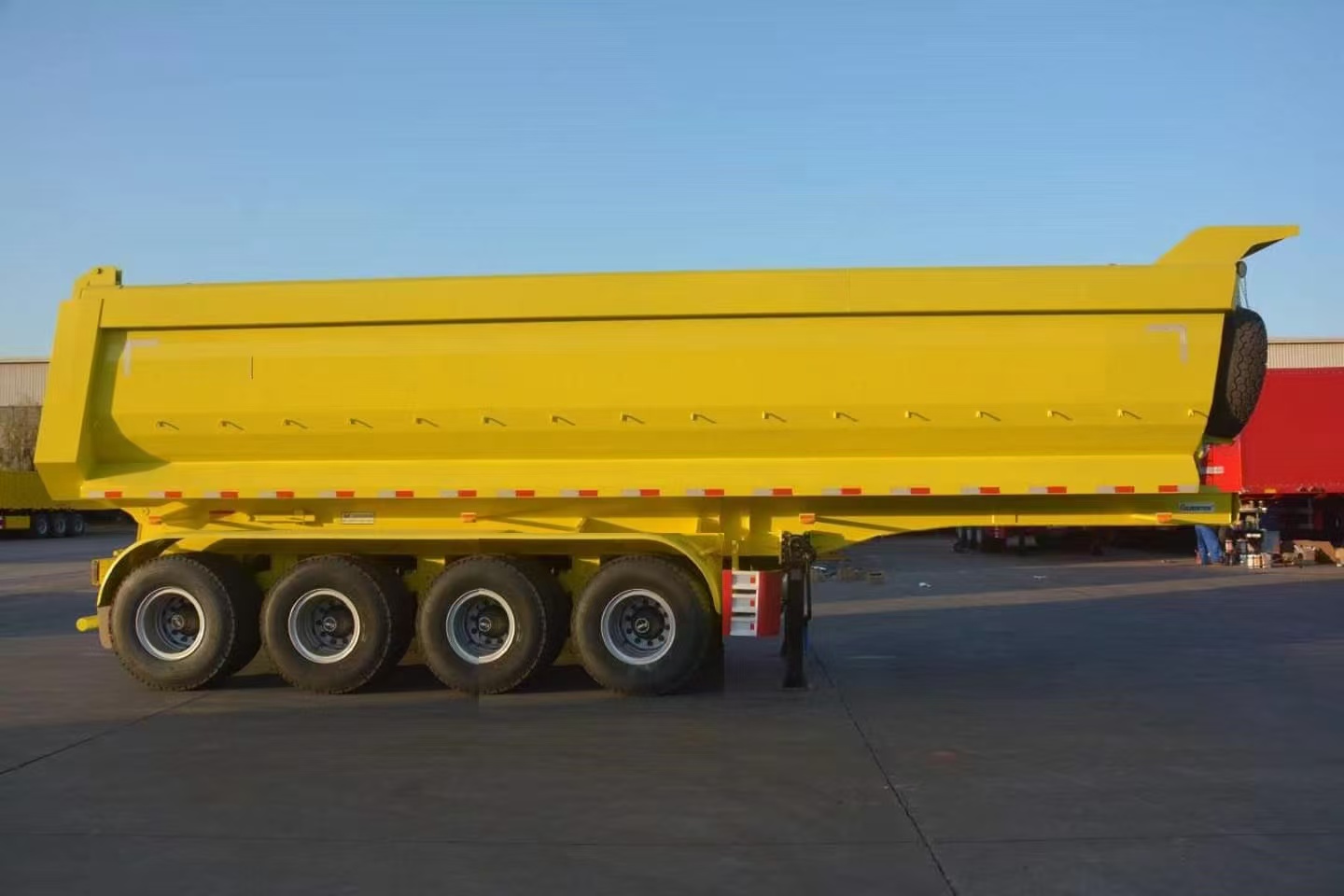
Match the axle configuration to cargo behavior
| Payload situation | Configuration question | Practical check |
|---|---|---|
| Regular palletized freight | Is a tandem group sufficient for the planned gross and axle loads? | Confirm loading pattern, route limits, and fifth-wheel transfer. |
| Dense, compact cargo | Would an additional axle or different spacing improve the allowable distribution? | Review axle-group loads, structural ratings, permits, and cargo restraint. |
| Variable pallet positions | Would a sliding axle group provide useful balancing range? | Test representative load plans and confirm safe adjustment procedures. |
| Mixed light and heavy duty | Could a liftable axle match the operating pattern? | Check regulatory conditions, controls, maintenance, and tire strategy. |
| Long or high-center-of-gravity cargo | Does the layout support stability as well as axle loading? | Review securement, deck geometry, suspension, and route constraints. |
Do not separate axle count from the rest of the specification
An axle configuration is only one part of the specification. The selected arrangement should be reviewed alongside axle ratings, suspension type, brake system, wheel and tire capacity, frame design, deck or body type, kingpin setting, and the intended tractor. A semi trailer with more axles may still be unsuitable if the structure or running gear is not rated for the actual duty, or if the tractor and coupling arrangement cannot support the planned kingpin load.
Ask suppliers for a configuration confirmation tied to the intended operating scenario. Provide the cargo type, normal and maximum weights, dimensions, route regions, loading method, frequency of heavy trips, and any permit assumptions. This produces a more useful discussion than requesting “the strongest” trailer, because it identifies which limits control the job.
A practical selection sequence
- Define the heaviest routine shipment and the range of cargo positions.
- Map the expected kingpin load and trailer axle-group load for representative loading plans.
- Check current gross, axle, spacing, bridge, and route requirements in every operating jurisdiction.
- Compare tandem, tri-axle, sliding, and liftable options against maneuverability, tare weight, maintenance, and loading variability.
- Confirm the complete running-gear and structural specification, not merely the number of axles.
- Verify the finished semi trailer with real scale weights and update the loading procedure when cargo changes.
Choose for the recurring job, then verify in service
The most suitable semi trailer axle layout is usually the one that handles the recurring cargo pattern safely and economically while leaving realistic operating margin. Tandem arrangements can be efficient for stable general freight. Tri-axle or other expanded layouts may make sense for certain dense loads, subject to legal and engineering review. Sliding and liftable arrangements can add flexibility when the work varies, but they bring operating requirements of their own.
Use payload requirements as the starting point, then test the full load path—from cargo placement through the trailer axle group and kingpin to the tractor. That disciplined approach turns a broad axle configuration choice into a specification that can be checked, documented, and managed on the road.