
 EN

Abrasion-Resistant Steel Helps Dump Trucks Handle Construction Materials
For a fleet moving quarry stone, crushed aggregate, demolition debris, or coarse sand, a dump truck body is exposed to more than ordinary cargo weight. Every loading cycle can introduce sliding abrasion, localized impact, and repeated contact at the floor, sidewalls, tailgate, and front bulkhead. That is why an abrasion resistant steel decision deserves to be treated as an operating-fit question, not simply a material label on a quotation.
As a maintenance coordinator reviews a dump truck specification, the useful question is not “Which steel is strongest?” More precisely, it is: what material, loading method, body design, and inspection routine fit the payload and route? A well-chosen steel truck body can support a more predictable wear-management plan, but the final selection still needs verification against payload density, impact severity, local regulations, and the manufacturer’s approved configuration.
Why abrasive construction materials change the job of a dump truck body
Construction materials do not wear a body in one uniform way. Fine, dry sand may scour surfaces as it moves during travel and tipping. Sharp aggregate can concentrate impact where a loader drops material. Broken concrete may combine irregular impact with abrasion when it is pushed toward the tailgate. In each case, the dump truck body is part of the production cycle rather than just a container.
In general, abrasion-resistant plate is designed to resist surface wear in abrasive applications. Searchable manufacturer guidance also identifies AR450 as a material category used for bodies hauling highly abrasive, high-impact loads. That does not mean every construction truck should use the same grade or thickness. Grade names alone do not confirm welding practice, formed-section behavior, chassis compatibility, or expected life. Those details belong in the final technical review.
A useful checkpoint is the loading and unloading routine; before deciding, relate it to actual rock size, loader drop height, moisture, haul distance, and tipping frequency. The material choice versus actual exposure is the more useful comparison.
Where to examine a steel truck body first
Wear often tells a story about the operation. Inspect a dump truck after cleaning it enough to see the floor, side seams, front wall, tailgate area, hinge zones, and any installed liners. Look for polished paths, thinning, dents, cracked coatings, trapped moisture, loose fasteners, and deformation around reinforcements. These observations do not diagnose a cause by themselves, but they make conversations with the body builder and maintenance team more specific.
- Floor and rear transition: These areas often see sliding material and final discharge contact.
- Front bulkhead: A loader’s placement pattern can create localized impact exposure here.
- Sidewalls and upper rails: Examine them where oversized fragments strike or where loading is consistently off-center.
- Tailgate, hinges, and latch areas: Material flow, vibration, and retained fines can make access and drainage important.
By inspection access, we mean whether routine check points can be reached safely and consistently. A durable dump truck body is easier to manage when the team can inspect suspected wear zones before a small issue turns into downtime.
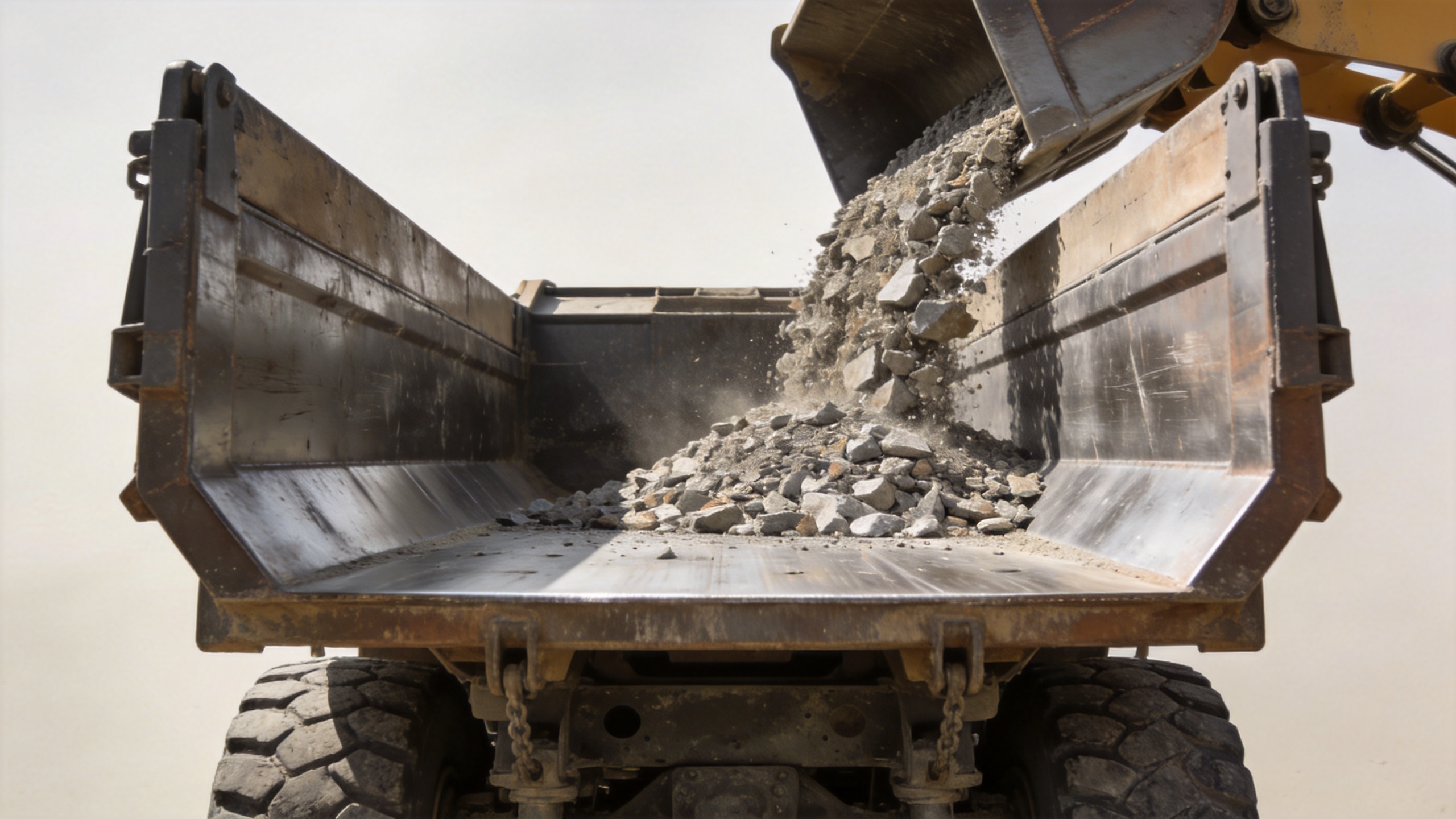
Match abrasion-resistant steel to the material flow, not only the payload rating
A payload rating is essential, but it does not fully describe the punishment a body receives. Two loads of similar mass can behave very differently: rounded wet gravel may move differently from angular dry stone, while demolition debris may produce intermittent point impacts. For this reason, abrasion resistant steel selection should connect the cargo to the loading pattern and unloading task.
Start by recording what the dump truck carries most often, the largest pieces likely to enter the body, how the loader loads it, and whether the truck hauls one material or changes tasks weekly. Then compare these operating details with the body supplier’s documented grade, thickness, reinforcement, liner, and fabrication recommendations. It is not simply a material issue; exposure and maintenance practice both matter.
A steel truck body may be appropriate when the operation needs a robust platform for abrasive work, but durability and payload are a trade-off rather than a universal win. Additional material can affect tare weight, while a lighter design may need a different wear strategy. The right choice may depend on details that should be verified with the final specification.
Build a practical inspection and maintenance routine
Wear management is more dependable when it is scheduled around the work cycle. For a busy construction truck, a short visual check after material changes, unusually harsh loading, or a new route can be more useful than waiting for a failure. Record the material carried, the observed location, and the date. Over time, those notes can reveal whether a wear pattern follows a particular quarry, loader, driver routine, or drainage condition.
- Clean out retained material so the dump truck body can be examined.
- Check floor, corners, seams, tailgate, fasteners, and drainage points for visible changes.
- Separate what was observed from the presumed cause; avoid ordering repairs on assumption alone.
- Review the notes with the fabricator or qualified service team before changing plate, liners, or loading practices.
- Update the checklist when payloads, routes, loaders, or unloading methods change.
This approach also avoids a common mistake: treating a general checklist as a substitute for task-specific inspection. It is a starting point, not proof that a given dump truck configuration is fit for every material.
Questions to ask before specifying a dump truck body
| Question | Why it matters |
|---|---|
| What material is loaded most often? | Rock, gravel, sand, and demolition debris can create different abrasion and impact patterns. |
| How is the material loaded? | Loader height, bucket size, and drop location influence localized damage risk. |
| How frequently does the truck tip? | High-cycle work can change priorities for hinges, tailgate areas, and inspection access. |
| Will the body change tasks? | A multi-use dump truck may need a documented compromise rather than an optimized single-material design. |
| What support is available? | Fabrication details, service access, and repair capability should be confirmed before ordering. |
A better way to evaluate abrasion-resistant steel
Abrasion-resistant steel can help a dump truck body handle demanding construction materials when the selection is connected to real loading and maintenance conditions. The strongest purchasing conversation combines the material category with evidence from the route, payload, body layout, and inspection history. For procurement teams, that means asking for a documented configuration rather than accepting a broad wear-resistance claim.
CMHAN’s merchant profile identifies road-construction customers among the audiences it serves, which makes operational-fit guidance more useful than generic vehicle comparisons. Before purchase, confirm the final dump truck body design, the intended material mix, fabrication requirements, and service plan with the responsible supplier or qualified technical team. That is how a construction fleet can turn a steel choice into a manageable lifecycle decision.