
 EN
EN

Revolutionizing Response: Multifunctional Maintenance Trucks
A few years ago, I witnessed an incident response along the highway after a minor accident, construction debris, and a broken guardrail. It was a mess. I saw three different response vehicles arrive: an incident response truck, a mobile repair truck, and a lighting truck. It took them a long time to coordinate, and the lane was closed for an unnecessarily long time. I recently saw a similar situation at a major municipal utilities depot, where the multifunctional emergency maintenance truck was deployed to a simulated downed power line. It was quick. Within minutes, the truck's built-in light tower was turned on, the team used their tools from the onboard storage, and the truck's integrated crane cleaned up the broken guardrail. Whereas the first situation had a response time of several vehicles, the multifunctional emergency maintenance truck streamlined the response time to a single vehicle, along with a coordinated team. The flexible emergency repair truck has the potential to revolution operational practices from fragmented reactions to streamlined, efficient actions.
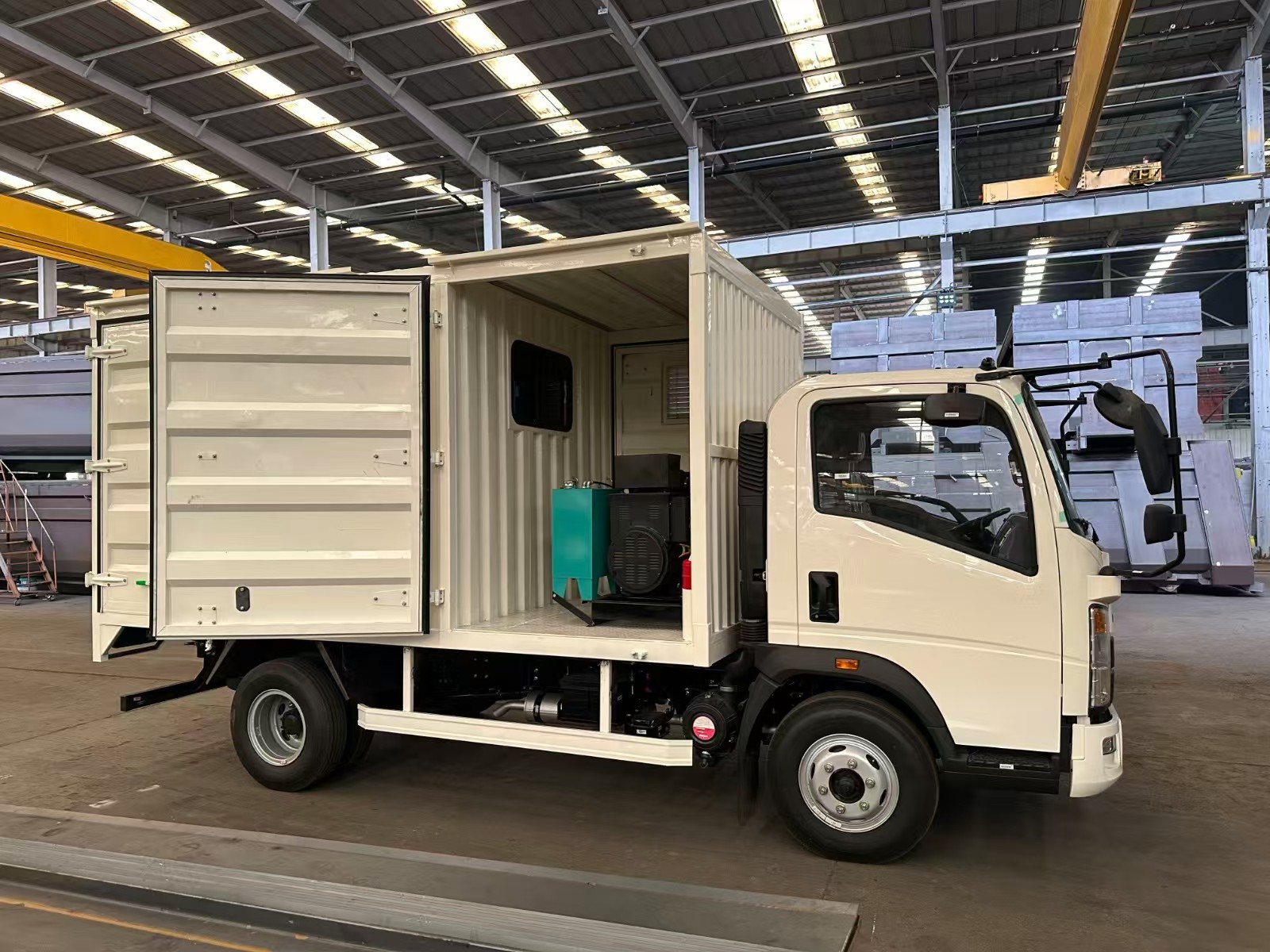
Building a Mobile Command Center
Creating a multifunctional emergency maintenance truck requires the true genius of smart integration, not simply assembly and construction. It's about smart mobile workshop design. The mobile workshop's chassis must be rugged and reliable, be able to carry a significant payload, and offer stable power take-off points. Then, specialists design the body to modularly integrate specific functionalities, like a hydraulics or power crane, tool and parts storage lockers, inverters or welders, and with high-intensity light towers. The real prize is in the design of the workflow. The National Association of Emergency Vehicle Specialists has documented and suggested that the best layout allows the least amount of crew movement, and that tools be placed in order of use with safety controls in the middle. A truly multifunctional emergency maintenance truck leverages out of the box thinking. It integrates a feeling of ‘extension’ to the team’s capabilities in that, not only does it streamline the workflows, it contributes to faster operations and a safety focus design.
Establishing Efficiency and Flexibility
Power distribution, telecommunications, and infrastructure maintenance industry leaders are vocal advocates for operational efficiency. In industry discussions, fleet managers identify flexibility and speed as key parameters. A multifunctional emergency maintenance truck can often replace two or three specialized vehicles. This consolidation goes beyond cost savings; it is a logistical triumph. It reduces the number of drivers needed, streamlines dispatch logistics, and significantly lowers the number of vehicles at a crowded incident. The results are proven: less road closure time, quicker restoration of critical services, and better allocation of personnel and technology. multifunctional emergency maintenance trucks are the standard for modern, flexible response units.
Building Trust Through Reliability And Transparency
For managers and crews alike, there is one thing they all need. Trust. Multifunctional emergency maintenance trucks must be built and designed to earn that trust. Trust is earned through mechanical reliability and operational transparency. These trucks are built on known and proven commercial truck platforms. Platforms that have known service intervals and parts availability. Added accessories such as cranes and generators come from reputable manufacturers with known performance and safety specs. There is nothing hidden from the buyer and a decent manufacturer will supply load charts for the crane, power output curves for the generator, and even detailed storage layout diagrams. Because of this transparency and planning, training can be more accurate and crews have greater familiarity with the trucks built to service their needs. When a crew hops into the truck, there are no unknowns to be aware of. Everything that is stored within the truck is known and that turns the truck into a trusted asset during a crisis.
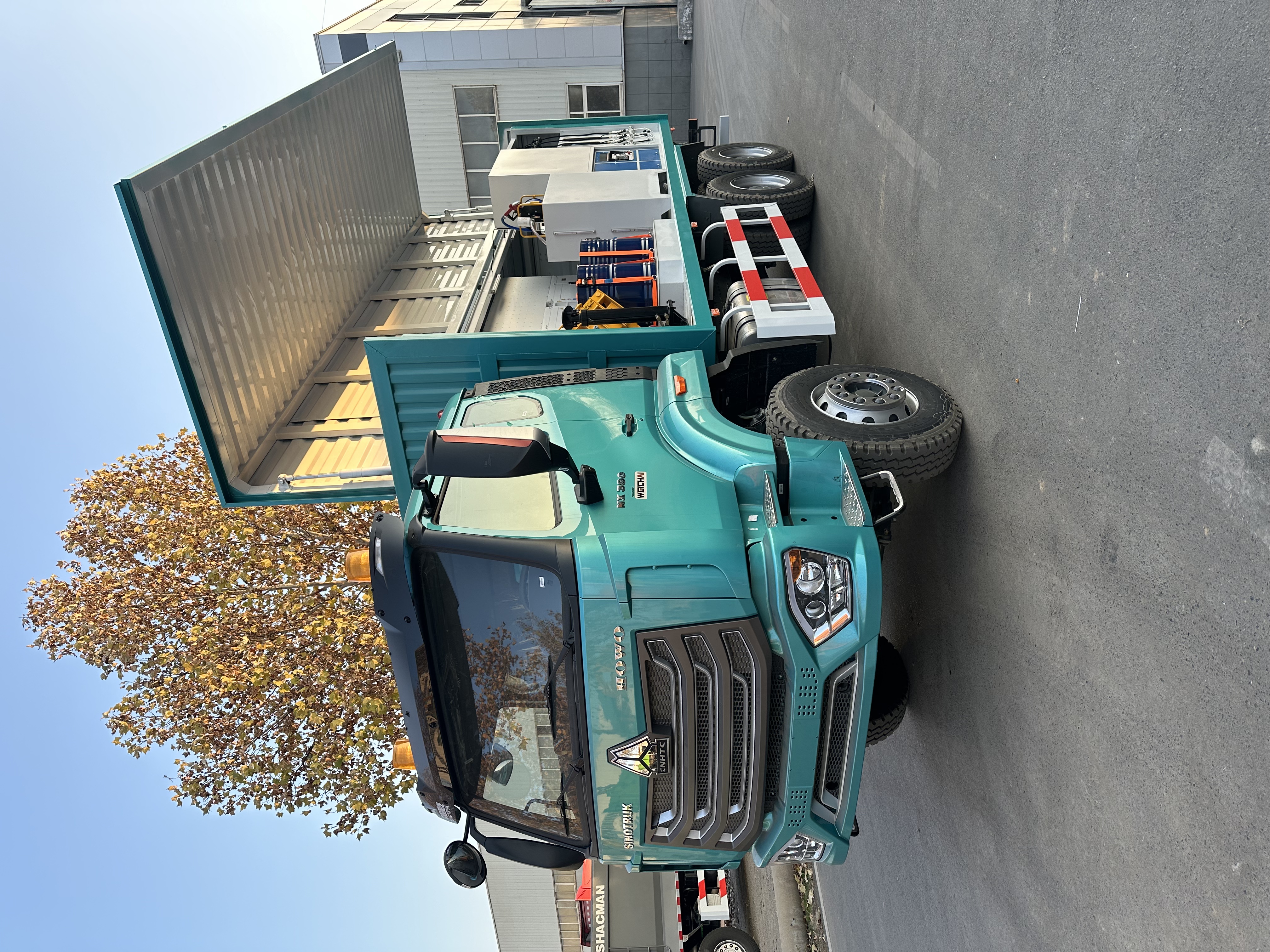
Integration and Immediacy: Keeping the Lines of Communication Open
The multifunctional emergency maintenance trucks exemplify the prototype of technology integrated with immediacy. prepared with the capability and not just the inventory, they prove that the prototype for the future is with technology and equipment integrated with tools such as real time data streams, pods for drone deployment, and self-diagnostics. The philosophy is the same: one empowered team, all the tools, and the capability to clear the problem on the spot. The emergency maintenance multifunctional trucks are transforming the level of downtime. Whether it is a city’s infrastructure or a utility grid on a national level, it changes the response strategy and philosophy from, "We will send what we have to offer" to "We have what you need on the spot, right now. This is a major revolution in readiness and resilience.