
 EN

What Tools Are Commonly Installed Inside a Maintenance Truck?
A maintenance truck is more than a vehicle carrying a few hand tools. It is a mobile workshop arranged so a technician can inspect, diagnose, repair, and restock equipment where the work happens. The exact layout should follow the assets being serviced, travel distance, payload limits, and local safety requirements. Still, most well-planned maintenance truck setups include the same core categories: organized hand tools, diagnostic gear, lifting and recovery equipment, power and air systems, consumables, and safety supplies.
From a maintenance-planning perspective, the most useful question is not “What is the biggest tool package available?” It is “What tasks must this maintenance truck complete before the technician returns to the workshop?” That distinction keeps the body organized, makes stock easier to audit, and helps prevent unnecessary weight from taking the place of items that solve routine field problems.
Start With the Job List, Not the Tool Catalog
A service body can look fully equipped while still missing what a crew needs on site. Before specifying a maintenance truck, list the machines or vehicles it will support, the repairs that occur most often, and the distance to a fixed shop. A truck supporting construction machinery may prioritize hydraulic fittings, hoses, welding capability, and lifting equipment. A fleet-support service truck may need tire-service tools, electrical diagnostics, spare lamps, filters, and secure storage for scheduled inspections.
This is also where payload and access matter. A heavy generator, compressor, crane, drawers, fluids, and parts all add up. If the route and workload are stable, a smaller, better-organized package can be more useful than a crowded maintenance truck. Conversely, crews working far from a depot may reasonably choose more onboard capability. The configuration should be checked against the truck chassis rating and the applicable operating rules before purchase or upfitting.
1. Hand Tools and Fastener Tools
Nearly every maintenance truck carries a base set of hand tools: combination wrenches, socket sets, ratchets, breaker bars, pliers, screwdrivers, punches, chisels, pry bars, hammers, torque tools, and measuring devices. The mix should reflect the equipment being serviced. Metric and SAE tools may both be necessary in mixed fleets, while insulated hand tools can be relevant where electrical work is expected.
Storage is part of the tool decision. Drawer dividers, labeled bins, foam cutouts, and lockable cabinets reduce search time and help the technician see when a tool is missing. A mobile workshop moves over uneven ground, so loose tools are not simply inconvenient; they can become a safety issue or damage other maintenance truck tools.
2. Diagnostic and Electrical Repair Equipment
A first visit goes more smoothly when the technician can diagnose the fault before ordering parts or returning for another trip. Common items in a maintenance truck include a multimeter, test leads, circuit tester, battery tester, scan-tool capability where appropriate, inspection light, work lights, and a laptop or protected device for service information. Electrical repair supplies may include terminals, fuses, relays, heat-shrink tubing, cable ties, wire, crimping tools, and connectors.
A practical rule is to stock equipment that helps a technician separate an observed symptom from a presumed cause. For example, a no-start complaint could involve a battery, connection, fuse, control signal, or mechanical issue. Basic testing equipment will not replace manufacturer-specific procedures, but it helps a maintenance truck collect useful evidence before parts are changed.
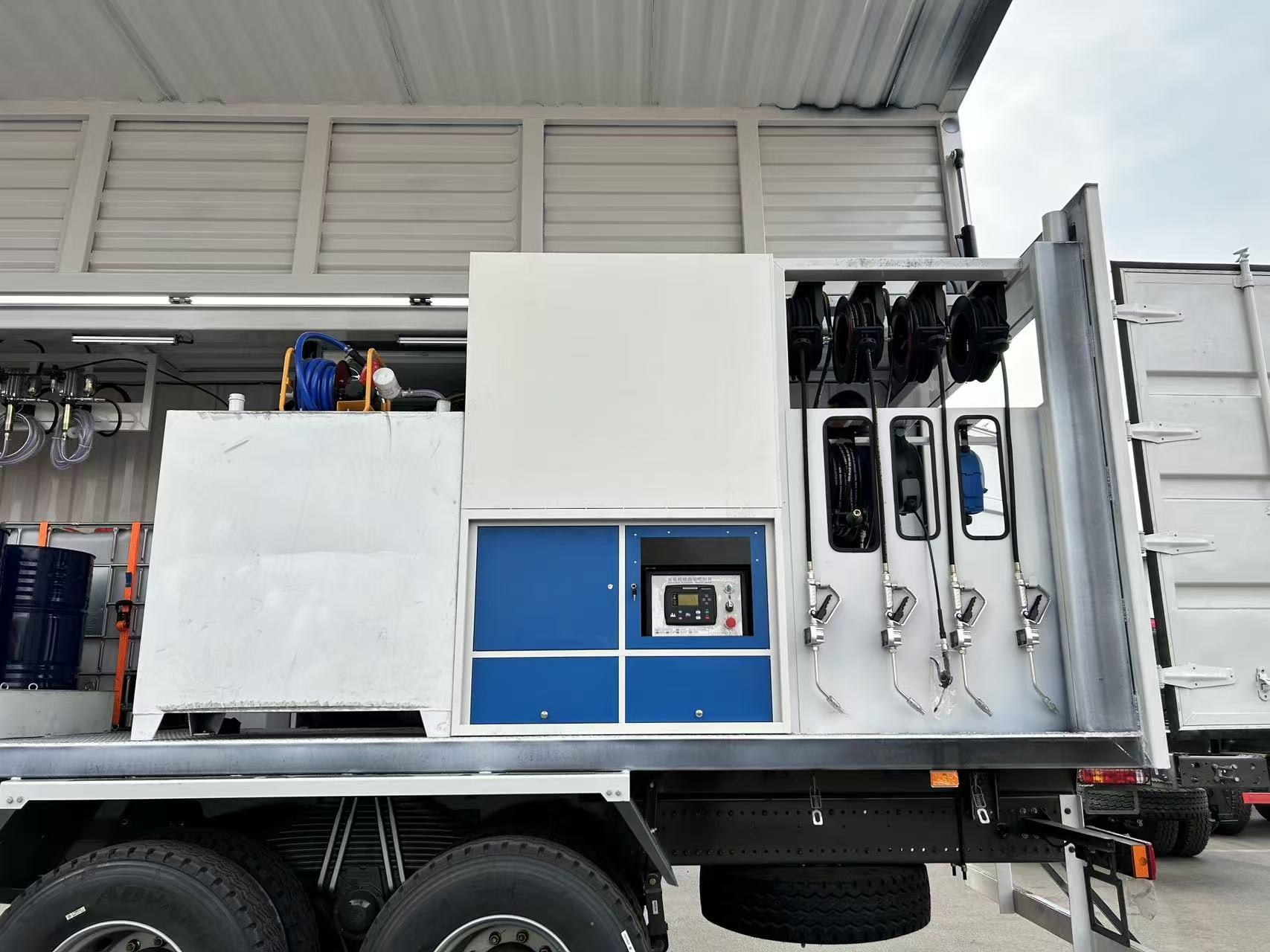
3. Air, Electrical Power, and Welding Systems
Onboard utility systems turn a service body into a working mobile workshop. Many configurations use an air compressor for tire inflation, cleaning, pneumatic tools, and certain repair tasks. A generator, inverter, or combined power unit may support lights, chargers, corded tools, and other electrical repair equipment. Some crews also install a welder or welder-generator when their planned work includes field fabrication or repair.
These are familiar equipment categories, but they are not a universal checklist. They add cost, space, maintenance requirements, and heat-management needs. Before choosing them, verify duty cycle, electrical demand, ventilation, fuel arrangement, noise limits, and the tools the crew actually uses. A maintenance truck with a modest power system that is used every week can be a better fit than a larger unit that consumes payload without supporting the work plan.
4. Lifting, Recovery, and Tire-Service Tools
Depending on the task, a maintenance truck may include a service crane, lifting slings, shackles, chains, jacks, jack stands, wheel chocks, and recovery accessories. Tire-focused work can call for an inflation system, impact tools, torque equipment, tire gauges, valve-service tools, and items for safe wheel handling. These items require careful capacity control: every lifting or recovery component must be selected, inspected, and used within its rated limits.
Do not treat a crane as a simple add-on. It changes the body layout, load distribution, operator training needs, and inspection routine. The same applies to drawers holding dense parts or fluids. When setting up a maintenance truck, ask how the technician will reach, lift, secure, and replace each heavy item rather than only whether it fits into a compartment.
5. Fluids, Lubricants, Hoses, and Common Spare Parts
Many field repairs stop because a low-cost consumable is unavailable. For that reason, a maintenance truck commonly carries lubricants, grease equipment, approved fluids, funnels, drain pans, absorbent material, filters, fittings, seals, clamps, belts, bulbs, fasteners, and hose-repair supplies. The exact inventory should follow the supported equipment and supplier guidance; mixing fluids or stocking unverified substitutes can create more problems than it solves.
Use a simple replenishment routine. Record the operating condition behind each issue, then review which parts were actually consumed. If technicians repeatedly borrow the same connectors or hydraulic fittings from a shop, those items may deserve a labeled place in the maintenance truck. If supplies expire, leak, or rarely move, they should be reviewed instead of automatically reordered.
6. Safety, Site Protection, and Communication Gear
Safety equipment is not separate from productivity. Typical maintenance truck tools and supplies include personal protective equipment, gloves suited to the task, eye protection, hearing protection, a first-aid kit, fire extinguisher, spill-control materials, cones, warning triangles, wheel chocks, and a lockout/tagout kit when applicable. A technician may also need a radio, phone charger, camera, or documentation device to report conditions and close out work.
The right list depends on the site. Roadside work, construction areas, industrial yards, and remote locations create different hazards. Build the maintenance truck checklist around a documented risk assessment and local rules, then inspect the supplies regularly. An expired extinguisher or an inaccessible first-aid kit does not help when a crew needs it.
How to Build a Useful Maintenance Truck Checklist
- Define the service scope. List the planned repairs, inspections, and machines supported by the maintenance truck.
- Group equipment by task. Keep diagnostic, hand-tool, fluid-service, electrical, and safety items together where possible.
- Check weight and access. Confirm payload, axle distribution, compartment capacity, and safe retrieval of heavy tools.
- Plan for replenishment. Label high-use consumables and create a restocking trigger after every service call.
- Review the layout with technicians. Their inspection notes can show whether a maintenance truck is missing a recurring item or carrying equipment that does not match the job.
Final Takeaway
The common tools inside a maintenance truck are more useful when treated as a connected field-service system, not a shopping list. Hand tools and diagnostics solve routine issues; air, electrical power, and welding equipment extend what can be done away from base; lifting gear and consumables support the repair; and safety supplies protect the crew and site. Start with the real task, validate load and safety requirements, and revise the inventory as service records reveal what the team actually uses. That is how a maintenance truck becomes a dependable mobile workshop instead of a vehicle with crowded compartments.